

Melbourne CBD
Melbourne showroom
257 Collins Street, Level 3Melbourne VIC 3000
Email us before visiting Collins Street. Please wait for our email confirmation before coming in.
Arrange your visitDiamond Education · Buying Guide
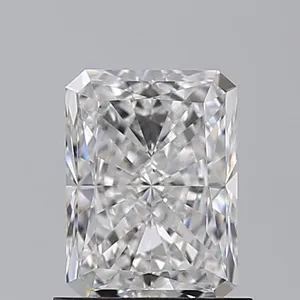
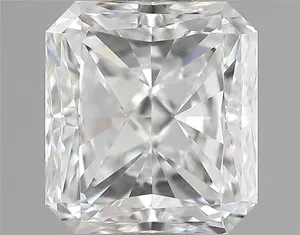
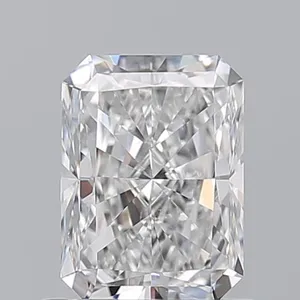
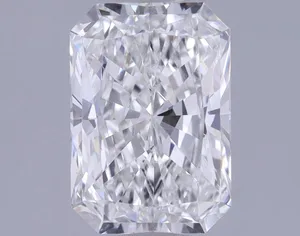
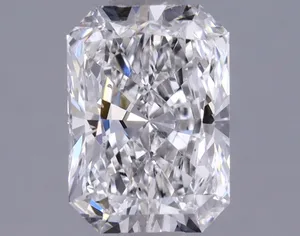
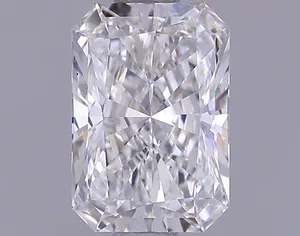
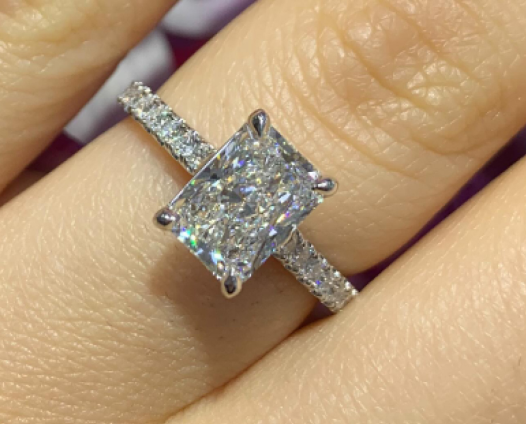
The radiant cut diamond has a rectangular or square shape with cropped corners.
Radiant cuts are similar in shape to the emerald cut diamond but with more facets, which gives them more sparkle and brilliance.
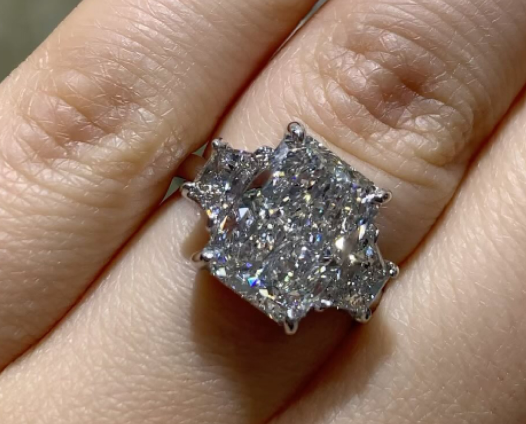
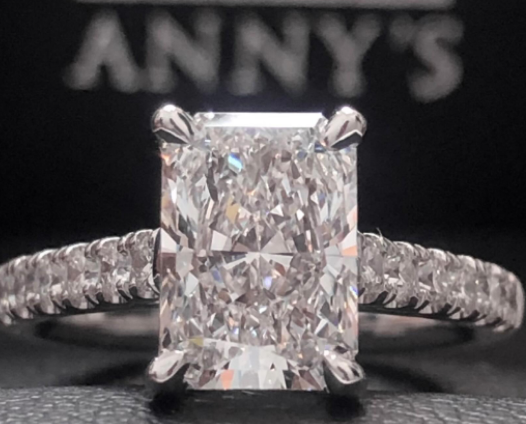
Depth below 67% and table between 61–69% can help narrow a shortlist, but these ranges do not guarantee an attractive cut. Compare the complete proportions, report and appearance under more than one light source.
Depth · under 67%Table · 61–69%
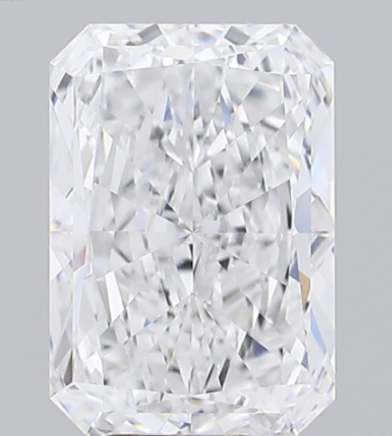
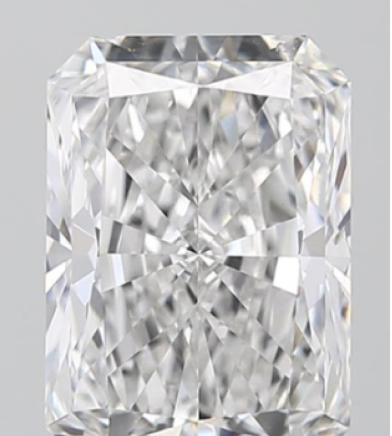
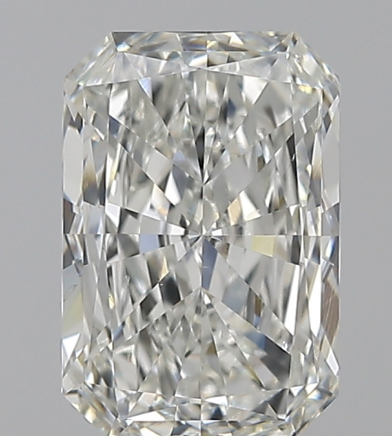
A more important gauge of judging a stone's cut is by viewing the video. The faceting of the stone is bar none the most important element of a radiant. The whole goal is to achieve a blended in bowtie with minimal black shadows. See below three perfect of what we aim to achieve. Now you can have a radiant cut diamond, that is perfect on paper, with the best measurements and %'s; but you can still have a very bad bowtie. Therefore, look at the video first, then confirm with the certificate. See below 3 Bad examples of radiants with poor cuts showcasing bowties.
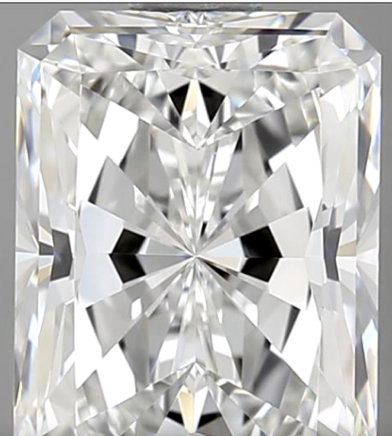
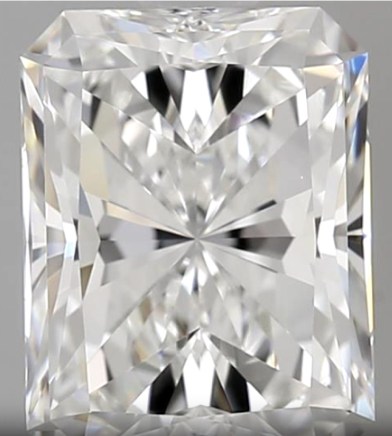
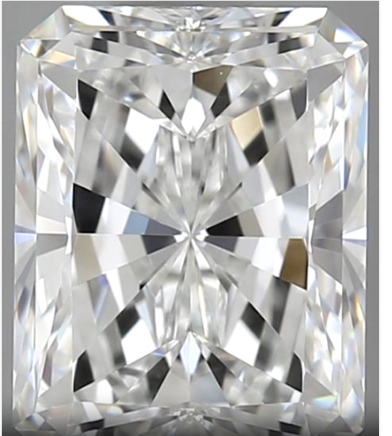
The characteristics of a radiant tend to showcase colour more prominently than a like for like round diamond. It's for this reason we hope to stick in the colourless D-E-F Range.
Recommended · D to F

The length to width ratio is a measure of how elongated or square a fancy shape diamond appears. It is determined by dividing the length of the diamond by its width. A higher ratio indicates a more elongated shape, while a lower ratio indicates a more square shape.
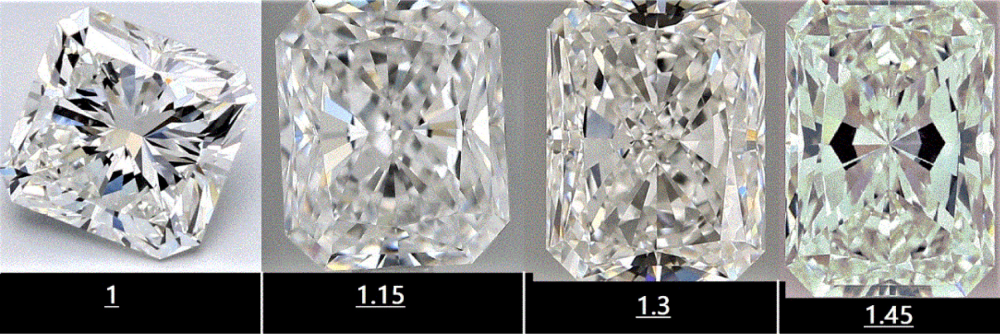
The ideal ratio for a radiant is between 1.4 to 1.47.
Closer to 1.3 is shorter and fatter. Above 1.5 is longer and skinnier. You can have 3 diamonds all 2ct, but can have very different shapes for all three. Please bear in mind, the optimal ratio can vary depending on personal preferences.
Given a radiant cut diamond has a fairly large open surface area. It's easier to spot imperfections than say a round diamond. For this reason it's best to find radiants with imperfections away from the centre/table.
Recommended · SI1 to VS2
What a radiant's measurements mean in carat weight, for the rectangular cut this guide recommends. A square radiant of the same weight is a different stone on the hand — it gains width and loses roughly a millimetre of length — so read the length and width together rather than the weight alone. Rows from 0.30ct up are the median of real certified radiants in our own inventory, with the sample size beside each one.
| Length × width | Carat weight | Typical range | Based on |
|---|---|---|---|
| 2.0 × 1.4 mm | 0.023 ct | — | Calculated |
| 2.5 × 1.8 mm | 0.046 ct | — | Calculated |
| 3.0 × 2.1 mm | 0.079 ct | — | Calculated |
| 3.5 × 2.5 mm | 0.13 ct | — | Calculated |
| 4.0 × 2.8 mm | 0.19 ct | — | Calculated |
| 4.5 × 3.2 mm | 0.27 ct | — | Calculated |
| 4.7 × 3.4 mm | 0.31 ct | 0.30–0.32 ct | 72 stones |
| 5.0 × 3.6 mm | 0.39 ct | 0.35–0.42 ct | 255 stones |
| 5.5 × 4.0 mm | 0.51 ct | 0.45–0.54 ct | 900 stones |
| 6.0 × 4.3 mm | 0.64 ct | 0.54–0.72 ct | 969 stones |
| 6.5 × 4.6 mm | 0.79 ct | 0.71–1.01 ct | 940 stones |
| 7.0 × 5.0 mm | 1.04 ct | 0.97–1.10 ct | 3,346 stones |
| 7.5 × 5.2 mm | 1.19 ct | 1.06–1.51 ct | 1,669 stones |
| 8.0 × 5.8 mm | 1.56 ct | 1.48–1.79 ct | 4,393 stones |
| 8.8 × 6.3 mm | 2.00 ct | 1.92–2.50 ct | 150 stones |
| 9.0 × 6.3 mm | 2.06 ct | 1.92–2.50 ct | 6,191 stones |
| 10.0 × 7.2 mm | 3.07 ct | 2.59–3.16 ct | 6,706 stones |
| 11.0 × 7.9 mm | 4.05 ct | 3.59–4.19 ct | 6,542 stones |
| 12.0 × 8.5 mm | 5.03 ct | 4.66–5.21 ct | 3,666 stones |
| 13.0 × 9.1 mm | 6.10 ct | 5.75–7.26 ct | 509 stones |
| 14.0 × 9.8 mm | 8.03 ct | 7.08–9.53 ct | 226 stones |
| 15.0 × 10.6 mm | 10.06 ct | 9.06–11.07 ct | 197 stones |
Rows from 0.30 ct up are the median of our own GIA and IGI certified stones, with the sample size shown and the typical range being the middle 80% of that bucket. Smaller sizes come from our diamond supplier's own book where it carries the shape, and are calculated from the trade weight formula where it does not. Covers 2.0 mm to 15.0 mm. Snapshot 2026-08-30.
Radiant is one of the four shapes our diamond supplier's melee book does not carry, so the rows below 0.30ct are calculated from the trade weight formula and labelled as such. For every other shape, and a converter that works both ways, see the full diamond size chart.
Choose a carat weight to see what a natural and a lab-grown radiant diamond cost today, or enter your budget to see the size it buys. Each figure is the typical price of the radiant diamonds available through us at the grade shown under the results, worked out every night; follow its link to see the real stones.
1 ct radiant · Natural
about A$6,138
Typical price · based on 54 diamonds available through us
Listed now, at or under this price
1 ct radiant · Lab-grown
about A$1,538
Typical price · based on 317 diamonds available through us
Listed now, at or under this price
At this size, lab-grown costs about 75% less than natural.
Natural: E–F colour, VS2 clarity, excellent cut for rounds. Lab-grown: E colour, VS1 clarity, ideal cut for rounds. GST included.
Put it in an engagement ringTypical prices of the diamonds available through us, updated 11 October 2026. See every shape and size in our diamond price guide.
Radiant pairs brilliant-cut sparkle with a rectangular outline. If you'd prefer the step-cut look in the same outline, read the Emerald Buying Guide; for a softer pillow outline with similar sparkle, see the Cushion Buying Guide. For a single-page side-by-side across all ten shapes, see our Diamond Shape Comparison. Or jump straight to our engagement ring designs when you're ready to choose a setting.
Made personal, at Anny's
Melbourne CBD
Email us before visiting Collins Street. Please wait for our email confirmation before coming in.
Arrange your visitOur Frankston home
Visit us to talk through your ideas, explore designs and find your perfect fit.
Explore our Frankston showroomTypical engagement and bridal ring turnaround: 3–4 weeks from CAD sign-off. We also have 2-week and 48-hour options for engagement and bridal rings. Get in touch and we'll help find an option that works for your timeframe.
Typical repair turnaround: 1 to 7 business days, depending on complexity and customer urgency
Anny's Manufacturing JewellersABN 88 447 171 579