Melbourne CBD
Melbourne showroom
257 Collins Street, Level 3Melbourne VIC 3000
Email us before visiting Collins Street. Please wait for our email confirmation before coming in.
Arrange your visitDiamond Education · Fluorescence
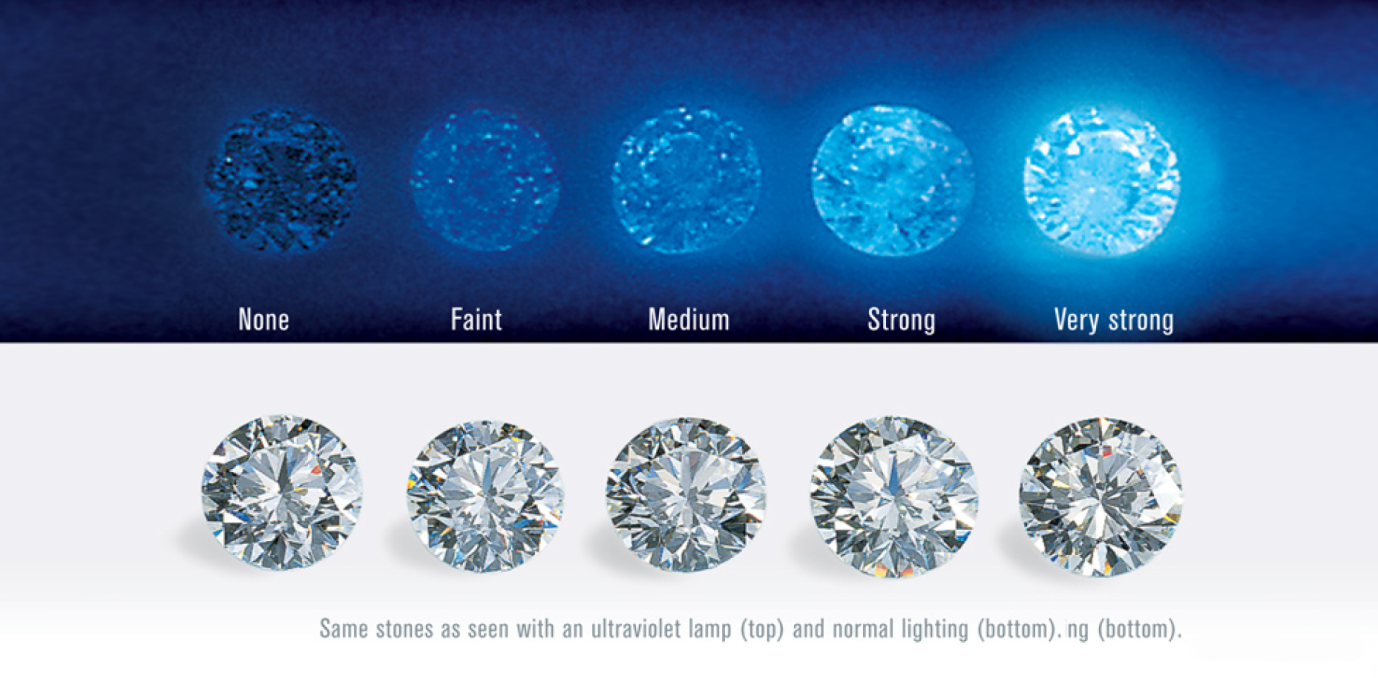
Diamond fluorescence refers to the phenomenon where a diamond emits a visible glow when exposed to ultraviolet (UV) light.
The Short Answer
Fluorescence is a response to UV, including UV in daylight. It is not automatically a defect, and its visibility depends on the stone and lighting. Assess transparency and appearance under several light sources, independently of the fluorescence grade.
The Scale
GIA uses these five descriptions for fluorescence intensity. Check the terms on the actual report; fluorescence intensity is separate from a stone's transparency and overall appearance.
The Physics
When a fluorescent diamond is subjected to intense UV light, typically from a special lamp like a black light, it absorbs the energy from the UV photons. This absorbed energy causes some of the diamond's electrons to become excited and glow, usually a blue colour.
Fluorescence and transparency are different characteristics. Light-scattering features can contribute to milkiness, so a fluorescence grade alone cannot diagnose haze or rule it out. Some people appreciate the glow; judge the individual stone under several light sources.
What colour it glows
Usually blue. Yellow, orange and white are possible but far less common.
Whether it is a flaw
Fluorescence is not automatically a defect. Decide by examining the individual stone and how it looks to you.
Some people want it
Some individuals appreciate the unique glow of fluorescent diamonds and find them visually appealing.
From Our Bench
In our experience, faint and medium fluorescence is a useful tool to maximise the customer's budget to allow for purchasing a diamond with larger carat size.
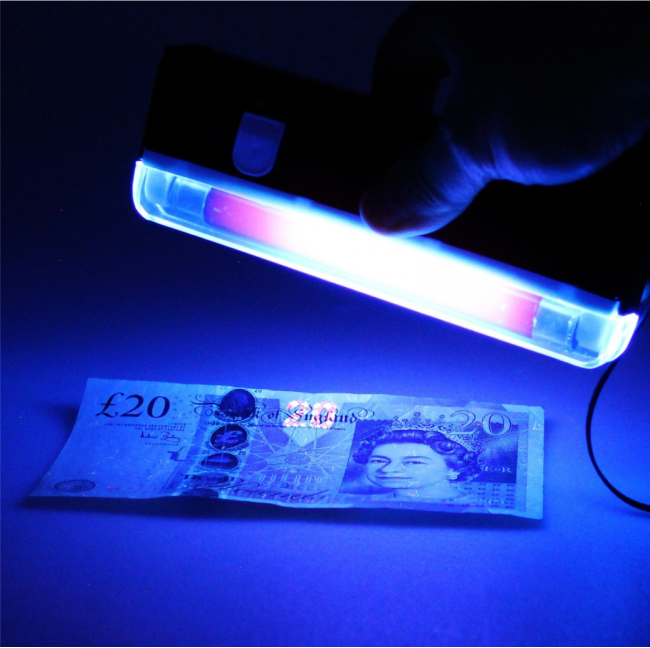
A UV lamp can make a fluorescent diamond's glow easier to see. Daylight contains UV as well, so fluorescence can affect appearance outdoors. The effect varies with the stone, the UV present and the surrounding light; a lamp demonstration does not describe every wearing situation.
Fluorescence can be worth considering when comparing value, but judge it alongside transparency, cut and appearance. The right choice is the stone whose appearance you enjoy in the lighting where you will wear it.
Want to test your own ring?
A suitable UV lamp can reveal fluorescence. Follow its manufacturer's instructions, then compare the ring in daylight and other lighting. A visible glow under the lamp is not a diagnosis of poor quality.
Fluorescence is one of the few diamond characteristics that is easier to judge in person than on paper. For serious sourcing decisions we cross-check the physical stone under our own UV lamp rather than trusting the paper grade alone — so if you are weighing a fluorescent stone against a non-fluorescent one, come and talk to us.
Every stone we sell is IGI/GIA Certified.
Made personal, at Anny's
Melbourne CBD
Email us before visiting Collins Street. Please wait for our email confirmation before coming in.
Arrange your visitOur Frankston home
Visit us to talk through your ideas, explore designs and find your perfect fit.
Explore our Frankston showroomTypical engagement and bridal ring turnaround: 3–4 weeks from CAD sign-off. We also have 2-week and 48-hour options for engagement and bridal rings. Get in touch and we'll help find an option that works for your timeframe.
Typical repair turnaround: 1 to 7 business days, depending on complexity and customer urgency
Anny's Manufacturing JewellersABN 88 447 171 579