

Melbourne CBD
Melbourne showroom
257 Collins Street, Level 3Melbourne VIC 3000
Email us before visiting Collins Street. Please wait for our email confirmation before coming in.
Arrange your visitDiamond Education · Buying Guide
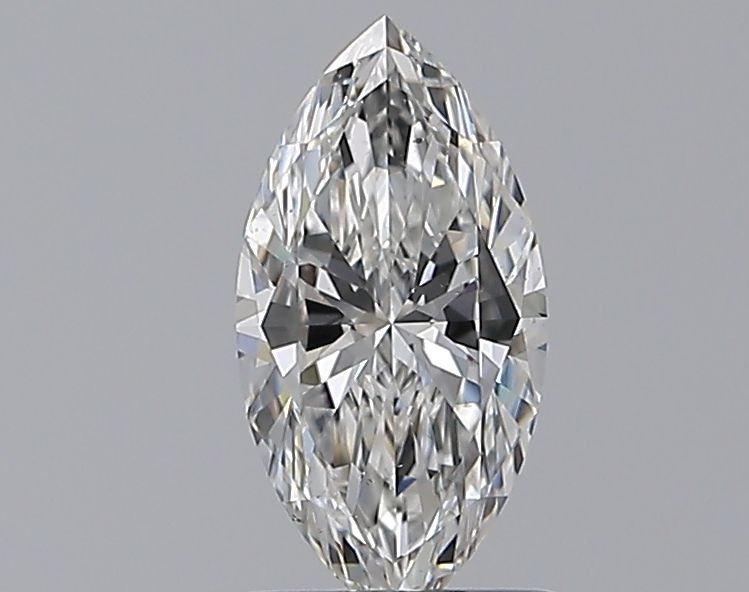
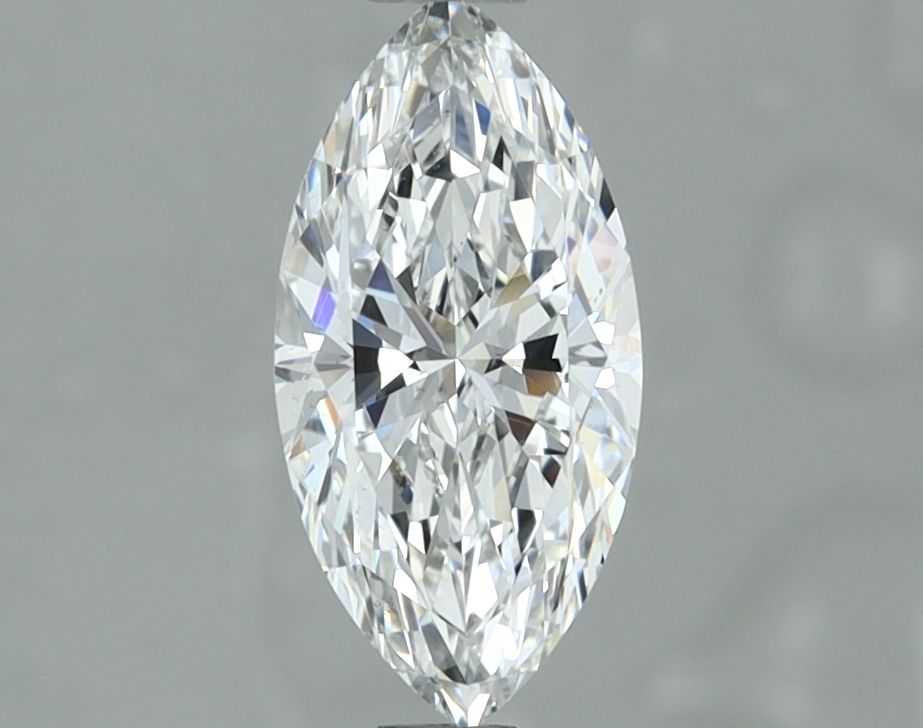
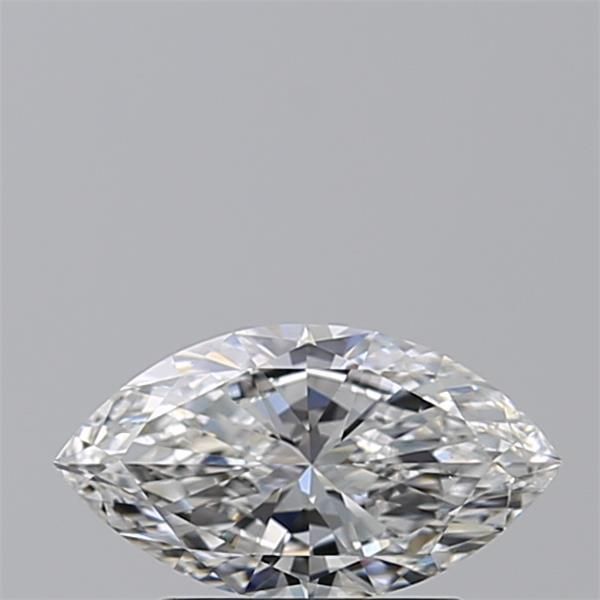
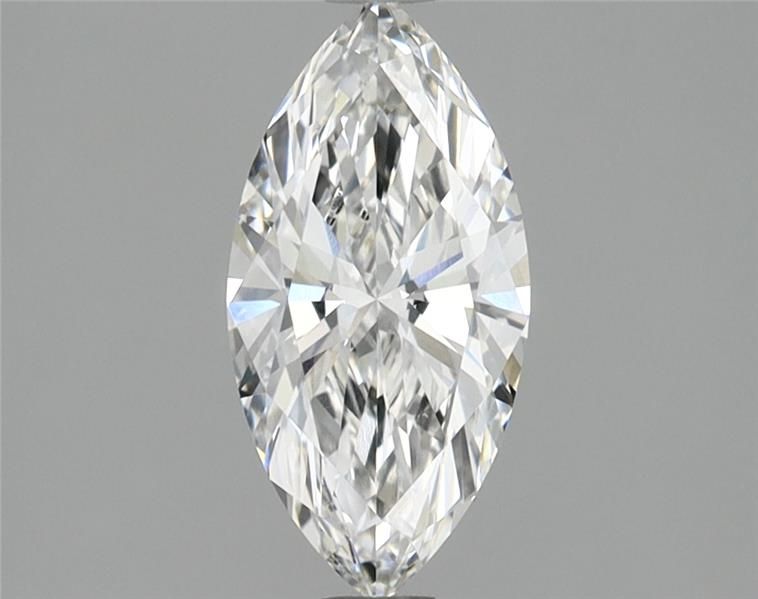
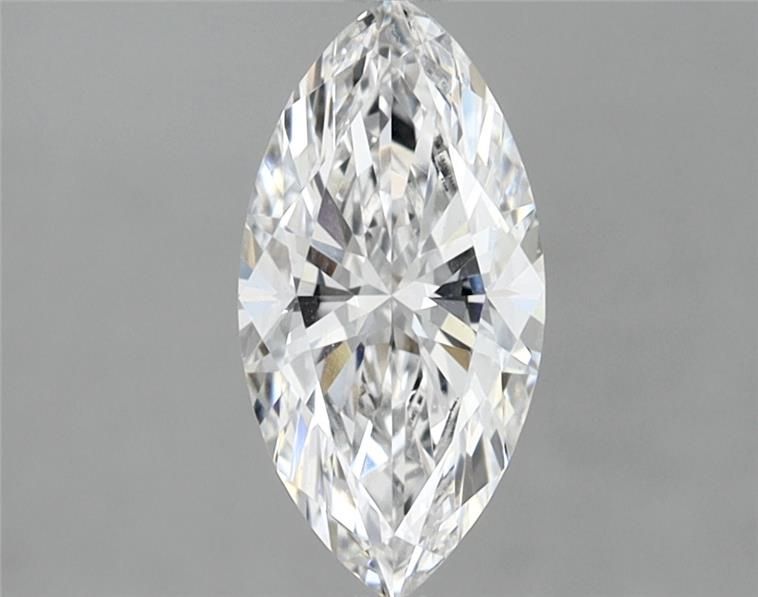
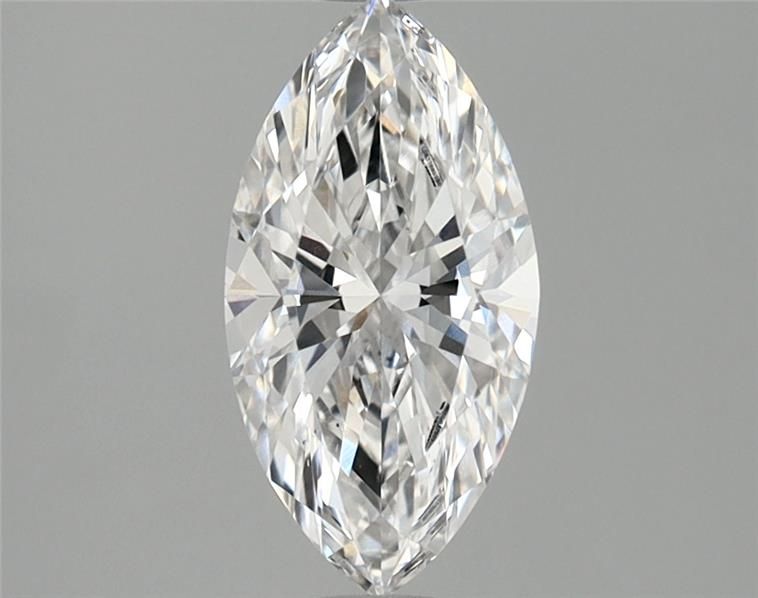
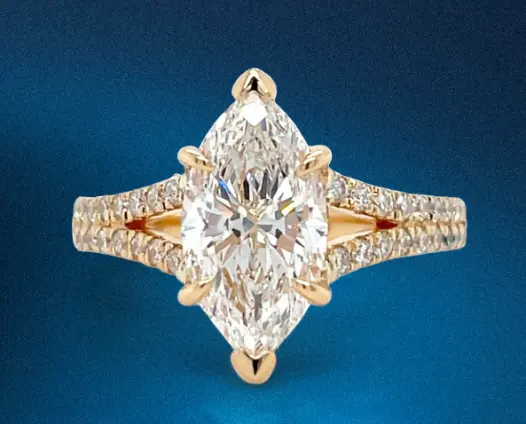
The marquise diamond, with its elongated shape and pointed ends, offers a distinctive and sophisticated appearance. This unique shape not only enhances the diamond's carat weight, making it appear larger, but also adds a graceful, elongated effect to the finger. Marquise brilliant cut diamonds typically feature between 56 and 60 facets, depending on the specific cutting style.
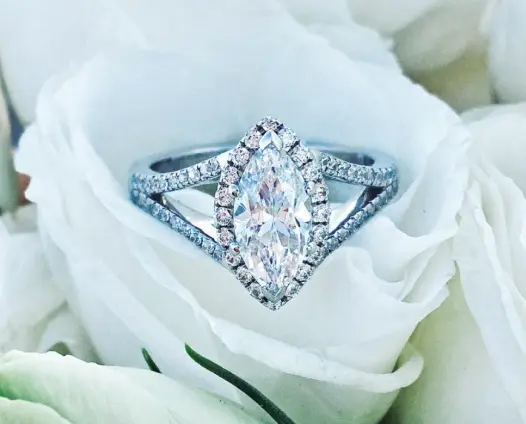
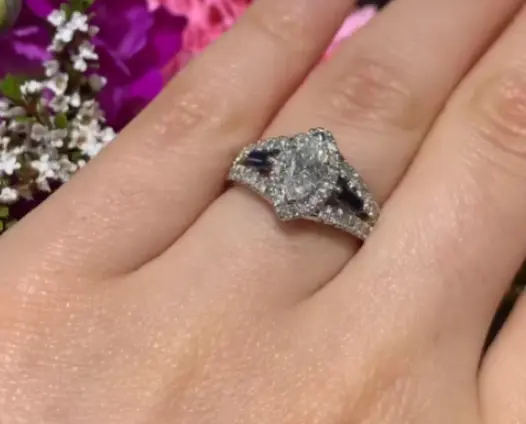
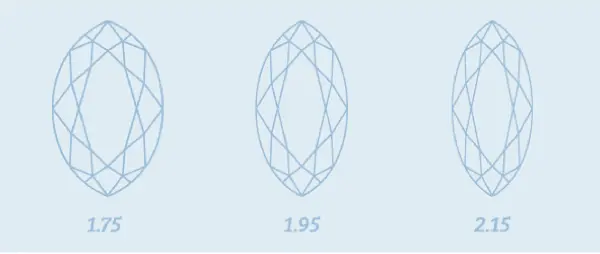
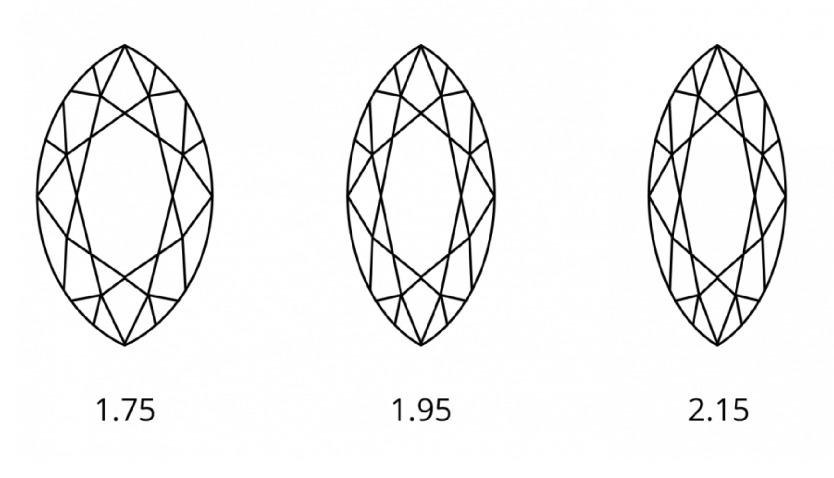
The most popular length-to-width ratios for marquise cut diamonds range from 1.75 to 2.15.
Symmetry is crucial for marquise cut diamonds. The two end points should align perfectly, and the left and right sides should closely mirror each other. Even minor misalignment can cause the diamond to appear off-centre in the final setting.
53% – 63%
58% – 62%
Marquise diamonds can display a bow-tie effect, which may vary from barely noticeable to quite pronounced. This effect cannot be determined from the diamond certificate or dimensions alone and must be evaluated through visual inspection.
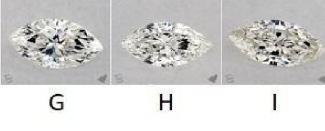
For marquise diamonds, we recommend a colour grade of D, E or F, particularly if the stone will be set in white gold or platinum. The elongated outline of a marquise carries colour further through the stone than a round of the same weight, so warmth that would go unnoticed elsewhere can show face-up. Staying in the colourless range keeps the diamond reading bright and white against the metal.

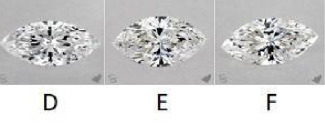
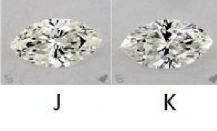
Recommended · D to F
Marquise cut diamonds can effectively hide inclusions when they are well cut, so you don't necessarily need to invest in higher clarity ratings. Many diamonds in lower clarity grades can still appear eye-clean. For optimal clarity and value, we recommend looking at SI1 to VS2 grades, but it's crucial to assess each diamond individually based on its visual appearance.
Recommended · SI1 to VS2
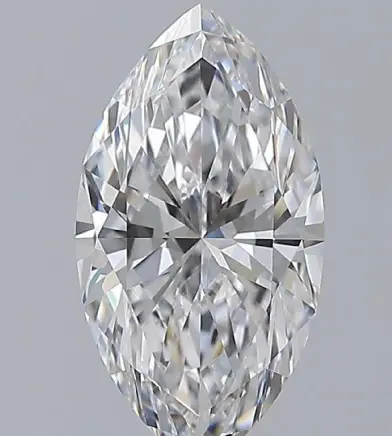
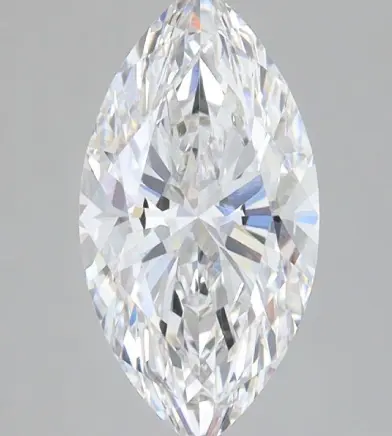
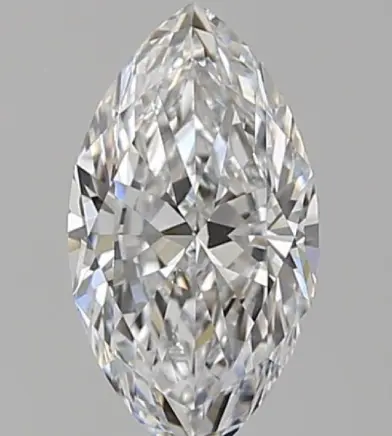
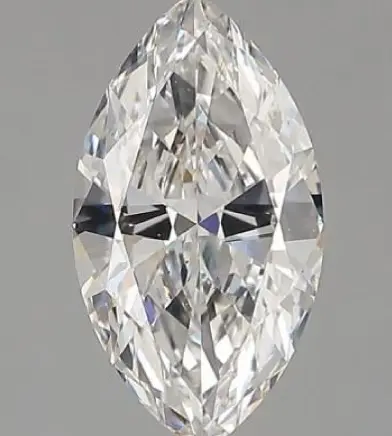
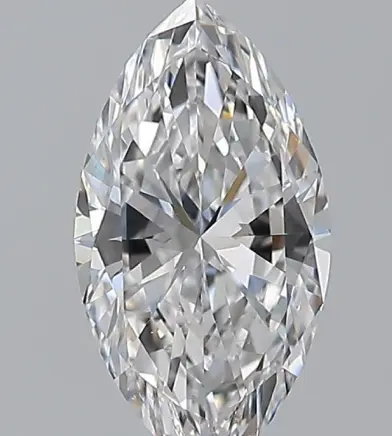
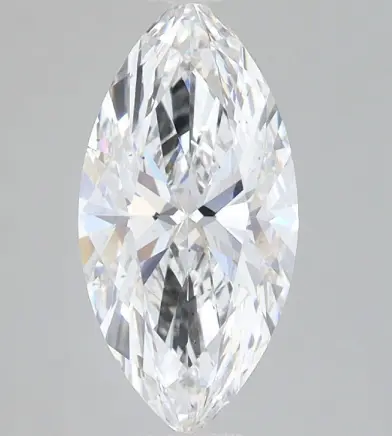
Ratio
The ideal ratio for the Marquise is 1.85 to 2.
We find anything above 2 is too skinny and long and below 1.8 is too short and wide.
What a marquise's measurements mean in carat weight. Because it is the most elongated shape we cut, a marquise reads far larger than its weight suggests — the numbers below are where that shows. Every row from 0.30ct up is the median of real certified marquise stones in our own inventory, with the sample size beside it; the smaller sizes come from our diamond supplier's book.
| Length × width | Carat weight | Typical range | Based on |
|---|---|---|---|
| 2.0 × 1.0 mm | 0.01 ct | — | Calculated |
| 2.5 × 1.3 mm | 0.02 ct | — | Supplier measurement |
| 3.0 × 1.5 mm | 0.04 ct | — | Supplier measurement |
| 3.5 × 1.9 mm | 0.05 ct | — | Supplier measurement |
| 4.0 × 2.0 mm | 0.06 ct | — | Supplier measurement |
| 4.5 × 2.3 mm | 0.09 ct | — | Supplier measurement |
| 5.0 × 2.8 mm | 0.16 ct | — | Supplier measurement |
| 6.0 × 3.3 mm | 0.29 ct | — | Supplier measurement |
| 6.5 × 3.5 mm | 0.30 ct | 0.30–0.32 ct | 154 stones |
| 7.0 × 3.7 mm | 0.33 ct | 0.30–0.40 ct | 402 stones |
| 7.5 × 3.9 mm | 0.41 ct | 0.37–0.50 ct | 471 stones |
| 7.9 × 4.2 mm | 0.50 ct | 0.47–0.60 ct | 258 stones |
| 8.0 × 4.2 mm | 0.51 ct | 0.47–0.60 ct | 775 stones |
| 9.0 × 4.7 mm | 0.70 ct | 0.61–0.81 ct | 1,019 stones |
| 10.0 × 5.3 mm | 1.04 ct | 0.96–1.09 ct | 3,821 stones |
| 11.0 × 6.0 mm | 1.48 ct | 1.22–1.54 ct | 4,188 stones |
| 11.4 × 6.0 mm | 1.50 ct | 1.43–1.54 ct | 464 stones |
| 12.0 × 6.1 mm | 1.57 ct | 1.50–1.77 ct | 2,991 stones |
| 12.7 × 6.6 mm | 2.00 ct | 1.99–2.60 ct | 93 stones |
| 13.0 × 6.7 mm | 2.09 ct | 2.00–2.54 ct | 1,256 stones |
| 14.0 × 7.2 mm | 2.58 ct | 2.51–3.07 ct | 1,481 stones |
| 15.0 × 7.7 mm | 3.09 ct | 3.01–3.65 ct | 704 stones |
| 16.0 × 8.4 mm | 4.04 ct | 3.90–4.10 ct | 1,346 stones |
| 17.0 × 9.0 mm | 5.01 ct | 4.37–5.09 ct | 155 stones |
| 18.0 × 9.3 mm | 5.53 ct | 5.05–6.13 ct | 83 stones |
| 19.0 × 10.1 mm | 7.01 ct | 6.08–7.09 ct | 87 stones |
Rows from 0.30 ct up are the median of our own GIA and IGI certified stones, with the sample size shown and the typical range being the middle 80% of that bucket. Smaller sizes come from our diamond supplier's own book where it carries the shape, and are calculated from the trade weight formula where it does not. Covers 2.0 mm to 19.0 mm. Snapshot 2026-08-30.
Length and width give an indicative weight range. Depth, girdle thickness and other proportions also affect weight, so this table is an estimate. Use the individual grading report or a measured loose-stone weight for an exact figure. For every other shape, and a converter that works both ways, see the full diamond size chart.
Choose a carat weight to see what a natural and a lab-grown marquise diamond cost today, or enter your budget to see the size it buys. Each figure is the typical price of the marquise diamonds available through us at the grade shown under the results, worked out every night; follow its link to see the real stones.
1 ct marquise · Natural
about A$8,368
Typical price · based on 22 diamonds available through us
Listed now, at or under this price
1 ct marquise · Lab-grown
about A$1,537
Typical price · based on 157 diamonds available through us
Listed now, at or under this price
At this size, lab-grown costs about 80% less than natural.
Natural: E–F colour, VS2 clarity, excellent cut for rounds. Lab-grown: E colour, VS1 clarity, ideal cut for rounds. GST included.
Put it in an engagement ringTypical prices of the diamonds available through us, updated 14 November 2026. See every shape and size in our diamond price guide.
Marquise is the most elongated of the brilliant cuts. The natural alternatives are the Oval Buying Guide and the Pear Buying Guide — same brilliant facet pattern, different outline. For a single-page side-by-side across all ten shapes, see our Diamond Shape Comparison. Or jump straight to our engagement ring designs when you're ready to choose a setting.
Made personal, at Anny's
Melbourne CBD
Email us before visiting Collins Street. Please wait for our email confirmation before coming in.
Arrange your visitOur Frankston home
Visit us to talk through your ideas, explore designs and find your perfect fit.
Explore our Frankston showroomTypical engagement and bridal ring turnaround: 3–4 weeks from CAD sign-off. We also have 2-week and 48-hour options for engagement and bridal rings. Get in touch and we'll help find an option that works for your timeframe.
Typical repair turnaround: 1 to 7 business days, depending on complexity and customer urgency
Anny's Manufacturing JewellersABN 88 447 171 579