

Melbourne CBD
Melbourne showroom
257 Collins Street, Level 3Melbourne VIC 3000
Email us before visiting Collins Street. Please wait for our email confirmation before coming in.
Arrange your visitDiamond Education · Buying Guide
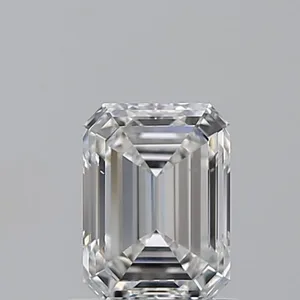
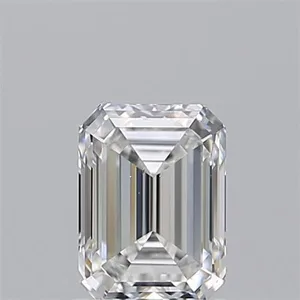
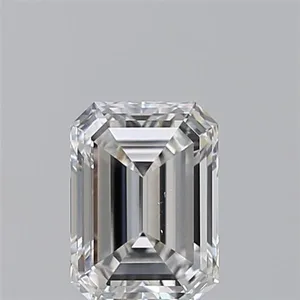
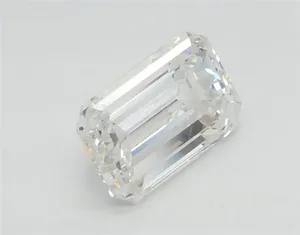
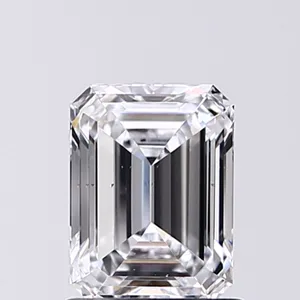
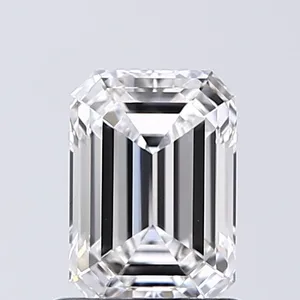
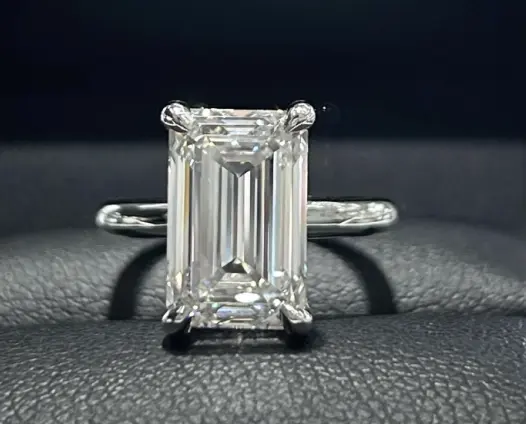
The emerald cut diamond typically features 57 facets and is known for its elongated, rectangular shape with distinctive step cuts, which create a "hall of mirrors" effect. Although not as sparkly as other cuts, emerald cuts often appear larger than diamonds of the same carat weight in other shapes. However, they tend to reveal more colour and, due to their large table, can accentuate even small flaws. As a result, buyers should be cautious of visible inclusions when selecting an emerald cut diamond.
Excellent emerald cut specifications
61% – 69%
61% – 67%
1.40 – 1.50
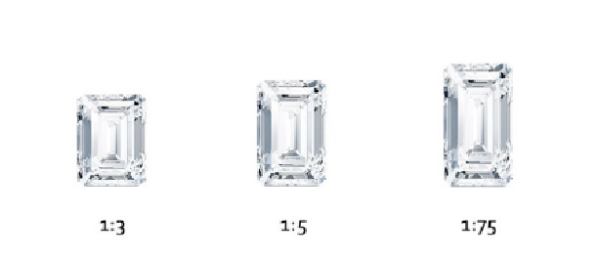
The traditional emerald cut typically features a length-to-width ratio between 1.3 and 1.4. For a more elongated look or to create the illusion of longer fingers, seek a ratio between 1.5 and 1.6. Factors such as depth percentage, table percentage, and length-to-width ratio significantly influence the diamond's appearance and light reflection. Depth below 74% can be a shortlist preference, but table and depth ranges do not guarantee an attractive cut. Compare the complete proportions, report and clear video or an in-person view under more than one light source.
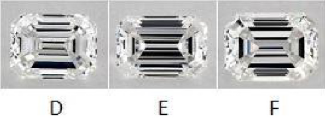
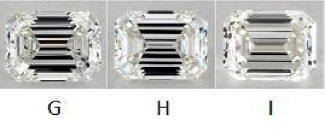
In emerald cut diamonds, colour is more pronounced due to their large table and step cuts, which can highlight the stone's natural hue more than other shapes. We offer D–H colour grades; compare individual stones across that range in your preferred setting and lighting.
Offered range · D to H

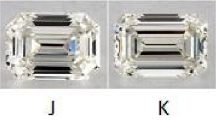
For the best value, we suggest aiming for a VS2 clarity grade. Clarity grades SI1 and SI2 are usually not advisable for step cuts. Unlike brilliant cuts, which are designed to maximise sparkle, step cuts do not scatter light as effectively, making inclusions more visible. With their open facets, inclusions in step cuts are more apparent, so it's wise to choose a clarity grade no lower than VS2.
Recommended · VS2 or better
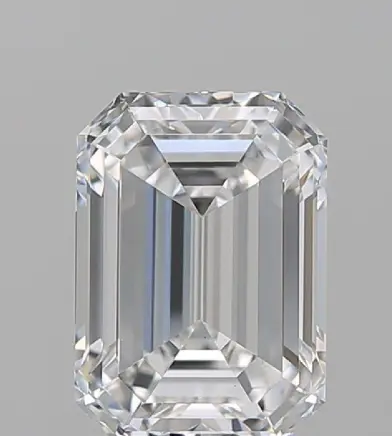
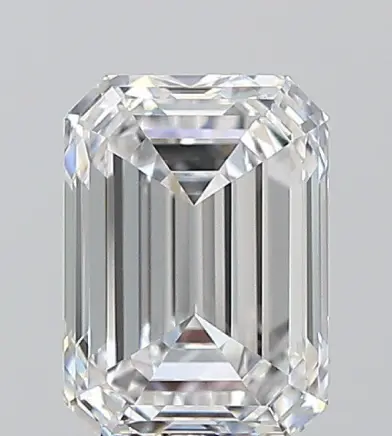
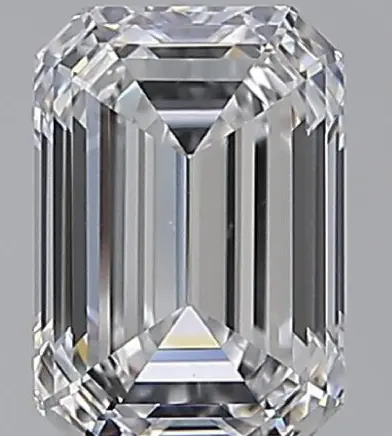
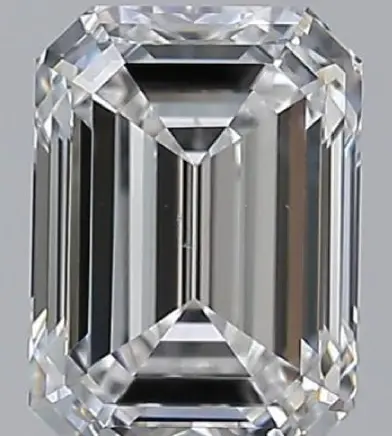
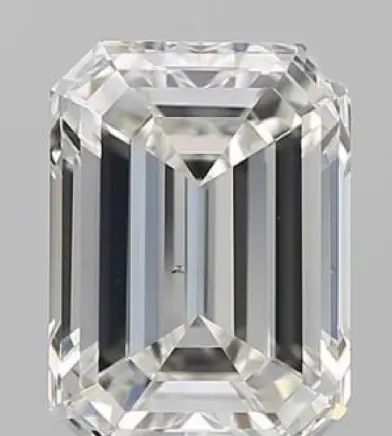
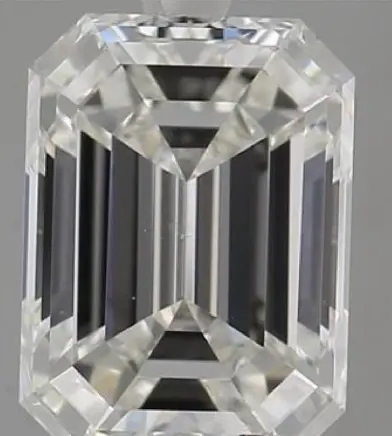
What an emerald cut's measurements mean in carat weight. Step cuts carry their weight differently from brilliants, which is why these figures are measured rather than borrowed from another shape's formula. Every row from 0.30ct up is the median of real certified emerald cuts in our own inventory, with the sample size beside it; the smaller sizes come from our diamond supplier's book.
| Length × width | Carat weight | Typical range | Based on |
|---|---|---|---|
| 2.0 × 1.4 mm | 0.03 ct | — | Calculated |
| 2.5 × 1.8 mm | 0.058 ct | — | Calculated |
| 3.0 × 2.3 mm | 0.10 ct | — | Supplier measurement |
| 3.8 × 2.6 mm | 0.17 ct | — | Supplier measurement |
| 4.0 × 3.0 mm | 0.24 ct | — | Supplier measurement |
| 4.5 × 3.2 mm | 0.30 ct | 0.30–0.33 ct | 79 stones |
| 4.7 × 3.4 mm | 0.33 ct | 0.31–0.38 ct | 120 stones |
| 4.9 × 3.5 mm | 0.40 ct | 0.36–0.42 ct | 120 stones |
| 5.0 × 3.6 mm | 0.45 ct | 0.40–0.50 ct | 425 stones |
| 5.3 × 3.8 mm | 0.50 ct | 0.43–0.51 ct | 271 stones |
| 5.5 × 3.9 mm | 0.53 ct | 0.48–0.61 ct | 1,053 stones |
| 6.0 × 4.3 mm | 0.71 ct | 0.66–0.80 ct | 1,490 stones |
| 6.5 × 4.7 mm | 1.00 ct | 0.84–1.03 ct | 3,520 stones |
| 7.0 × 4.9 mm | 1.06 ct | 1.01–1.20 ct | 2,957 stones |
| 7.5 × 5.4 mm | 1.51 ct | 1.33–1.57 ct | 2,846 stones |
| 8.0 × 5.7 mm | 1.70 ct | 1.53–2.05 ct | 4,548 stones |
| 8.4 × 6.0 mm | 2.00 ct | 1.89–2.12 ct | 173 stones |
| 9.0 × 6.4 mm | 2.51 ct | 2.04–2.80 ct | 4,915 stones |
| 9.6 × 6.8 mm | 3.00 ct | 2.89–3.11 ct | 104 stones |
| 10.0 × 6.9 mm | 3.09 ct | 3.01–3.58 ct | 4,897 stones |
| 11.0 × 7.6 mm | 4.10 ct | 4.01–5.04 ct | 2,507 stones |
| 12.0 × 8.3 mm | 5.51 ct | 5.02–6.20 ct | 876 stones |
| 13.0 × 9.1 mm | 7.09 ct | 6.52–8.02 ct | 447 stones |
| 14.0 × 9.8 mm | 9.02 ct | 8.03–10.07 ct | 275 stones |
| 15.0 × 10.4 mm | 10.59 ct | 10.03–12.04 ct | 173 stones |
Rows from 0.30 ct up are the median of our own GIA and IGI certified stones, with the sample size shown and the typical range being the middle 80% of that bucket. Smaller sizes come from our diamond supplier's own book where it carries the shape, and are calculated from the trade weight formula where it does not. Covers 2.0 mm to 15.0 mm. Snapshot 2026-08-30.
Length and width give an indicative weight range. Depth, girdle thickness and other proportions also affect weight, so this table is an estimate. Use the individual grading report or a measured loose-stone weight for an exact figure. For every other shape, and a converter that works both ways, see the full diamond size chart.
Choose a carat weight to see what a natural and a lab-grown emerald diamond cost today, or enter your budget to see the size it buys. Each figure is the typical price of the emerald diamonds available through us at the grade shown under the results, worked out every night; follow its link to see the real stones.
1 ct emerald · Natural
about A$5,994
Typical price · based on 223 diamonds available through us
Listed now, at or under this price
1 ct emerald · Lab-grown
about A$1,546
Typical price · based on 224 diamonds available through us
Listed now, at or under this price
At this size, lab-grown costs about 75% less than natural.
Natural: E–F colour, VS2 clarity, excellent cut for rounds. Lab-grown: E colour, VS1 clarity, ideal cut for rounds. GST included.
Put it in an engagement ringTypical prices of the diamonds available through us, updated 11 October 2026. See every shape and size in our diamond price guide.
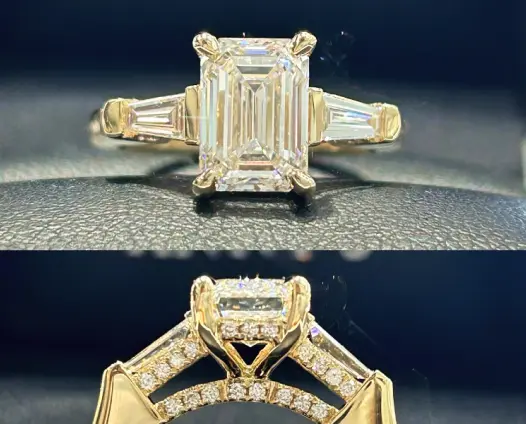
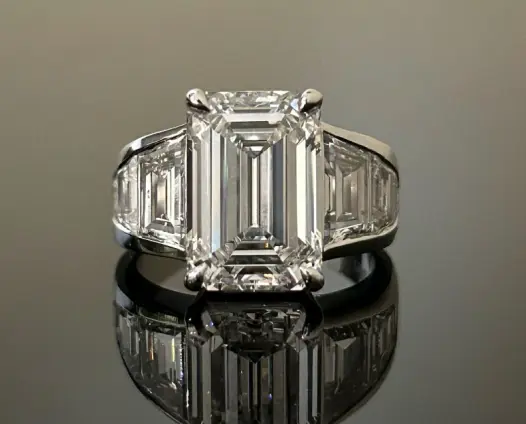
Emerald is part of the step-cut family. The closest cousin is the square Asscher Buying Guide; for a brilliant-faceted rectangular outline with more sparkle, see the Radiant Cut Buying Guide. For a single-page side-by-side across all ten shapes, see our Diamond Shape Comparison. Or jump straight to our engagement ring designs when you're ready to choose a setting.
Made personal, at Anny's
Melbourne CBD
Email us before visiting Collins Street. Please wait for our email confirmation before coming in.
Arrange your visitOur Frankston home
Visit us to talk through your ideas, explore designs and find your perfect fit.
Explore our Frankston showroomTypical engagement and bridal ring turnaround: 3–4 weeks from CAD sign-off. We also have 2-week and 48-hour options for engagement and bridal rings. Get in touch and we'll help find an option that works for your timeframe.
Typical repair turnaround: 1 to 7 business days, depending on complexity and customer urgency
Anny's Manufacturing JewellersABN 88 447 171 579