GEMSTONE GUIDE · UNDERSTAND YOUR OPTIONS
Natural, treated or lab-created gemstones: what are you buying?
The short answer
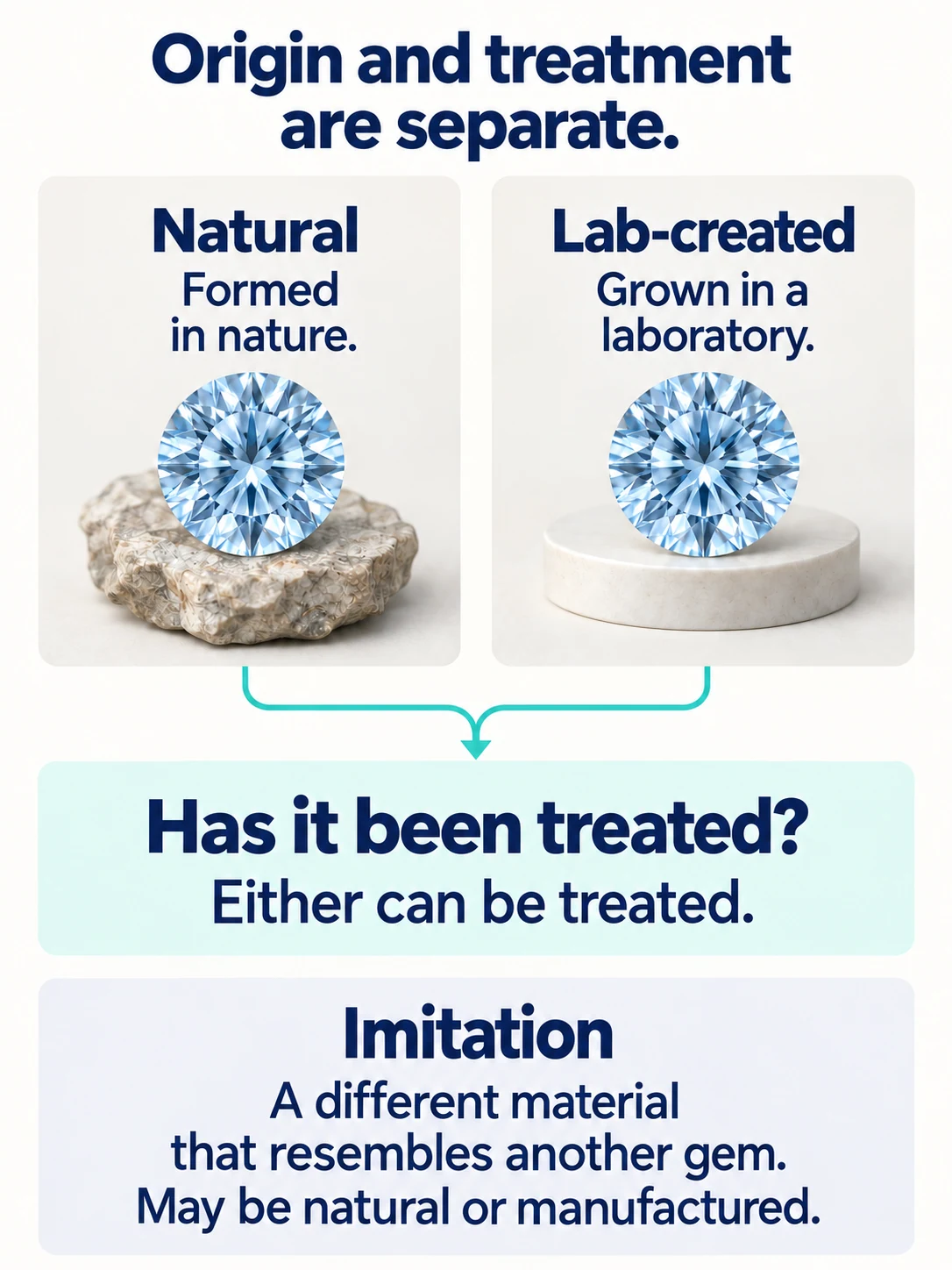
Natural describes how a gemstone formed. Treated describes what happened to it afterwards. A sapphire can form in the earth and then be heated to improve its colour. A lab-created sapphire is also sapphire, grown by people. An imitation sapphire is a different material made or chosen to resemble one.
Before buying, establish the stone’s identity, whether it formed naturally or in a laboratory, and any treatment. Those answers help you compare options and understand its care.
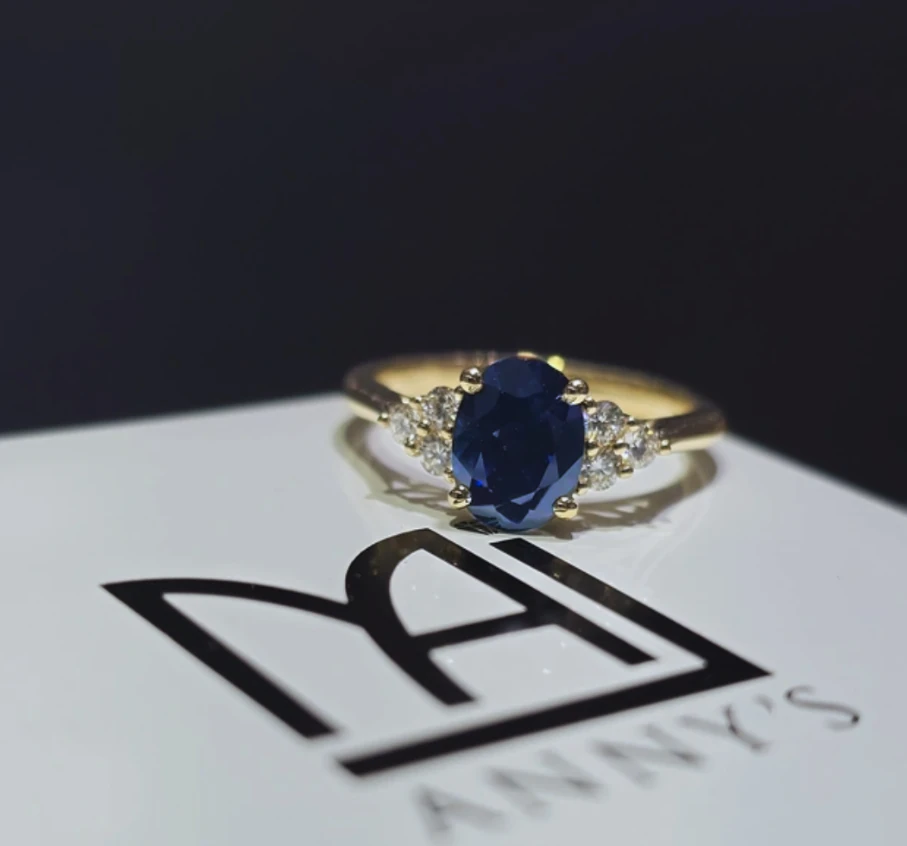
Photo: supplied by Anny’s.
What the labels actually mean
These labels answer different questions. A stone can be both natural and treated, or lab-created and treated.
| Term | What it tells you | What to check |
|---|---|---|
| Natural | The material formed in nature. | Has it subsequently been treated? “Natural” alone does not answer that. |
| Treated | A process beyond normal cutting and polishing has altered the stone’s appearance or other properties. | The exact process, its stability and any special care. |
| Lab-created or synthetic | A manufactured counterpart of a natural gem, such as sapphire, ruby or emerald. | The full gemstone name and any subsequent treatment. |
| Simulant or imitation | A different material used to resemble another gemstone. | Its actual identity: for example, glass used to imitate sapphire. |
An imitation can be a natural or manufactured material. Ask for its actual name, rather than only the gemstone it resembles. GIA explains synthetic gems and imitations.
Does natural mean untreated?
No. Cutting and polishing do not, by themselves, make a stone “treated”; processes such as heating or filling are separate matters. CIBJO’s gemstone definitions distinguish formation from subsequent treatment.
If you specifically want an untreated stone, ask what evidence supports that description. A report saying “no indications of heating” addresses heating; it should not be expanded into a claim that every possible treatment has been ruled out. Keep the laboratory’s exact wording and scope in mind.
Common treatments: heating and emerald oiling
Conventional heating and emerald oiling are established treatments that buyers encounter routinely. Their presence alone need not rule out a beautiful gemstone. Disclosure and appropriate care still matter.
Conventional heat treatment in sapphire and ruby
Heating is common in sapphire, and most rubies have been heated. It can improve colour or clarity and is an accepted treatment for sapphire. GIA explains commonly heat-treated gems and what to check in its ruby buyer’s guide.
Ordinarily heated sapphire and ruby can suit frequently worn jewellery, depending on the stone’s condition, setting and wear. Ask whether “heated” means conventional heating alone, or whether diffusion or filling is also present. Those processes need separate explanation. GIA’s sapphire care guide.
Emerald oiling: very common, with care considerations
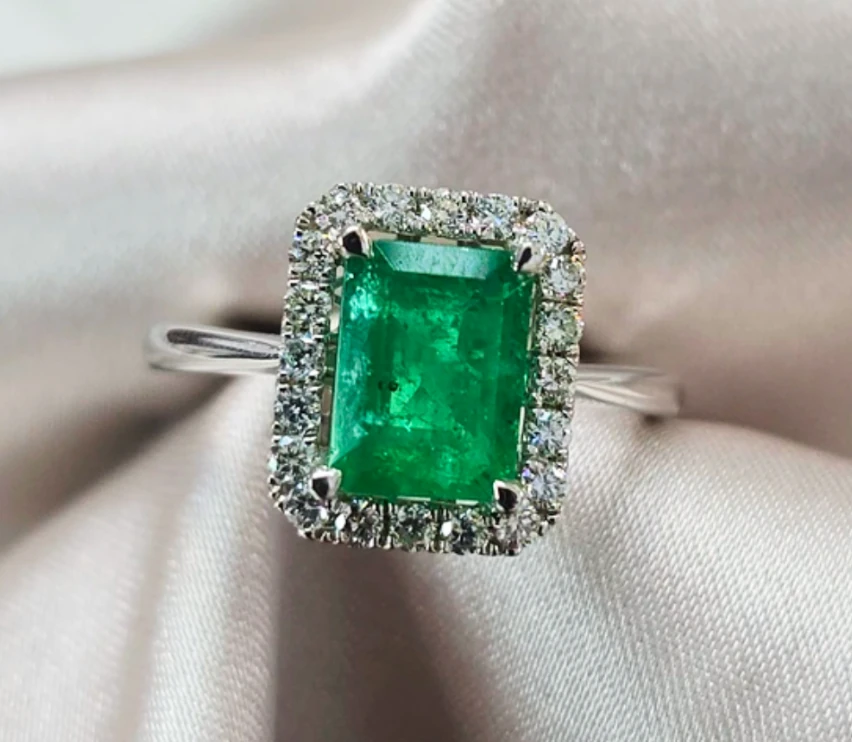
Photo: supplied by Anny’s.
Emeralds often have fractures that reach the surface. Colourless oil makes these less visible, improving apparent clarity while leaving the fractures in place.
Filling with oil, resin or other materials is common in natural emeralds. Ask whether the filler is colourless oil, resin or another material, and how extensive the treatment is. GIA’s emerald care guide.
GIA uses F1, F2 and F3 for minor, moderate and significant clarity enhancement. These describe treatment extent, not overall quality. GIA’s report explanation.
Fillers can change with heat, light or chemicals. Avoid steam and ultrasonic cleaning; use gentle cleaning with warm, soapy water and discuss future maintenance with your jeweller.
Other treatments: glass filling and colour alteration
Glass filling, diffusion, irradiation and dyeing need their own descriptions. Their effects on appearance, value and care differ, so a vague “treated” label is not enough.
Glass-filled ruby
Lead-glass filling can make heavily fractured ruby look clearer. It needs gentler handling than ordinarily heated ruby: heat, chemicals and even mild acids can damage the filler. Some material is identified as a ruby–glass composite; retain that description.
Tell your jeweller before cleaning, resizing or repairs. GIA recommends a damp cloth for filled ruby. Ruby care guidance.
Diffusion, including beryllium treatment
Diffusion uses heat to introduce colour-altering elements into the stone. Beryllium treatment is a form of diffusion, distinct from conventional heating. Colour penetration varies and can reach throughout a sapphire; shallow colour may be affected by recutting. GIA’s diffusion explanation.
Ask for explicit disclosure and suitable laboratory evidence. Diffusion-treated sapphires generally cost less than sapphires treated by conventional heating, making the distinction relevant to price comparisons. GIA’s sapphire buyer’s guide.
Irradiation
Irradiation changes colour. Its significance depends on the gemstone: commercial blue topaz commonly owes its colour to irradiation followed by heating. This can be a legitimate, disclosed treatment. Ask about colour stability and care for the particular stone.
Dyeing and surface coatings
Dyes introduce colour; coatings add a surface layer. Some dyes fade or react to solvents, while coatings can scratch. Coloured oil used to change an emerald’s colour should be distinguished from colourless clarity-enhancing oil. GIA’s treatment guide.
The concern is concealment or misrepresentation. Buyers should know which treatment they are paying for and how it affects the stone.
Is a lab-created gemstone a good choice?
A lab-created ruby, sapphire or emerald has essentially the same chemical, physical and optical properties as its natural counterpart. The main distinction is where it formed.
Choose by the stone’s colour, proportions, condition and suitability for your design. Lab-created gems still need care and are not necessarily flawless or untreated: GIA describes colour treatment after laboratory diamond growth. Environmental and sourcing claims need their own evidence.
Growth methods vary, and can affect appearance and cost. You do not need to memorise the manufacturing process to shop well; you need an accurate description of the stone. GIA’s synthetic gemstone guide.
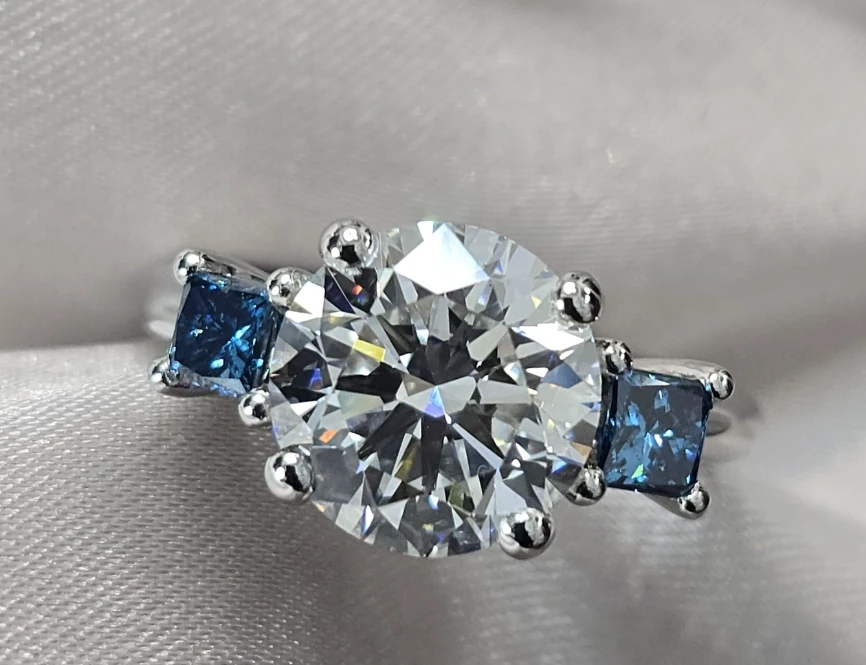
Photo: supplied by Anny’s.
Compare the stone, not just the price
Start with Anny’s current gemstone listings, then compare colour, shape, measurements, condition and disclosed treatment. Carat weight alone is not enough: two stones of the same weight can look different in size and quality.
Compare appearance and specifications alongside natural or lab-created status and treatment. An untreated label alone does not tell you whether a stone is attractive or well cut.
Ask for the treatment details and available documentation before treating two prices as equivalent. A loose-stone price covers the gemstone; the metal, setting, design and manufacture need to be included in a separate complete-jewellery quote.
Five questions to ask before buying
A GIA coloured-stone identification report records identity and detectable treatments. Geographic-origin reporting is an additional service for certain gemstones. A report is useful evidence; a seller’s “AAA” label is not a universal laboratory grade. GIA explains coloured-stone grading.
A few useful questions
Can you tell whether a gemstone is natural from a photograph?
Not reliably. Colour, sparkle or visible inclusions in a photograph cannot establish natural origin or rule out treatment. Some cases need specialist equipment and laboratory analysis. How GIA tests coloured stones.
Is cubic zirconia a lab-grown diamond?
No. Jewellery cubic zirconia is manufactured, but it is a different material from diamond. When used to resemble diamond, it is a diamond simulant. “Lab-made” without the material’s proper name is not a complete description.
Choose a gemstone with Anny’s
At Anny’s, we design and manufacture custom-made jewellery around your chosen stone. Bring your ideas, budget and any paperwork you already have so we can discuss a suitable design and the information you need before deciding.
Frankston: 92 Young Street. Walk-ins welcome; no appointment required. Monday–Friday 10am–5pm and Saturday 10am–3pm.
Melbourne CBD: Level 3, 257 Collins Street. Email us before visiting Collins Street for engagement-ring and wedding-ring consultations. Please wait for our email confirmation before coming in. Remodelling consultations take place at our Frankston workshop.
Email info@annys.com.au to discuss your gemstone or arrange a CBD consultation.