Engagement Rings
Engagement Ring Settings Explained: Solitaire, Halo, Trilogy, Pavé and Bezel
The short answer? Your "setting" is the metalwork that holds your stone — and it decides both the look and how well your ring survives everyday life. In Australia the five most-loved settings are solitaire, halo, trilogy, pavé and bezel: solitaire is the timeless classic, halo and pavé add the most sparkle, and the bezel is the most protective. We hand-craft all of them, built to last — and the setting we recommend most across the counter is the classic six-claw solitaire.
- For busy hands, a lower-set ring with more claws protects best — height and claw count matter more than the style name.
- Whichever you choose, have the claws checked every 6–12 months; a worn one is simply retipped, not replaced.
What is an engagement ring setting (and is it the same as the shape)?
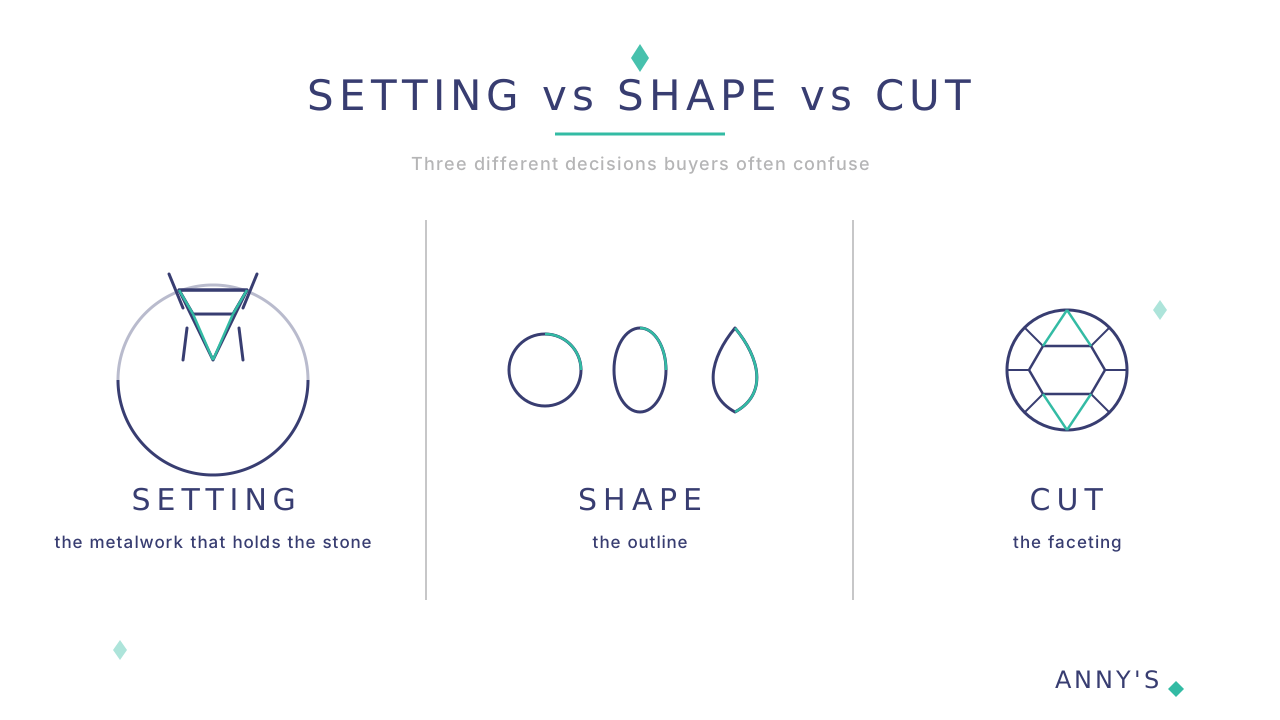
A setting (also called the mounting) is the metalwork that holds your stone to the band. GIA frames the job in two halves: the first demand is practical — that the setting "will be secure enough to hold the stone safely in place" — but "there are many aesthetic concerns as well" (GIA). It's a different thing from your diamond's shape (its outline — round, oval, pear) and its cut (how well it's faceted) — both their own decisions, covered in our diamond shape comparison guide.
One word first: claw and prong are the same thing. In Australia and the UK we say claw; prong is the American word for the identical metal finger that grips your stone — "the prongs are pressed over the crown facets to keep the stone in place" (Antique Jewelry University). We'll use "claw" from here.
 View full size
What are the five most popular engagement ring settings (compared)?
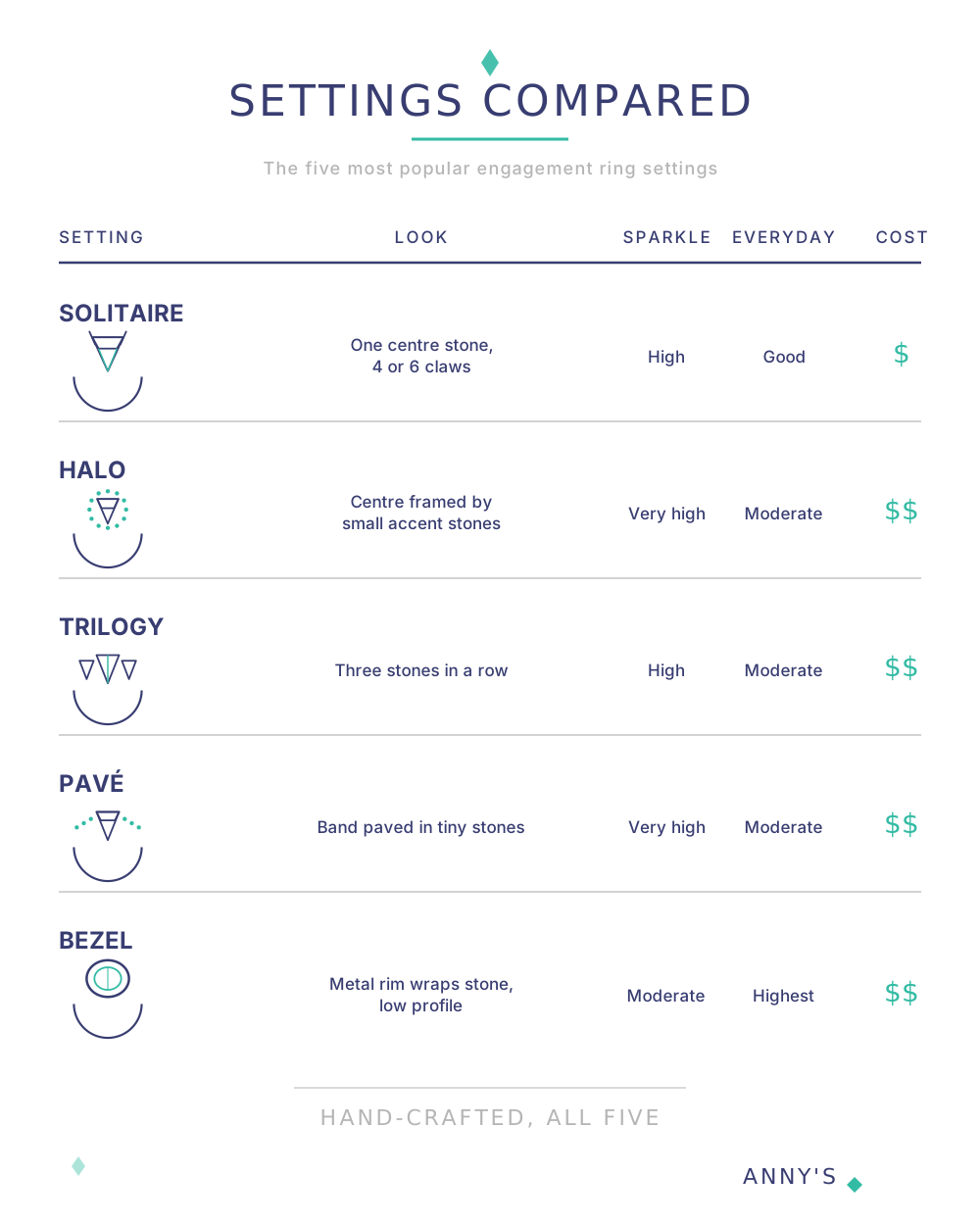
The five settings most Australian buyers choose between are solitaire, halo, trilogy, pavé and bezel — from a single clean stone to a protective metal rim. The chart compares them at a glance; the sections below expand each one.
 View full size
Solitaire — one stone, all the spotlight
A solitaire holds a single centre stone with no accent stones — GIA says buyers choose it "for its classic elegance and its ability to showcase the beauty of the stone" (GIA). Claw (prong) settings are the most common choice overall: 35% of engagement rings carry one in The Knot's 2024 study (The Knot, 2024) — that figure counts claw settings of every style, not solitaires specifically, and it's an international study with no clean Australia-only equivalent.
The one real decision is 4 claws or 6: four "mean less metal on the diamond, letting the center stone be the star of the show", while GIA’s own advice is blunter — "if you’re not sure how many prongs to pick, go with six", because "if a prong is accidentally sheared off in a four-prong setting, the center stone can easily fall out" (GIA). (Claw count doesn't change sparkle — that's the cut's job.)
Halo — make a smaller stone read bigger
A halo rings the centre stone with small accent stones (melee) so it catches more light and looks larger — GIA puts it simply: "the center stone can appear to be the size of the halo" (GIA). The hidden halo — melee tucked under the centre, visible only from the side — is now one of the most-requested looks, on 18% of engagement rings in The Knot's 2024 study (international) (The Knot, 2024). The trade-off is upkeep: lots of tiny stones that can loosen over the years if they're not expertly set.
Trilogy — past, present and future
A trilogy (three-stone) ring sets three stones along the band, the centre usually larger or raised and flanked by two matched stones. As Wikipedia describes it, "the three stones symbolize the past, present (center stone), and future" (Wikipedia) — a meaning popularised by a De Beers campaign that, trade magazine JCK records, "first began in 2000" as the "three-stone anniversary ring" before "past, present, and future" proved "a potent positioning" (JCK).
Pavé — a band paved in sparkle
Pavé (say it "pah-vey", French for "to pave") sets many tiny stones close together so the metal almost disappears and the band reads as continuous sparkle — GIA calls it "a style of bead setting in which many small gems… are set close together to create an interlocking honeycomb pattern" (GIA). Each stone is held by minute beads of metal, not full claws — which gemmologist Renée Newman calls, in general, "a risky setting method in terms of possible stone damage": good diamonds, rubies and sapphires "can withstand the pressure of being pavé set", but more fragile stones don't always (Jewellery Business). So it's worth choosing a jeweller who sets it properly.
Bezel — the rub-over that shields your stone
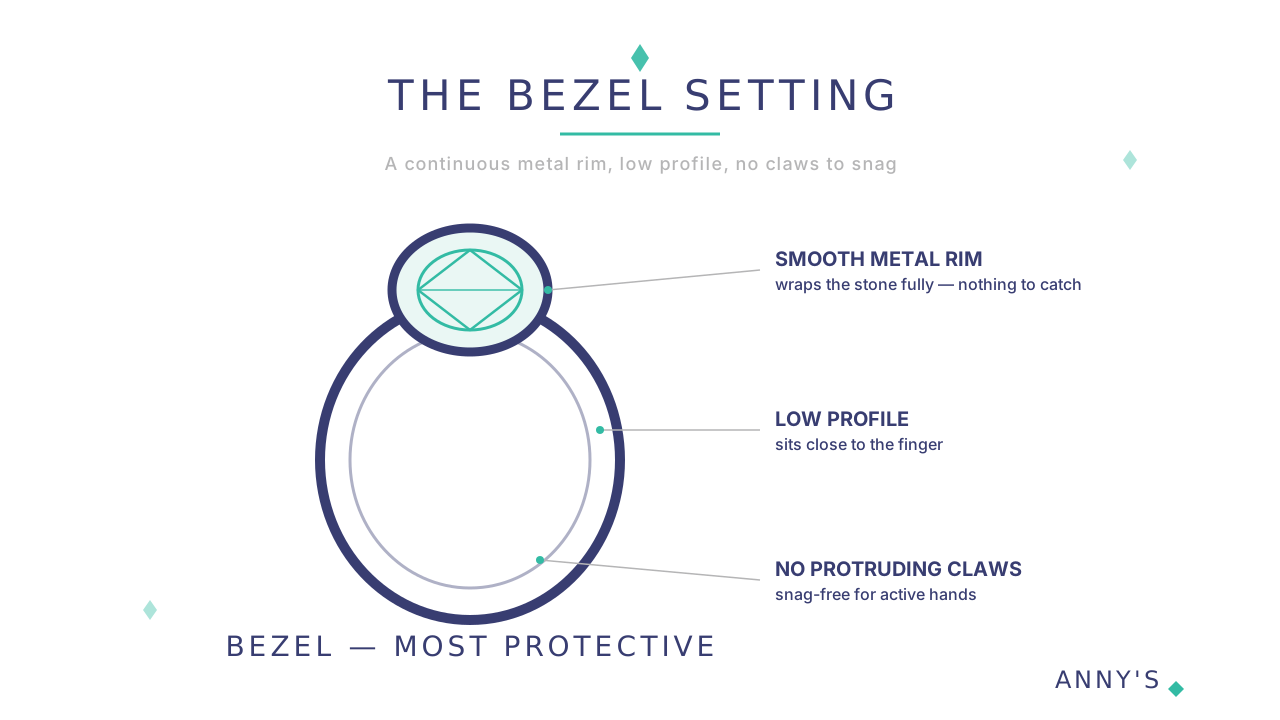
A bezel (we often call it a "rub-over" in Australia) holds the stone in a continuous metal rim that wraps fully or partly around it. GIA describes it as "a style in which a thin metal strip is pushed or hammered around a gem to hold it in place", one that "helps prevent the center stone from falling out" and "protects the girdle against bumps, bangs and other accidents" (GIA). Smooth and low-profile, with no claws to snag. The trade-off is that the rim covers the stone's edge, so a poorly cut diamond can look a little less bright — but with a well-cut stone you barely notice.
Which engagement ring setting is most durable for everyday wear?
The bezel is generally most secure and a sturdy six-claw the strongest open setting — but what matters more than the style name is how low the setting sits and how many claws hold the stone. Surveying jewellers for her trade-magazine piece, gemmologist Renée Newman reports their advice to "select a setting with at least six prongs for claw-set large diamonds," because with four, "if one prong… is damaged, it's easy to lose the stone" (Jewellery Business). And even a diamond isn't unbreakable — as GIA notes, it's "the hardest gemstone, but not necessarily the toughest… diamonds can be cleaved or fractured by a hard blow" (GIA). So the setting genuinely matters: it protects your stone through years of everyday knocks.
Where does that leave you? The bezel is the maximum-protection option for those who want it. But the setting we actually recommend most across the counter, for everyday hands, is a classic six-claw solitaire — the "Tiffany-style" setting: secure, easy to clean and inspect, and timeless. That's house experience from the bench, not a rule.
The honest first-party bit: worn claws are routine work for us — repairs make up roughly 25% of our business. That's why we build a little extra metal into every setting (roughly $300–$500 more in thicker claws, baskets and shoulders), so a ring wears for years instead of thinning out early. We frame that as building it properly rather than promising a fixed lifespan — but almost any setting, made well, can last. See our custom design and repairs service.
 View full size
Do claw and pavé settings need maintenance?
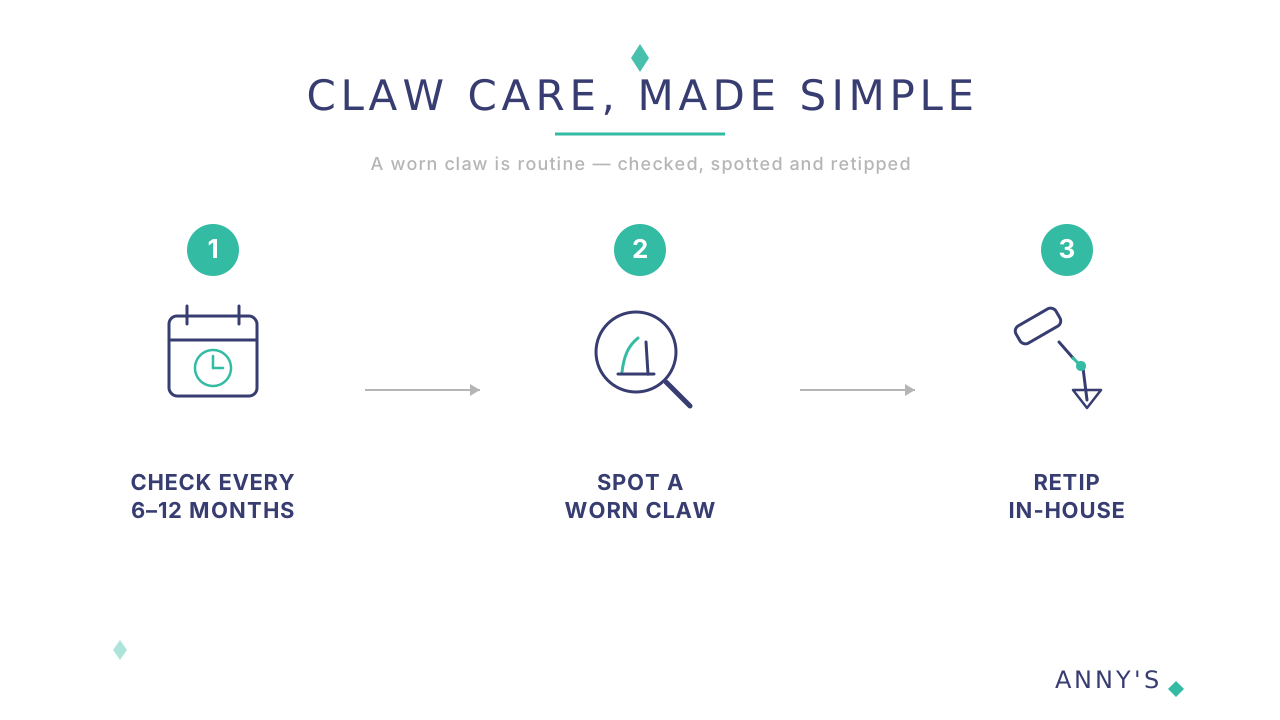
Yes — and it's simple. On a daily-worn ring, the claws should be professionally checked every 6–12 months. GIA advises getting the prongs "checked every six months for potential damage", and if that feels too often, using "your yearly wedding anniversary as a convenient reminder" (GIA); insurer Jewelers Mutual "recommends professional inspections and cleanings twice a year", and for a regularly worn engagement ring suggests "perhaps every three to four months" (Jewelers Mutual). Between checks, watch for a claw that looks thin, bent or lifted. GIA's own at-home test is simple: "You can check if a prong is loose by seeing if the stone moves when you gently push it (if it moves, it's loose)", and "gaps between the diamond and the setting are another warning sign" (GIA). The fix is usually small: a worn claw is retipped — fresh metal added to the tip rather than the whole setting rebuilt — which we do in-house with the laser welder, often in a day or two.
 View full size
How much does an engagement ring setting cost in Australia?
There's no clean, official Australian figure for a setting on its own, so we won't quote one we can't stand behind. The direction is clear, though: a plain solitaire setting costs the least, while halo, pavé and trilogy cost more for the extra stones and metalwork, and platinum sits above gold. The setting is only one part of the whole ring: at Anny's, complete engagement rings run roughly AUD $3,000–$6,000 with a lab-grown diamond and AUD $8,000–$30,000 with a natural diamond, depending on the centre stone, metal and design.
How does metal choice affect how a setting wears?
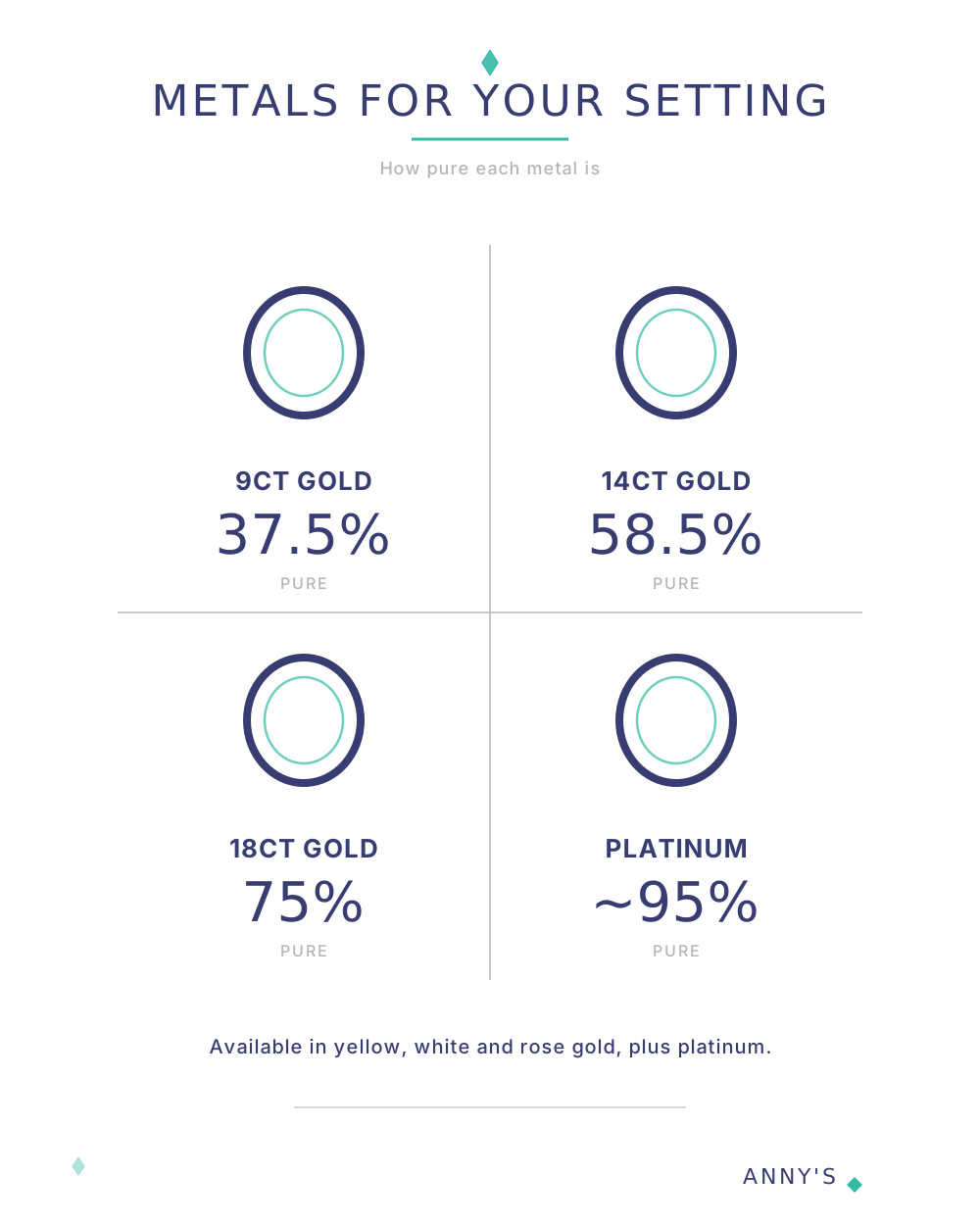
The metal also changes how fine claws and pavé beads hold up. The Australian favourites are 9ct gold (37.5% pure), 14ct (58.5%) and 18ct (75%), plus platinum (about 95% pure), in yellow, white and rose. There's no single "best", just trade-offs: platinum is dense and durable, developing a re-polishable patina rather than wearing thin; 18ct gold is the fine-jewellery sweet spot, though gold claws slowly thin and need retipping; 9ct gold is the most economical and paler, and can feel harder on the surface — but it’s the more brittle of the two in fine sections like claws, so "harder" isn’t the same as "lasts longer".
 View full size
So which engagement ring setting should you choose?
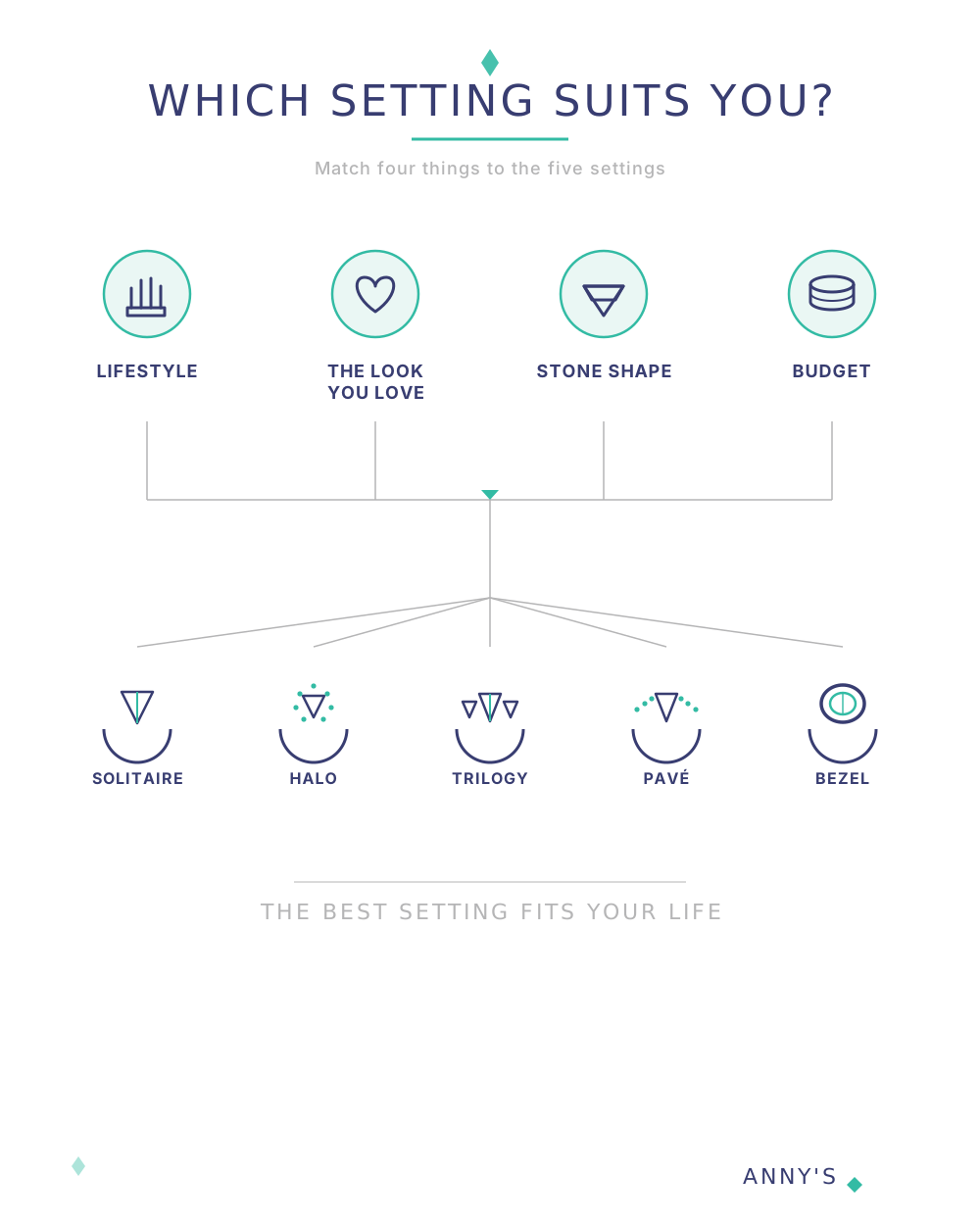
There's no single right answer — the best setting fits your life. Match it to four things: lifestyle, the look you love, your stone's shape and your budget. If your hands are busy — nursing, trades, little kids, the gym — a robust six-claw (our usual counter recommendation) or a lower-set ring shrugs off daily wear: a stone sitting close to the band has little proud of the finger to catch on gloves, tools or hair, and more claws spread the daily knocks across more contact points. Shape matters too: pointed stones like princess, pear and marquise need protective V-claws to cup their corners, and softer coloured stones often need more protection than open claws give — our FGAA-accredited gemmologist helps match the stone to a setting that protects it (see our diamond shape comparison guide and coloured-gemstone engagement rings). And then there's simply the look you fall for — which is allowed to win. For the full bench-level trade-off between four and six claws, see our solitaire engagement ring guide.
 View full size
Here's the part most buyers never get told, and it matters more than the setting style itself. A "delicate" or super-thin band can look elegant in a photo, but thin metal is very often a cost-cutting decision, not a design one — less gold in the shank and claws is simply cheaper to cast, and it's not always obvious from a photo or even in person. That's exactly why we build to the thickness and claw strength our bench experience shows survives daily wear (see the durability section above) rather than shaving metal to hit a lower price. One thing you can check for yourself on any ring, anywhere: ask the gram weight. A showroom can put it on a scale in front of you; a bare online listing usually won't. None of this means you're stuck choosing between a look you love and a ring that holds up — a well-built version of any setting on this page can be worn hard, every day, for years.
Frequently asked questions
Do pavé rings lose stones?
Only if they're poorly made. Pavé melee are held by tiny beads of metal, so well-set pavé is reliable while rushed, careless setting is risky (Jewellery Business). Choose a jeweller who sets it properly, have it checked regularly, and pavé holds beautifully for years.
Can my ring be resized or my setting changed later?
Yes. A plain solitaire or a band with stones only across the top resizes easily; a fully set or pavé band is trickier, because the metal can't be cut and rejoined without re-setting — still very doable in our workshop. A setting isn't forever, either: we can re-set your stone into a new design or rebuild a worn one as part of routine repairs and remodelling, so the ring can grow and change with you. See the journey of a custom ring.
Will a custom setting cost more or take longer than buying one in-store?
Custom manufacture takes approximately 3–4 weeks from CAD sign-off, subject to design complexity and workshop capacity. Consultation, sourcing and design approval happen before that window. Ready to Ship pieces dispatch from our warehouse in 1–3 business days; delivery time is additional. On cost, you're paying for the stone, metal and labour rather than a markup on a fixed-range ring — and you get a setting matched to your stone and finger.
Can you wear an engagement ring during hands-on work?
Generally yes, in a well-built low-profile setting — but a few situations call for taking it off regardless of setting: heavy lifting or machinery (crush and impact risk), swimming or the gym (rings can slip off with grip or temperature changes), and anything involving strong chemicals or repeated hard knocks. For what suits hands-on daily work, see which setting should you choose above.
Ready to see them in person?
The easiest way to choose is to try a few on. You're welcome at our Frankston workshop and showroom (walk-ins welcome — the bench is right there), or Email us before visiting our Melbourne CBD showroom for engagement and wedding rings. We'll talk through the look, your lifestyle and your stone, make a setting built to last, and help you hand-pick a certified diamond. You Imagine. We Create. For Collins Street, please wait for our email confirmation before coming in.
Typical engagement and bridal ring turnaround: 3–4 weeks from CAD sign-off. We also have 2-week and 48-hour options for engagement and bridal rings. Get in touch and we'll help find an option that works for your timeframe.