The cheap engagement ring trap: how to buy well
An affordable engagement ring can be excellent value. The cheap-ring trap is paying for the look you want without checking how the ring is built. Before paying a deposit, ask for the finished band and claw dimensions, who will make the ring and set its stones, and exactly what the quote and aftercare include. Compare the diamond, metal, workmanship and service behind the complete ring.
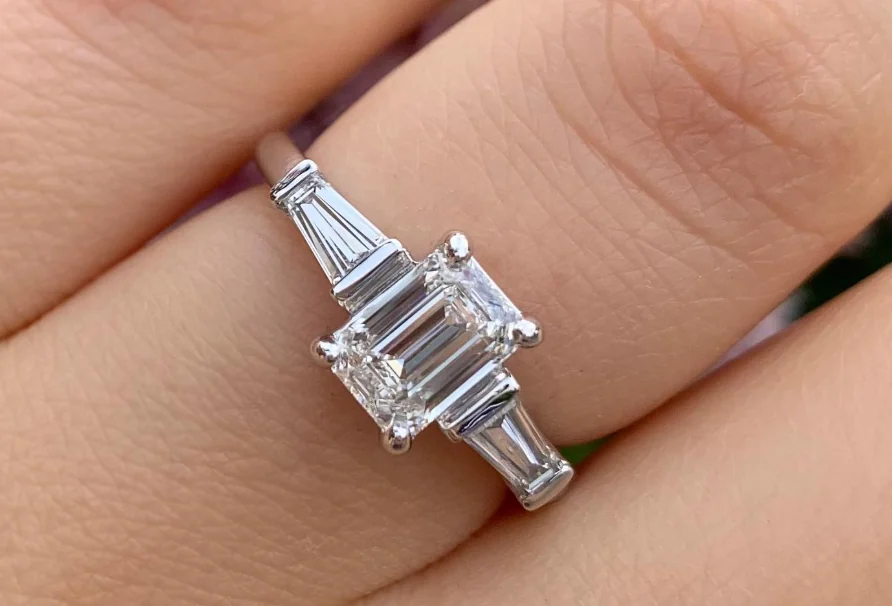
A real Anny's example: 2.5g to 5g
In the remake example on our questions to ask your future jeweller page, a customer brought us a ring whose centre stone kept becoming loose despite repeated tightening. The original ring weighed 2.5g, with a 1.5mm-wide band and very thin claws. We assessed the construction and recommended starting again.
The replacement ring weighed 5g, with the band and claws rebuilt to give the stone appropriate support. The case shows why the construction matters when two designs appear similar. Repeatedly tightening a stone may leave the underlying problem unresolved if the setting itself needs to be redesigned.
These weights describe that particular remake. A ring's size, metal and design all affect its weight, so 5g is not a target for every engagement ring.

Who designs and makes your ring?
Our questions guide highlights three skills behind a finished ring:
- The designer develops the design and proportions, including how the centre stone, setting and band work together.
- The goldsmith makes and assembles the metal components, with attention to thickness, shape and structural support.
- The diamond setter fits the stones and shapes the claws that hold them, checking their placement and contact.
At Anny's, our designers, goldsmiths and setters work in the same workshop. That gives the people making your ring a direct way to discuss changes and check how one stage affects the next.
Ask any jeweller who handles these jobs, where the work happens and who takes responsibility for the completed ring. When outside specialists are involved, ask how the jeweller coordinates them and manages adjustments or repairs. Clear answers help you understand the service included in the price.
What we look for in the band and claws
The shank is the band around your finger. Width, thickness and profile matter together: a band can look wide from above while being thin underneath.
Ask for the proposed finished band and claw dimensions and why they suit your stone, finger size and design. As a starting point, our questions guide gives 2mm as Anny's preferred minimum band width, with approximately 1.6mm thickness at the base, building to 1.9mm at the side walls. These are design preferences, not universal targets.
Claws are the small metal arms that hold the stone. Their thickness, length, placement and contact all matter. A large centre stone on a very fine setting deserves a conversation about support, wear and the way the ring will be used.
The practical question is whether the whole construction suits the job. Neither extra weight nor a particular number of claws establishes that on its own. Have a jeweller assess visible gaps, pits or uneven finishing rather than trying to diagnose a ring from its price tag.


Compare the whole quote
Bring the two quotes and their specifications together. A useful comparison makes the differences visible before you pay a deposit.
| What to compare | What to ask |
|---|---|
| Centre stone | Is it natural or lab-grown? What are its dimensions, grades and report details? Can I see the actual stone or its video? |
| Metal and construction | What is the underlying metal and fineness? What are the finished band and claw dimensions, and what finish does it have? |
| Design approval | What will I review before manufacture? When must changes be agreed, and what could change the price? |
| Fit and resizing | Can this design be resized? Where is the work done, what does it cost and how long will I be without the ring? |
| Complete price | Does the total include GST, stone, setting, manufacture, delivery and agreed extras? |
| Aftercare and terms | Which inspections and services are included? What do the warranty, cancellation and change-of-mind terms cover? |
A centre diamond's grading report describes the stone; its setting still needs a separate assessment. Check the report with the issuing laboratory and ask the jeweller to match it to the diamond. A grading report also serves a different purpose from a valuation. GIA explains its report scope and the distinction from appraisal.
Where you can make a sensible saving
Start with a budget you feel comfortable with. A simpler design, fewer decorative stones or a slightly smaller centre diamond are options worth quoting. Compare actual measurements and appearance on your hand, and give cut proper attention: proportions and finish affect how a diamond returns light. GIA's quality guide explains how the characteristics work together.
Natural and lab-grown diamonds are both diamonds, with essentially the same chemical, physical and optical properties. Choosing lab-grown can create room in the budget for the setting you want. GIA explains their different origins.
For context, six selected lower-priced Anny's listings checked on 20 September 2026 were described as 1.00ct round, F colour, VS2 clarity and Excellent cut. Three lab-grown diamonds with IGI reports were A$1,485 each; three natural diamonds with GIA reports were A$6,596–A$6,713. Prices included GST.
These were loose-stone examples, not market averages or confirmed showroom stock; symmetry and dimensions varied. Price and availability can change, and metal, setting and manufacture need a separate quote.
Ask how your ring will be looked after
Our questions guide also asks about tools and repair capability. Anny's has a laser welder, which provides a precise way to join metal for suitable jobs. The jeweller's skill and choice of method still matter. Ask how they would service your particular design, especially around set stones.
Confirm resizing time and cost for the actual ring. Also discuss how a future wedding band will sit beside it. Cleaning, setting checks, polishing and restoring a plated finish are different services, so ask what aftercare includes.
Everyday wear still deserves attention. Diamond resists scratching but can chip under a hard impact, and a loose stone can wear against its claws. Stop wearing the ring and arrange an inspection if a stone moves, a claw catches or the band changes shape. GIA's care guidance explains these risks. For an existing ring, we can assess whether repair is practical before you consider replacing it.
Read the purchase terms before ordering. Change-of-mind returns depend on the retailer's policy; rights relating to faults are separate. Store terms cannot remove your Australian Consumer Law rights. See the ACCC's consumer guarantees and refund guidance.
Bring your budget and ideas to Anny's
Bring your inspiration, budget and any wedding band the ring needs to sit beside. We can discuss the stone, metal and construction together through our custom-made jewellery service.
Frankston: 92 Young Street. Walk-ins welcome; no appointment required. Monday–Friday 10am–5pm and Saturday 10am–3pm.
Melbourne CBD: Level 3, 257 Collins Street. Email us before visiting Collins Street for engagement-ring and wedding-ring consultations. Please wait for our email confirmation before coming in. Remodelling consultations take place at our Frankston workshop.
Email info@annys.com.au to discuss your ring or arrange a Melbourne CBD appointment.