Pearl Jewellery Buying Guide: How to Choose and Care for Pearls
Choose pearl jewellery by its lustre, how it looks on you and how you plan to wear it. Freshwater, Akoya, South Sea and Tahitian pearls all offer beautiful options; the best choice is the individual piece that suits you. Cultured pearls are real pearls. For regular wear, earrings and pendants are easier to protect than rings or bracelets, because pearls scratch easily.

Which type of pearl suits you?
Start with the colour, shape and size you enjoy. These are typical characteristics, rather than rules every pearl must follow.
| Pearl type | Look and character | A useful starting point if you like… |
|---|---|---|
| Freshwater | White and pastel colours; round, oval and irregular shapes, with a wide range of sizes. | Choice in shape and colour, including a relaxed baroque look. |
| Akoya | Often round, white or cream, with bright reflections; typically under 9mm. | Classic pearl studs or a neatly matched white strand. |
| South Sea | Often larger, typically 8–18mm, in white, silver and golden tones. | A substantial single pearl or a bold strand. |
| Tahitian | Typically 8–14mm, often grey with green or other overtones; not simply jet black. | Naturally darker colours with subtle shifts as the pearl moves. |
Baroque means irregularly shaped. It describes shape, rather than a separate pearl type or a fault. Sizes and colours overlap, so ask for the specifications of the actual piece. GIA’s pearl type guide explains the main differences.
What about Australian South Sea pearls?
Australia is an important source of South Sea cultured pearls, alongside Indonesia and the Philippines. The name “South Sea” alone does not establish Australian origin. If buying an Australian-grown pearl matters to you, ask for its stated origin and supporting information. Judge its lustre, surface and shape as well as where it was grown. GIA: pearl origins.
How to judge pearl quality in person
GIA assesses pearls using seven value factors: size, shape, colour, lustre, surface, nacre and matching. You do not need to memorise a grading chart. Use these practical checks:
- Look at the reflections. Lustre is the brightness and sharpness of light reflected from a pearl. Compare similar pearls under the same lighting: does one look lively while another looks flat? Different pearl types have different lustre characteristics.
- Turn the piece around. Check for pits, scratches and uneven areas. A small mark in a discreet position is different from a prominent blemish on the front. Severe surface damage can affect durability.
- Check the match. For studs, compare size, colour, lustre and shape side by side. For a strand, look for a consistent overall effect unless the design deliberately mixes pearls.
- Try it on. Check the colour against your skin, the length of the necklace and the weight of earrings. Larger is not automatically more flattering.
Nacre is the layered material that gives these pearls their surface and lustre. Its quality matters for appearance and durability, but a photograph cannot establish nacre thickness. Ask the seller what is known about the pearls. GIA: pearl quality factors.
Cultured pearls, treatments and “AAA” grades
Cultured pearls are real pearls, grown in living molluscs with human intervention. Natural pearls form without that intervention and are rare. Imitation pearls are manufactured lookalikes. Most pearl jewellery sold today uses cultured pearls. GIA: natural and cultured pearls.
Some cultured pearls form around a bead; others do not. Freshwater pearls can be produced either way, so “freshwater” does not guarantee solid nacre throughout. GIA: cultured pearl types.
Pearls may be bleached, dyed, irradiated or coated. Treatment can affect care, but does not make a cultured pearl an imitation. Ask for known treatments and care instructions in writing. GIA: pearl treatments.
Treat “AAA” and similar labels as the seller’s grading description. They are not a universal standard that lets you compare every retailer directly. Ask what the grade measures and compare the pearls themselves. GIA’s pearl classification research.
Can you wear pearls every day?
Pearl earrings or a pendant can suit regular, careful wear. Pearls are soft and easily scratched, so they still need to come off for activities that expose them to chemicals, sweat or knocks. GIA: pearl properties.
Choose a pearl ring for occasional wear. Hands meet taps, benches and bags throughout the day; a protective setting reduces some contact but cannot make the pearl scratch-resistant. Bracelets also need more care than earrings or necklaces. For a ring you plan to wear regularly, discuss a more durable gemstone and the care it needs.
What should you spend on pearl jewellery?
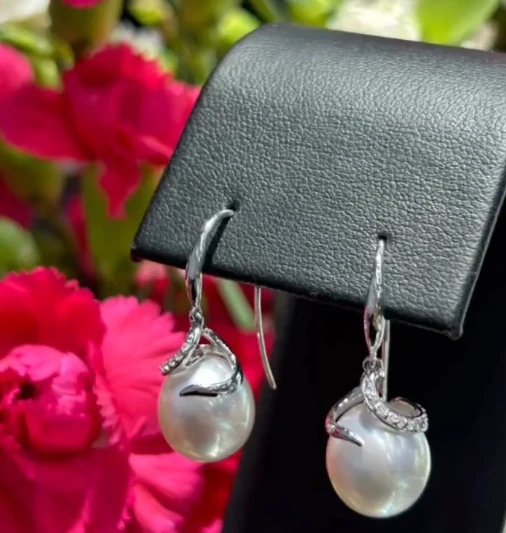
Compare complete pieces as well as the pearls. Price reflects pearl quality and matching, plus the metal, setting, clasp and any accompanying gems. A single pearl pendant and a carefully matched strand are different purchases, even when their pearls are the same type.
If you are working to a budget, start with the look you want, then compare a smaller pearl, a different shape or a simpler setting. Keep attractive lustre high on your list. Check whether a pendant includes its chain and whether an advertised earring price covers a pair.
Here are three price examples from Anny’s:
| Finished pearl jewellery | Listed price |
|---|---|
| Thomas Sabo freshwater pearl charm bracelet, 15cm, with recycled 925 silver attachment ring | A$159 |
| 9ct yellow gold freshwater pearl drop earrings | A$483 (sale) |
| 9ct yellow gold oval baroque freshwater pearl drop earrings | A$622 (sale) |
Prices checked 19 September 2026, in Australian dollars including GST. These are finished pieces in different designs, not a comparison of loose pearl values. Prices and availability can change; online availability does not confirm showroom stock.
How to care for pearl jewellery
The useful habit is on last, off first: put pearls on after perfume, hairspray and cosmetics, once those products have dried.
- Wipe pearls gently with a very soft, clean cloth after wearing them.
- Remove them before showering, swimming, exercise and household cleaning.
- Never use an ultrasonic or steam cleaner on pearls, including pieces set with diamonds.
- For occasional cleaning, use mild soapy water and a soft cloth; avoid prolonged soaking. Let a strung piece dry fully before wearing it so damp thread is not stretched.
- Store pearls separately from harder jewellery in a soft pouch or lined compartment, away from heat and very dry conditions.
These precautions protect the pearl surface and the materials holding the piece together. GIA: pearl care and cleaning.
Have a strand checked when the thread stretches, frays or shows gaps, or the clasp feels unreliable. Restringing depends on condition and wear, rather than one timetable for everyone. Knots between pearls help reduce rubbing and limit losses if the thread breaks. GIA: buying and maintaining pearl strands.
Two useful questions
Can you tell whether a pearl is real at home?
Appearance alone is not reliable proof. Avoid biting, scraping or chemical tests. A professional examination can help identify imitation pearls; distinguishing natural from cultured pearls may need laboratory testing. GIA’s pearl identification work examines both natural and cultured material. GIA: pearl services.
Are pearls a June birthstone?
Yes. Pearl is one of June’s birthstones, alongside alexandrite and moonstone. For a gift, earrings or a pendant make pearl care easier to manage than a ring. See our birthstones by month guide. GIA: June birthstones.
Find a pearl piece you will enjoy wearing
Browse Anny’s jewellery collection, or talk to us about custom-made jewellery. Bring an idea or an existing piece to our Frankston workshop and showroom, and we can discuss the design, pearl options and care it would need. Contact us about a particular piece before visiting to confirm its availability.
92 Young Street, Frankston. Walk-ins welcome; no appointment required. Monday–Friday 10am–5pm and Saturday 10am–3pm.