The Anny's guide / Coloured gemstones
Emerald Buying Guide: Colour, Price & Care
Choose an emerald for its colour and character, then check its treatment, condition and suitability for your jewellery. A beautiful green matters more than chasing a bigger carat weight. Emerald can make a wonderful engagement ring, but it needs thoughtful setting design and gentler wear than sapphire. Before buying, see the actual stone where possible and understand what its price and paperwork cover.
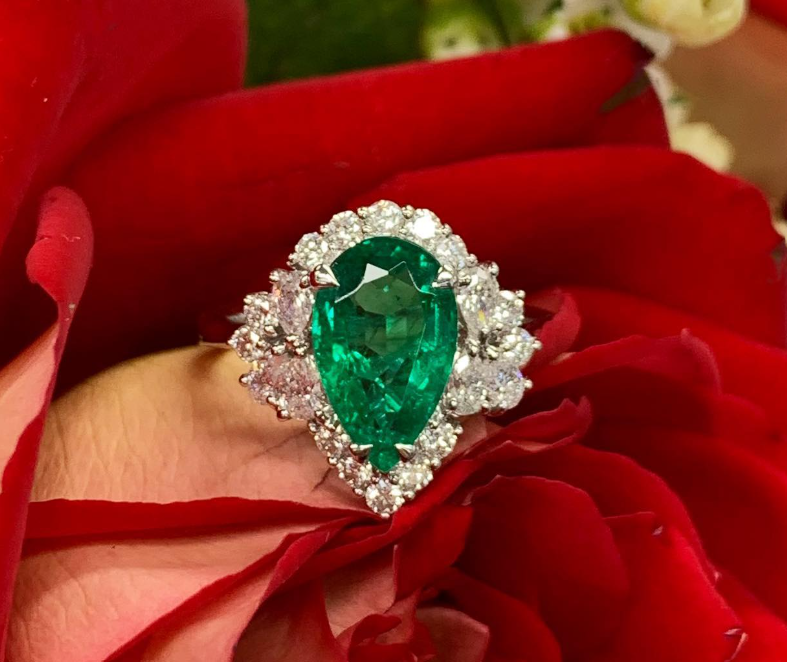
Start with the green you love
View the emerald from above in ordinary daylight and indoor light. Does its green still appeal away from bright display lighting? Turn it slowly and check for reasonably even colour and brightness, without a washed-out or very dark centre.
Fine emeralds are prized for vivid green to bluish green colour and good transparency. The darkest stone is not automatically the best. Carats measure weight; ask for dimensions in millimetres to judge the visible size. Two emeralds of the same weight can have noticeably different proportions. GIA: emerald quality factors.
Photographs help you shortlist stones, but lighting and screens affect colour. Compare the actual emeralds where possible, considering their appearance, disclosed treatment and price together.
Are visible inclusions a problem?
Natural emeralds commonly contain visible internal features, often called jardin, French for garden. An emerald does not need to look flawless to be beautiful. However, inclusions that cloud the stone or fractures that affect its strength deserve attention; being common does not make every inclusion harmless. GIA: emerald quality factors.
Ask the jeweller to show you what is visible without magnification and explain any durability concerns. Inclusions alone do not establish that a stone is natural. To establish whether an emerald is natural or laboratory-grown, ask for appropriate gemmological identification. GIA: gemstone identification reports.
Understand treatment before comparing prices
Many emeralds have cracks that reach the surface. Oil or resin can make these less visible, but the cracks remain. A treated natural emerald is still natural; the filling can affect appearance, care and value. Ask which filler was used, how extensive the treatment is and what documentation is available. SSEF: emerald reports.
You may see descriptions such as minor, moderate or significant clarity enhancement. These describe treatment extent, not an overall quality grade or a promise that the stone will resist damage. Laboratories use their own reporting terminology, so read the actual report. GIA: enhancement classifications.
For a significant purchase, ask whether an independent laboratory report is appropriate. Match its weight, dimensions and description to the stone, and verify the report number with the laboratory. Check what it covers: natural or lab-grown identity, detectable treatments, and any requested country-of-origin opinion. Origin cannot always be determined, and report services vary. GIA: coloured-stone reports.
What do emeralds cost at Anny's?
These six listings from our emerald collection show a range of loose-stone prices. Their product pages do not state treatment or confirm natural or lab-grown status; ask us for those details and any available reports. The price groups help you browse the collection; they are not quality grades.
Lower-priced emeralds
0.34ct square

A$715
3.75 × 3.75 mm · Listed origin: Not stated
Reference BEQS0375A
1.07ct cabochon

A$1,650
7.1 × 5 mm · Listed origin: Zambia
Reference BEVC0705X2
Mid-range emeralds
0.76ct emerald cut — example stone

Previously listed at A$6,393
6.1 × 4.1 mm · Listed origin: Zambia
Reference BEOS0604X1
This stone is shown as a size and price example and is no longer listed. Browse available emeralds.
1.02ct oval

A$7,564
6.95 × 5.9 mm · Listed origin: Not stated
Reference BEVB0705X7
Higher-priced emeralds
3.31ct round

A$28,067
10.3 × 10.3 mm · Listed origin: Zambia
Reference BERB1000X1
4.22ct emerald cut

A$41,940
10.06 × 9.24 mm · Listed origin: Zambia
Reference BEOS1008X1
Observed 19 September 2026. Prices are in Australian dollars, include GST and cover the loose stone only. Price and availability can change.
For a complete ring, allow separately for the setting, metal, design and manufacture. Confirm viewing availability before making a special trip for a particular emerald.
Does Colombian or Zambian origin matter?
Colombia, Zambia and Brazil are well-known emerald sources. Origin can carry market appeal, but colour and appearance overlap between countries. A country name does not guarantee superior quality, and a seller's origin description is different from a laboratory opinion. GIA: geographic origin research.
If you are paying extra for a particular origin, ask what evidence supports it. Choose the individual emerald, with its colour, condition and treatment in view, rather than relying on its country label.
Is emerald suitable for an engagement ring?
Yes, if you are comfortable with more careful wear. Emerald measures 7.5–8 on the Mohs hardness scale, which describes resistance to scratching. Its resistance to knocks and breakage is a separate issue: GIA rates emerald's toughness as fair to good. GIA: emerald care.
A protective setting can shield vulnerable edges and corners. A bezel surrounds the edge with metal; partial bezels and well-positioned claws offer other design options. The stone's condition and the finished setting both matter, and protection cannot eliminate the risk of chipping. GIA: gemstone durability and settings.
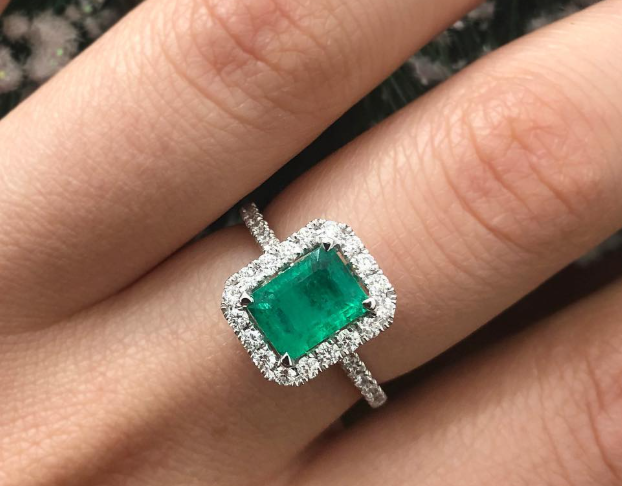
Remove an emerald ring for gardening, gym sessions and hands-on work. If you want a green ring for frequent wear with less concern about knocks, discuss green sapphire too. GIA: sapphire durability. If your heart is set on emerald but your routine is demanding, a pendant or earrings may suit you better. GIA: choosing emerald jewellery.
Anny's designs, sets and finishes custom jewellery at our Frankston workshop. We can discuss the stone, proportions and setting together, so the design reflects both your taste and how you plan to wear it.
How to care for emerald jewellery
Use warm water, mild soap and a soft brush gently, then rinse and dry carefully. Avoid ultrasonic and steam cleaners. Heat and chemicals can damage the stone or affect materials used to fill its fissures. GIA: emerald cleaning guidance.
Store the piece separately from harder jewellery, and have loose claws or any change in appearance checked. Tell the jeweller it contains an emerald before resizing or repairs. Filling materials can change over time; seek an assessment if the stone looks different, rather than assuming it needs routine re-oiling.
Two useful questions
Is a laboratory-grown emerald a real emerald?
Laboratory-grown emerald has essentially the same chemical, physical and optical properties as natural emerald, but forms in a laboratory. That distinction should be clearly disclosed. Green glass and other lookalikes are different materials. GIA: synthetic gem materials.
Does “emerald cut” mean the stone is an emerald?
No. Emerald cut describes a shape and facet arrangement, not the gemstone's identity. Diamonds and other gems can be emerald cut; emeralds also come in ovals, pears and other shapes. Check both the stone type and the cut when browsing.
Find an emerald that suits you
Start with our current emerald listings, or email info@annys.com.au with a stone reference, your budget and the jewellery you have in mind.
Visit 92 Young Street, Frankston: walk-ins welcome, no appointment required. Open Monday–Friday 10am–5pm and Saturday 10am–3pm.
Our Melbourne CBD location is Level 3, 257 Collins Street. Email us before visiting Collins Street for engagement-ring and wedding-ring consultations. Please wait for our email confirmation before coming in. Remodelling consultations take place at our Frankston workshop.
Factual sources
Checked 19 September 2026. References are linked beside the claims they support.
- GIA: Emerald Quality Factors
- GIA: Emerald Care and Cleaning Guide
- SSEF: Emerald Reports
- GIA: Emerald Enhancement Classifications
- GIA: Coloured-Stone Report Comparison
- GIA: Geographic Origin Determination of Emerald
- GIA: More Than the Mohs Scale
- GIA: Emerald vs Diamond
- GIA: Gemstone Identification Reports
- GIA: Sapphire Care and Cleaning
- GIA: Synthetic Gem Materials