Care & repairs · Repair guide
Jewellery repairs in Melbourne: what can (and can't) be fixed
Most jewellery can be repaired well: resizing, worn claws, thin bands, lost stones, broken chains and dull finishes are everyday work at our Frankston bench. The main limits are tungsten carbide and ceramic rings, some costume pieces, and repairs that would cost more than the piece is worth. Titanium rings can't be resized. Bring it to Frankston for a free inspection and quote on the same visit. Most repairs take 1 to 7 business days.

What can be fixed, and what can't
Most wear and tear is fixable. A few jobs depend on what we find under magnification, and a small number aren't worth attempting. We'd rather tell you before we take your piece than after.
Can it be fixed?
Usually fixable
- Resizing up or down a size or two
- Retipping worn claws
- Re-shanking a thin, cracked or misshapen band
- Replacing a missing or damaged stone
- Broken chains, links and clasps
- Polishing and rhodium re-plating
Sometimes, after inspection
- Big size changes, which become a partial re-shank
- Claws worn past retipping, or a cracked head: a new head lasts longer
- Costume pieces with thin plating, base metal or glued stones
- Treated stones, which must be identified before any bench work
Not worth it, or not possible
- Resizing tungsten carbide or ceramic rings
- Titanium rings can't be resized.
- A repair that costs more than the piece is worth, unless its meaning matters more
The everyday repairs, explained
We do these every week. Three of them rebuild a ring's metal:
Three ring repairs, explained
Resizing
We cut the band at its base, shape it on a mandrel and add or remove a little metal, then rejoin it and polish the seam away.
Re-shanking
Years of wear thin the base of a band. A new lower section lasts; a solder on thin metal tends to fail again.
Retipping
Fine laser wire rebuilds worn claw tips without disturbing the rest of the setting.
- Stone replacement. A missing or damaged stone can usually be replaced, matched as closely as possible in size, colour and cut.
- Chains and clasps. A clean solder, a new jump ring or a new clasp, done so it doesn't show.
- Polishing and rhodium. A dull ring polishes back to its shine. Greyish white gold needs a fresh rhodium plate, done in-house at Frankston.
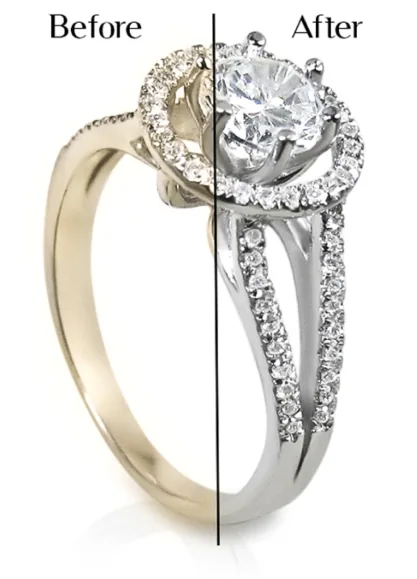
Rhodium re-plating, before and after
White gold's underlying colour can look warm or grey depending on its alloy. Its bright white finish is often a thin layer of rhodium, which wears over time. How soon the underlying colour becomes noticeable depends on how you wear the piece and the finish you prefer.
Re-plating is a separate paid service. Platinum and yellow gold have their own natural colours and do not normally need rhodium plating. Read what rhodium plating is.
The genuine limits, and why we name them
You deserve to know these before you hand a piece over.
Tungsten carbide, titanium and ceramic rings
These materials do not all behave the same way. GIA explains that tungsten carbide is extremely hard, lacks malleability and is brittle, so it cannot be soldered, welded or sized. Ceramic can chip or break. Titanium rings can't be resized.
Which rings can be resized?
Gold, platinum and silver
Yes. Cut, reshaped on a mandrel and rejoined, with the seam polished away.
Titanium
Titanium rings can't be resized.
Tungsten carbide and ceramic
Usually no. Tungsten carbide cannot be sized, while ceramic can chip or break.
Some costume and fashion jewellery
Base metal, thin plating and glued-in stones don't always survive a repair. Laser welding has made some costume pieces repairable that once weren't, but the question is whether the repair costs more than the piece.
Repairs that cost more than the piece is worth
The trade calls this beyond economic repair. If a job reaches that point, we'll say so rather than let you spend more chasing it. A sentimental piece is different: its meaning usually outweighs its market value, and that call is always yours.
Treated stones nobody identified first
Some treatments don't survive ordinary bench work. A fracture-filled ruby, with lead glass run into its cracks, can be ruined by basic workshop procedures, and the thin coloured layer on a surface-diffused sapphire can be damaged during a repair. Neither is obvious across the counter, and neither is rare.
Is Frankston convenient if you're elsewhere in Melbourne?
Yes. Frankston is part of Greater Melbourne, about 40 km south-east of the CBD at the end of the Frankston train line. Repairs from everyone are taken in at our Frankston workshop, 92 Young Street: walk in Monday to Friday 10am to 5pm or Saturday 10am to 3pm. Our Collins Street showroom takes repairs from existing Anny's clients only. Email us first and wait for our confirmation before visiting.
What happens when you bring a piece in
Nothing happens to your piece without your say-so.
- Walk in at Frankston
Everyone is welcome, wherever the piece came from.
- Free inspection and quote, same visit
A jeweller checks it under magnification and tells you plainly what it needs, including if it isn't worth repairing.
- You decide
Nothing goes ahead until you've said yes.
- Repaired at our own bench
Our jewellers do the work in our Frankston workshop. Nothing is sent out.
- Collect it
Most repairs are ready in 1 to 7 business days. Difficult jobs and busy periods take longer, so we give you a realistic date at drop-off.
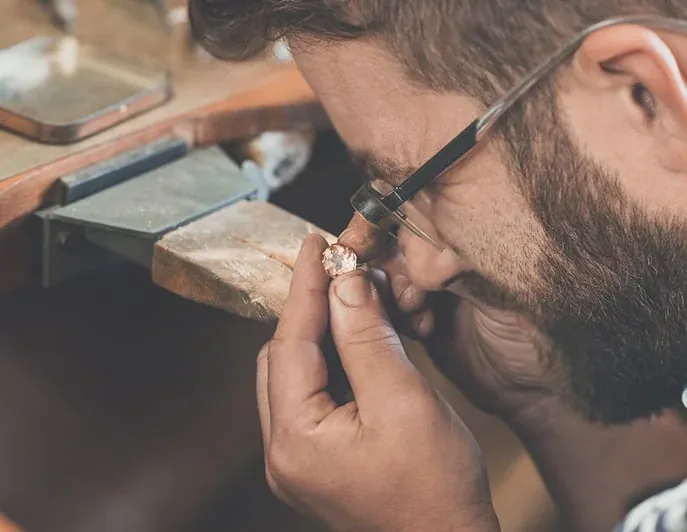
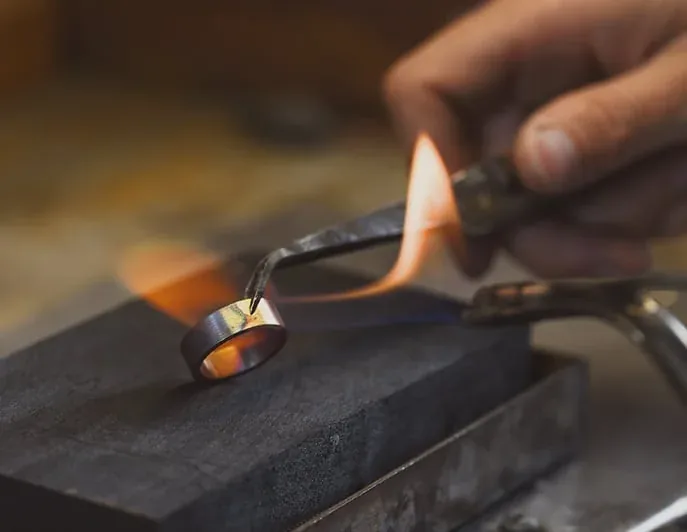
Repairs are around a quarter of our work, not a sideline. For typical costs, see our repair price guide; your exact price is confirmed at inspection. Told elsewhere that a piece can't be fixed? Read about the jobs other jewellers call impossible.
Should you get a valuation before or after a repair?
Either can make sense. The National Council of Jewellery Valuers recommends reassessing a piece every two to three years, and a repair is exactly the kind of change a valuation should capture.
- Your piece has never been valuedValue it before the repair, for a record of its condition
- It already has a valuationUpdate it after the repair, to keep your insurance current
See our valuation service, or read how to insure and value a ring. And to avoid an emergency repair, GIA recommends having claws checked about every six months: it catches a lifting claw long before a stone is lost.
Frequently asked questions
Does it cost anything to have a repair assessed and quoted?
No. The inspection is free, and a jeweller at Frankston quotes the work on the same visit, before any tools touch the piece. Nothing proceeds until you say yes, and if a repair isn't worth attempting, we'll tell you then.
Can old or badly broken jewellery be repaired, or is remodelling better?
Both are on the table. If a piece is sentimental and structurally sound, we'll almost always repair and restore it. If it's too far gone, or you've outgrown it, remodelling its metal and stones into a new piece is often the better call. Ask yourself: do you want the piece back as it was, or is it the materials and the memories you want to keep? See remodelling inherited and heirloom jewellery.
Bring it in for a free look
Walk into our Frankston workshop at 92 Young Street. A jeweller will inspect your piece and quote the work on the same visit.
Repairs are taken in at Frankston. Our Collins Street showroom takes repairs from existing Anny's clients only. Email us first and wait for our confirmation before visiting.