Gemstone guides · Australia
Alexandrite buying guide: colour, cost and rings in Australia
Alexandrite can be a beautiful choice for an engagement ring: it combines a distinctive colour change with durability suited to regular wear. Choose it for the colours you enjoy in real life, then check whether it is natural or laboratory-grown, what its paperwork confirms, and how it will sit in your ring. A bigger stone is not automatically the better choice.
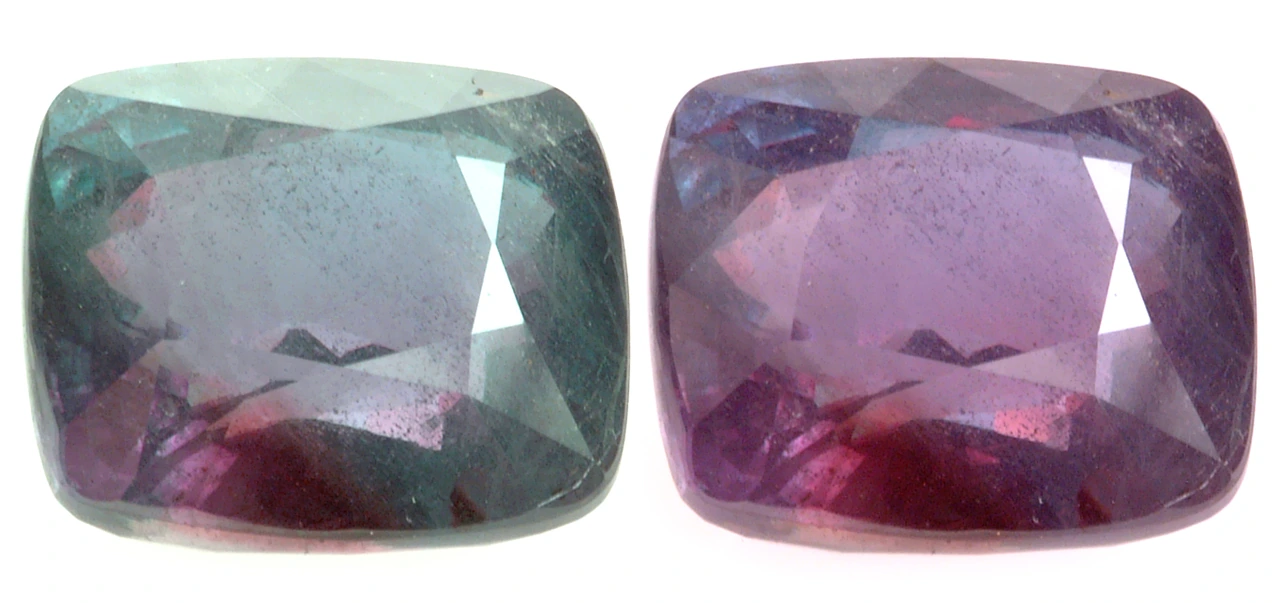

Start with the colour change
Alexandrite is a variety of chrysoberyl. It can appear green or bluish green in daylight and red or purplish red under incandescent light. Some stones show a subtler change or more brown. Keep the viewing angle similar when comparing lights: turning the stone can also change the colour you see. GIA explains the distinction.
When comparing stones, look for three things:
- Two colours you like. Enjoying both appearances matters more than choosing the most dramatic sales photograph.
- A clear change in suitable lighting. Compare it in daylight and incandescent light, or suitable gem-viewing lights. Then check it under lighting similar to your home or workplace.
- Brightness across the stone. View it from above, as it will sit in the ring. Check whether large dark areas or a washed-out centre spoil its brightness.
LEDs can show the effect, but different bulbs do not reproduce the same light. Paired photographs and videos are useful starting points; lighting, camera settings and your screen affect what you see. GIA’s research documents how carefully colour-change photographs are made.


Natural, laboratory-grown or imitation?
These terms describe different materials and origins. Ask for the exact identity in writing, especially when an inexpensive stone shows a striking colour change.
| Description | What it means | What to check |
|---|---|---|
| Natural alexandrite | Chrysoberyl formed in the earth; fine examples are rare. | Identification, any treatment and evidence for a stated country of origin. |
| Laboratory-grown alexandrite | Man-made chrysoberyl with essentially the same chemical, physical and optical characteristics as natural alexandrite. | Clear disclosure that it is laboratory-grown. |
| Alexandrite imitation | A different material chosen for a similar appearance, such as colour-change synthetic sapphire. | The actual material name; a colour change alone does not identify alexandrite. |
Laboratory-grown alexandrite is an option if you want the effect without natural rarity being your priority. It should be priced and described as laboratory-grown. Colour-change sapphire is a separate gemstone, even when advertised as “alexandrite sapphire”. See GIA’s synthetic-gem explanation and alexandrite buying advice.
For the broader terminology, read our guide to natural, treated and lab-created gemstones.
What does alexandrite cost in Australia?
Colour change, the attractiveness of both colours, clarity, cut and size all influence price. Fine larger stones are scarce, so carat weight alone is a poor basis for comparison. GIA’s quality guide explains these factors.
These three cushion-cut listings from Anny’s alexandrite search were checked on 19 September 2026. Their public details do not state natural or lab-grown status, treatment or country of origin. Ask us to confirm those details and any report before comparing value.
| Listed stone | Listed dimensions | Loose-stone price |
|---|---|---|
| 1.00ct Parti Alexandrite | 5.6 × 5.1 mm | A$10,780 |
| 1.38ct Parti Alexandrite | 6.2 × 6.1 mm | A$10,966 |
| 2.09ct Colour Change Alexandrite | 7.24 × 5.7 mm | A$16,720 |
Australian dollars, including GST as stated on the product pages. Stone only; setting and manufacture are additional. Prices and availability can change.
These are individual price examples, not a market average or a matched-quality comparison. “Parti” and “Colour Change” are listing labels, not quality grades.
Compare millimetres as well as carat weight: a squarer cushion and a more elongated cushion will look different on the hand. Set a budget for the complete ring, then consider the stone and setting together. Confirm viewing arrangements before travelling for a particular gemstone.
Is alexandrite suitable for an engagement ring?
Yes. Alexandrite resists scratches well and has excellent resistance to chipping and breaking, making it a practical choice for regular ring wear. It rates 8.5 on the Mohs scale, which measures scratch resistance. Hard knocks can still damage it. GIA’s care guide explains its suitability for rings.
The design still matters. Discuss the setting height, protection around the stone’s edge and how the ring will sit beside a wedding band. A lower setting or a bezel, which surrounds the edge with metal, may suit someone who is concerned about catching the ring. Compare that with the look of claws before deciding.

Looking after your ring
Clean with warm water, mild soap and a soft brush, then rinse and dry gently. Remove the ring for heavy manual work, gym weights and activities where it may be knocked; store it separately from other jewellery.
GIA says ultrasonic and steam cleaning are usually safe for alexandrite, but fracture-filled stones should receive only warm, soapy water. Have a jeweller check the stone and setting before machine cleaning. GIA care and treatment advice.
For resizing or repairs, bring the ring for assessment; safe methods depend on the stone’s condition, any treatment and the ring’s construction.
Common questions about alexandrite
Is alexandrite a June birthstone?
Yes, alongside pearl and moonstone. It offers another option for a June birthday or an engagement ring with a personal connection. GIA’s alexandrite overview.
What is cat’s-eye alexandrite?
It combines colour change with a moving band of light called chatoyancy. This effect is associated with aligned inclusions and is typically shown in a cabochon. A cabochon listing alone does not establish a cat’s-eye effect. GIA’s quality guide.
A ring designed around your stone
At Anny’s, we design and manufacture custom jewellery around your chosen gemstone at our Frankston workshop. Bring your preferred colours, ring ideas and overall budget so we can discuss the stone, proportions, metal and setting together. Explore our custom-made jewellery process.
Visit Frankston: 92 Young Street. Walk-ins welcome; no appointment required. Monday–Friday 10am–5pm and Saturday 10am–3pm.
Melbourne CBD: Level 3, 257 Collins Street. Email us before visiting Collins Street for engagement-ring and wedding-ring consultations. Please wait for our email confirmation before coming in. Remodelling consultations take place at our Frankston workshop.