GEMSTONES / CHOOSING YOUR RING
Gemstone durability for everyday rings
Diamond, sapphire, ruby, moissanite, spinel and alexandrite are strong choices for everyday rings. Other gemstones can also make beautiful rings, but some need more careful handling or are better saved for occasional wear.
Which gemstones suit everyday wear?
| Suitability | Gemstones | What to know |
|---|---|---|
| Great for everyday wear | Diamond, sapphire, ruby, moissanite, spinel and alexandrite | A good combination of scratch resistance and durability. They still need protection from hard knocks, heavy work and damage to the setting. |
| Suitable for regular wear with extra care | Aquamarine, morganite, amethyst and citrine | Can suit a careful wearer, but surface scratches and worn facet edges are more of a consideration than with harder stones such as sapphire. |
| Need more protection and careful handling | Emerald and topaz | Emeralds often contain fractures and may have oil or resin filling. Topaz is hard but can split from a sharp blow. A protective setting and suitable cleaning are particularly important. |
| Better suited to occasional ring wear | Tanzanite, opal and pearl | Tanzanite is vulnerable to knocks and chipping; opal needs protection from scratches and sudden temperature changes; pearl scratches easily and is sensitive to chemicals. |
A protective setting helps, but it does not make a delicate gemstone indestructible. These are practical groupings: the individual stone’s condition and treatments can change the advice. For example, a glass-filled ruby needs substantially more care than an untreated or ordinarily heat-treated ruby. GIA ruby care
For every ring, remove it before gym work, gardening, heavy lifting or cleaning with chemicals—and have a loose stone or damaged claw checked promptly.
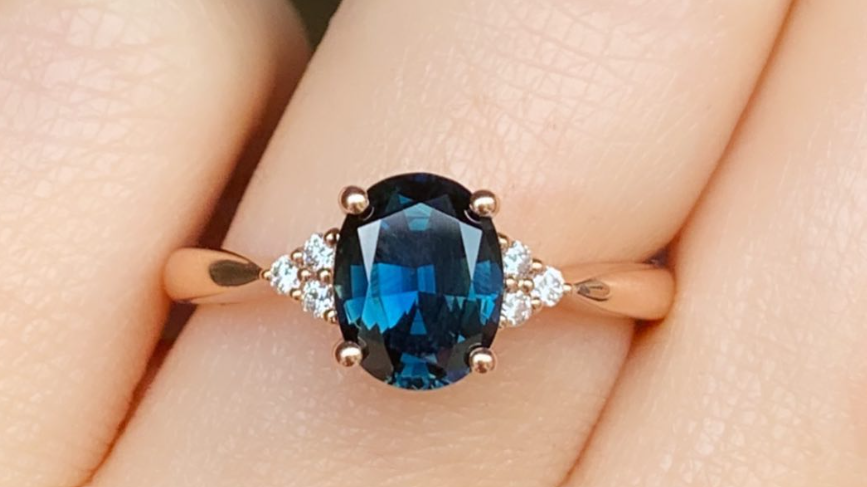
Hardness is only one part of durability
The Mohs scale rates resistance to scratching from 1 to 10. Its steps are not evenly spaced, and the rating does not measure how well a gem survives a knock.
Three properties matter when choosing a ring:
- Hardness: resistance to surface scratches and abrasion.
- Toughness: resistance to chips, cracks and breaking.
- Stability: resistance to changes caused by heat, light, chemicals and the environment.
Diamond has exceptional scratch resistance but can still chip. Some crystals have cleavage: directions in which they can split when struck. That is why a hardness number alone cannot tell you whether a stone suits your hands and habits. GIA’s diamond care guide explains these distinctions.

Choose the stone and setting together
Choose a setting that protects the stone’s exposed edges and suits your daily routine.
A bezel surrounds the edge with metal; a lower profile can make a ring less exposed during daily tasks. Well-positioned claws can protect vulnerable corners, particularly the tips of pear and marquise shapes. A halo may offer some protection when it actually shields the centre stone’s edge, but the word “halo” alone tells you little about that protection. GIA’s setting advice highlights the importance of protecting vulnerable areas.
For emerald or topaz, extra protection is useful alongside careful wear. For tanzanite or opal, it may still make more sense to choose a ring for selected occasions. That is a decision to make before the design is finalised.
Stone security depends on the metal alloy, construction, condition and setting. A metal name alone is not a guarantee. Our guide to engagement ring settings explains the main styles.


Compare hardness and care by gemstone
Gemstone durability at a glance
Hardness rates scratch resistance. Use the care notes to judge whether each stone suits your ring; its condition, treatments and setting also matter.
| Gemstone | Mohs hardness | What it means for your ring |
|---|---|---|
| Diamond | 10 | Strong everyday choice. Highly scratch resistant, but exposed edges and points can chip. |
| Moissanite | About 9.25 | A durable ring option with high scratch resistance. It is a different material from diamond. |
| Sapphire and ruby | 9 | Strong everyday choices with excellent toughness. Filled stones need different care. |
| Alexandrite | 8.5 | Strong everyday candidate: this chrysoberyl variety combines high hardness with excellent toughness. |
| Spinel | 8 | Good everyday candidate, with good toughness; less scratch resistant than sapphire. |
| Aquamarine and morganite | 7.5–8 | Can suit regular wear with care. Protect against knocks and expect more surface wear than sapphire. |
| Emerald | 7.5–8 | Needs more care. Fractures and any fillers matter; assess the individual stone before choosing a setting. |
| Amethyst and citrine | 7 | Can work in rings for careful wearers. Surface scratches and worn facet edges are a consideration. |
| Topaz | 8 | Hard but vulnerable to splitting from a blow. Choose a protective setting and careful wear. |
| Tanzanite | 6–7 | Vulnerable to knocks and cleavage. Better considered for protected, occasional ring wear. |
| Opal | 5–6.5 | Scratches readily and needs protection from knocks and temperature shocks. Often an occasional-ring choice. |
| Pearl | About 2.5 | Very easily scratched and sensitive to chemicals. Best reserved for a ring worn occasionally. |
Hardness values follow the linked GIA care guides and research.
Notice spinel and topaz both score 8, yet their advice differs. Spinel has good toughness; topaz has poor toughness because of its cleavage. A neat row of hardness numbers misses that practical difference.
Ask about treatments before you choose
Two stones with the same name can need different care. Ordinary heat treatment does not make sapphire or ruby unsuitable for everyday jewellery. Fracture filling is different: the material introduced into the cracks can be vulnerable to chemicals and cleaning methods. GIA’s ruby care guide explains the distinction.
Emeralds often contain cracks filled with oil or resin to improve appearance. Ask about the treatment and care it needs. Steam and ultrasonic cleaning can damage the stone or affect its filler. GIA’s emerald care guide recommends gentle cleaning.
Ask: What is this stone, what treatments are disclosed, and how should this particular ring be cleaned? Keep any report and written care instructions with your purchase records.
What everyday care looks like
An office day and a day of gardening place very different demands on a ring. Even diamond and sapphire need sensible habits:
- Remove your ring before heavy tasks. Gym weights, gardening, DIY and housework can expose the stone and setting to impacts, pressure or chemicals.
- Store pieces separately. A soft pouch or individual compartment helps prevent one gemstone scratching another.
- Check before cleaning. For many gems, lukewarm water, mild soap and gentle cleaning are suitable. Filled or dyed stones, pearls and assembled pieces may need a different approach.
- Ask before using an ultrasonic cleaner. Stone type, fractures, treatments and the condition of the setting all affect suitability. Avoid steam and ultrasound for emerald, topaz, tanzanite, opal and pearl.
- Act on a change. If a claw catches, a stone moves, or the ring takes a hard knock, stop wearing it until a jeweller checks it.
The linked care guides above give stone-specific instructions. For pearls, GIA recommends a gentle wipe with a soft, clean cloth after wearing. Keep perfume and cleaning chemicals away from their delicate surface. GIA pearl care
A few useful questions
Does a bigger gemstone chip more easily?
Size alone does not decide it. The material, fractures, shape, exposed edges and setting height all matter. A larger, low-set stone with protected edges can have a different risk profile from a smaller stone with an exposed point. Assess the whole ring.
Are laboratory-grown diamonds more durable?
Laboratory-grown diamond has essentially the same physical properties as natural diamond, so it still needs protection from knocks. GIA explains the material comparison.
Can a chipped gemstone be repaired?
Sometimes repolishing or recutting is possible, but it can change the stone’s weight, outline or fit in its setting. A jeweller needs to inspect the damage before recommending a repair or replacement. Do not assume every chip can be removed.
Find a gemstone that suits your life
Start with the colours you love and how you will wear the ring. Then compare individual stones, their condition and treatment information, alongside a suitable design. You can browse Anny’s current gemstone listings and bring a favourite listing or an existing piece to discuss with us.
Our custom-made jewellery service brings the stone and setting together around your preferences.
Visit 92 Young Street, Frankston: walk-ins welcome, Monday–Friday 10am–5pm and Saturday 10am–3pm. Our Melbourne CBD showroom is at Level 3, 257 Collins Street, Melbourne. Email us before visiting Collins Street for engagement-ring and wedding-ring consultations. Please wait for our email confirmation before coming in. Remodelling consultations take place at our Frankston workshop.