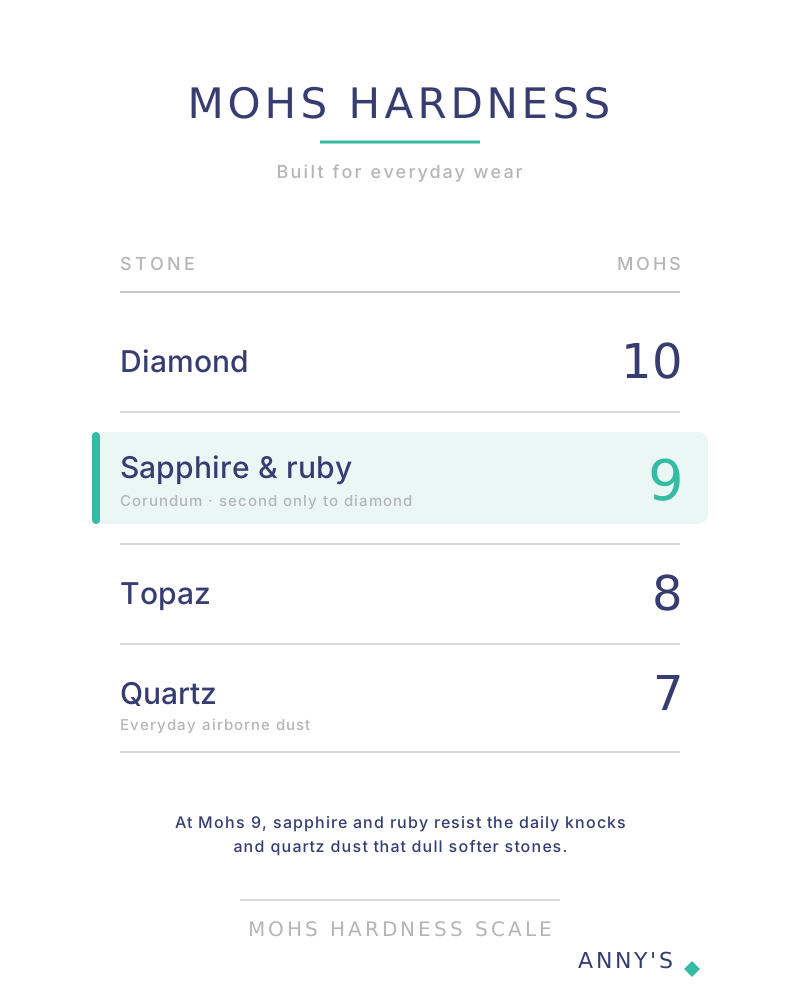
Yes, sapphire and ruby can make excellent everyday engagement rings. Both are corundum, rated 9 on the Mohs scratch-hardness scale. Choose sapphire for its broad colour range, or ruby for red. The right choice depends on the individual stone’s colour, condition and treatments, along with a setting suited to your hands and lifestyle.
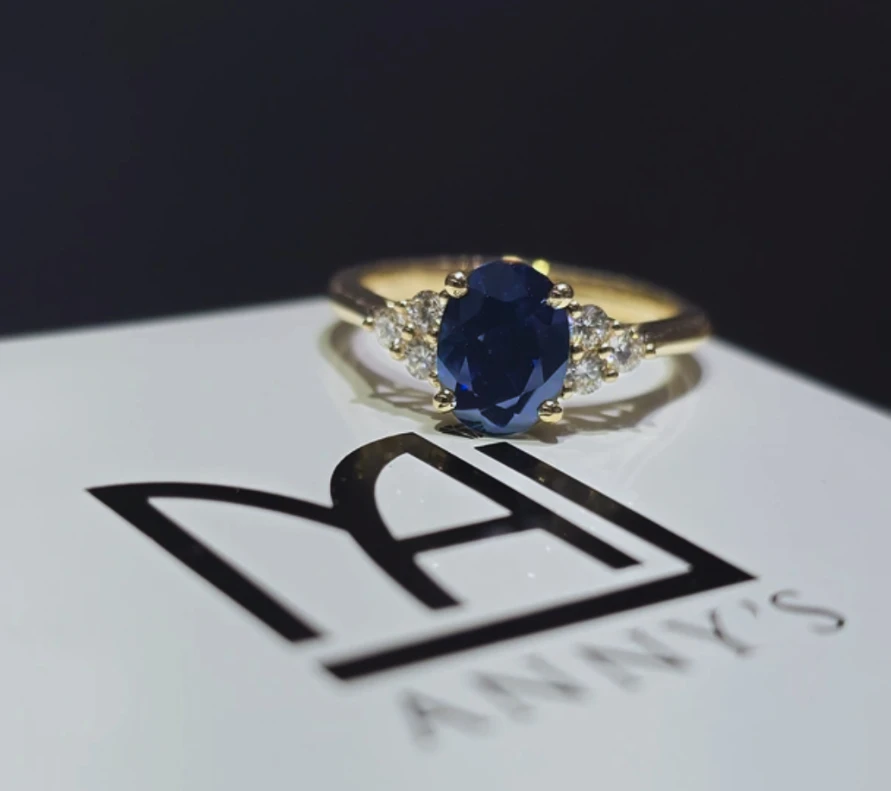
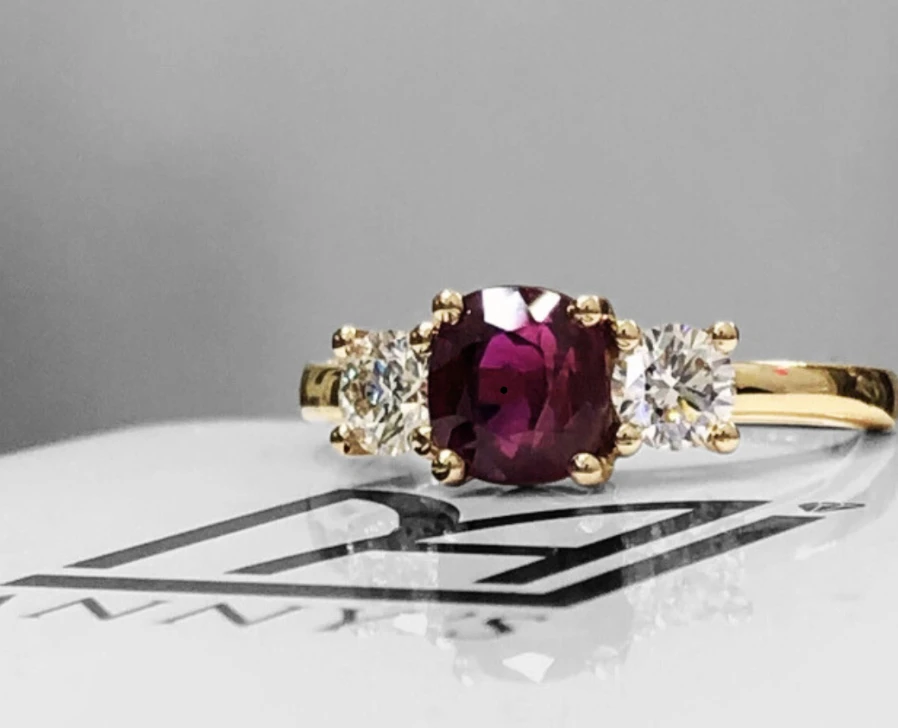
Sapphire or ruby: what is the difference?
Ruby is the red variety of corundum. Sapphire covers the other colours, including blue, teal, green, yellow and pink. Sharing a mineral gives them similar underlying properties, but inclusions and treatments can change how an individual stone should be worn and cared for. GIA’s sapphire overview
| Your decision | Sapphire | Ruby |
|---|---|---|
| Colour | Blue, teal, parti, pink, yellow and more | Red, sometimes leaning pinkish or purplish |
| Scratch resistance | Mohs 9 | Mohs 9 |
| Everyday wear | A strong candidate; check condition and treatments | A strong candidate; check condition and treatments |
| Main buying question | Do you love the colour in ordinary light? | Do you love the red, and is treatment clearly disclosed? |
Hardness is not a promise against chips. GIA describes corundum as having excellent toughness, but a hard knock can still damage a stone or its setting. Mohs is an ordinal scale: 9 does not mean “90% as hard as diamond”. Remove your ring for gym weights, gardening and rough work. GIA’s durability guidance
Blue, teal or parti sapphire?
Start with the colour you enjoy wearing. There is no need to choose the shade with the grandest trade name.
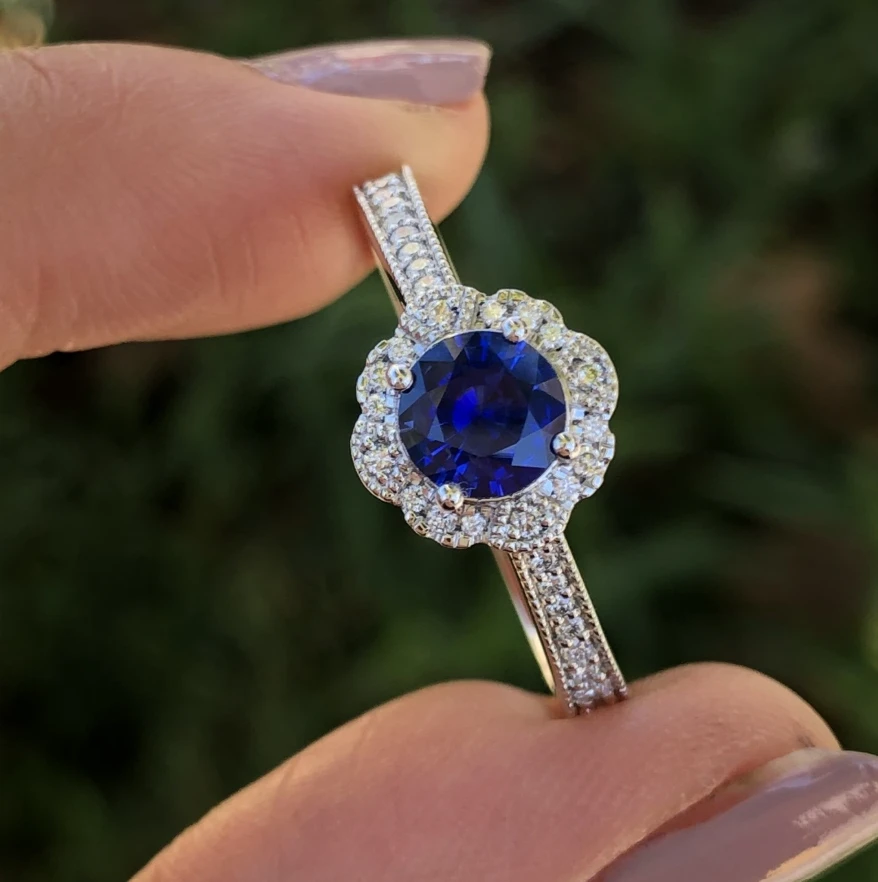
Blue offers everything from lighter blue to deeper, more saturated shades. Check that a dark stone still shows appealing colour away from bright display lighting.
Teal describes a blue-green appearance. Parti describes distinct areas of different colours within one sapphire, often blue, green and yellow. These descriptions can overlap: a sapphire may look teal overall while showing colour zoning.
Sapphire also comes in pink, purple, yellow and orange. Assess the colour family, how light or dark it looks, and how vivid or muted it appears. GIA identifies colour as the strongest influence on sapphire value, but your preferred colour need not be the most expensive. Sapphire colour and quality
View shortlisted stones face-up in daylight and ordinary indoor light. Tilt each gently: does it remain attractive, or do large areas look persistently dark or see-through? Compare the actual dimensions, too. Carat measures weight, so two equally heavy stones can look different in size.
Choosing an Australian sapphire
An Australian origin can add a meaningful local connection. Established sapphire regions include central Queensland’s Anakie gemfields and the New England area around Inverell and Glen Innes in NSW. Geoscience Australia
Ask what supports the stated origin: supplier records, an independent laboratory opinion, or both. Colour alone cannot establish where a sapphire was mined. An Australian-made ring can also contain an overseas gemstone; the ring’s manufacture and the stone’s origin are separate details.
What should you look for in a ruby?
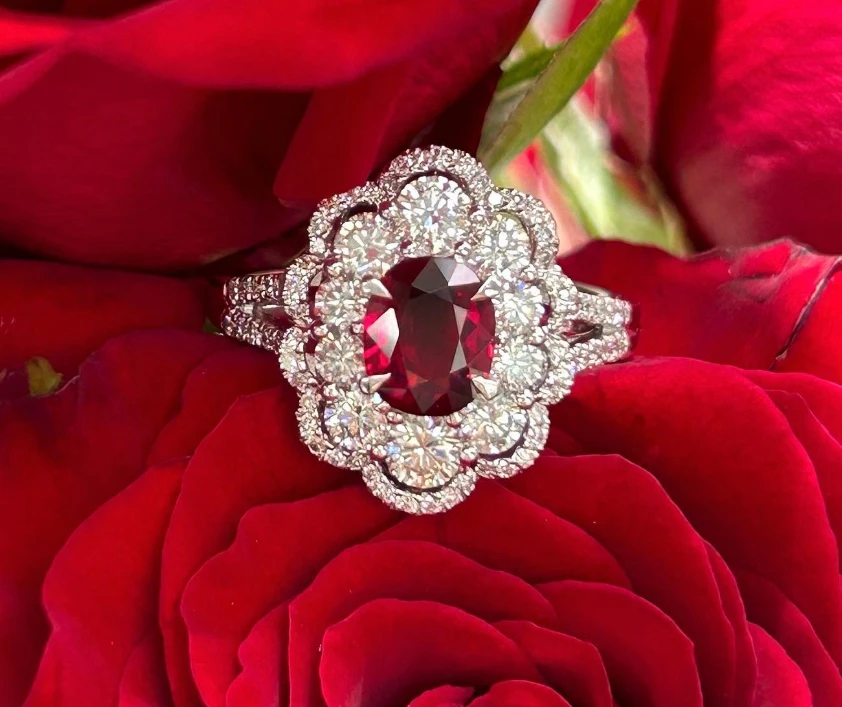
Look for a red you love, an attractive face-up appearance and clear treatment information. Natural inclusions are common; their position and extent matter more than simply whether they exist.
Names such as “pigeon’s blood” should prompt questions about the stone and the laboratory’s criteria, rather than replace a careful comparison. Fine ruby can command very high prices, especially as size increases, but a colour label alone does not establish quality. GIA’s ruby quality guide
What do sapphire and ruby stones cost?
Set a budget for the finished ring, then divide it between the centre stone, metal, accent stones and manufacture. A larger stone is not automatically the better buy: colour, cut, clarity, treatment and origin all influence value.
These three examples were checked on Anny’s live listings on 20 September 2026. They illustrate individual choices, not a matched-quality comparison or a market average.
| Listed loose stone | Listed dimensions | Displayed price |
|---|---|---|
| 1.74ct blue cushion sapphire, Australia | Not stated | A$517 |
| 1.20ct parti oval sapphire, Australia | 6.7 × 5.5 mm | A$898 |
| 1.38ct red oval ruby, origin not stated | 7.45 × 6.8 mm | A$5,805 |
Prices include GST and cover the stone only. Prices and availability can change. The inspected listings did not state treatment or natural/laboratory-created status; confirm both before comparing value or buying. Contact us to arrange viewing and confirm the stone’s location.
Browse current gemstones at Anny’s.
Treatments and paperwork: what to ask
Heated does not mean laboratory-created. Heat treatment can improve the colour or clarity of a natural sapphire or ruby. Ordinary heat treatment is widely accepted, and untreated and conventionally heated corundum can both be very durable. An unheated description is not, by itself, proof of a better-looking or stronger stone.
Other treatments need separate consideration. Diffusion introduces colour-causing elements; glass filling fills fractures or cavities and can bring significant care restrictions. “Treated” is too broad to tell you what you are buying. GIA’s ruby treatment and care guide
Anny’s works with heated and unheated sapphires and rubies, with treatment disclosed in writing. Ask which supporting documents come with your chosen stone.
An independent identification report can establish the material and list detectable treatments; an origin report may add a geographic-origin opinion. It is not a universal beauty score or a guarantee of ethical sourcing. GIA accepts both loose and mounted stones for relevant services, although a setting can limit examination. GIA’s coloured-stone reports
Design the ring around your daily life
A lower setting can reduce catching, while a bezel gives the stone’s edge more coverage. Claws leave more of the outline visible, but need checking as they wear. Neither design is damage-proof; construction, fit and the particular stone matter.
Try the design beside a wedding band before settling the height. A very low setting may require a shaped band to sit closely. Choose gold or platinum with the whole design in mind, including band proportions and future maintenance.
For untreated or conventionally heated stones in sound condition, warm water, mild dishwashing liquid and a soft brush are a sensible home-cleaning approach. Have the stone and setting checked before ultrasonic or steam cleaning. Filled or dyed material needs different care; GIA advises a damp cloth. Ruby cleaning guidance
Have your sapphire or ruby ring made at Anny’s
Our designers, jewellers and setters work together at our Frankston workshop. We design around your chosen stone, using CAD and a 3D-printed model to help you assess the proportions before manufacture. Bring colour references, a budget and your proposal date so we can discuss a realistic design and timeframe.
Explore custom-made jewellery, or email your ideas.
Frankston: 92 Young Street. Walk-ins welcome; no appointment required. Monday–Friday 10am–5pm and Saturday 10am–3pm.
Melbourne CBD: Level 3, 257 Collins Street. Email us before visiting Collins Street for engagement-ring and wedding-ring consultations. Please wait for our email confirmation before coming in. Remodelling consultations take place at our Frankston workshop.
You imagine, we create.