

Melbourne CBD
Melbourne showroom
257 Collins Street, Level 3Melbourne VIC 3000
Email us before visiting Collins Street. Please wait for our email confirmation before coming in.
Arrange your visitDiamond Education
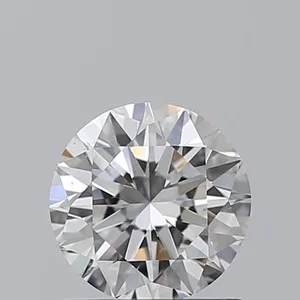
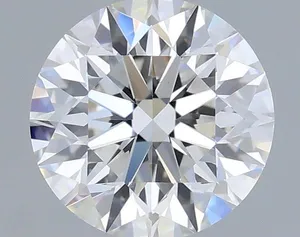
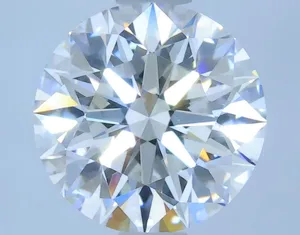
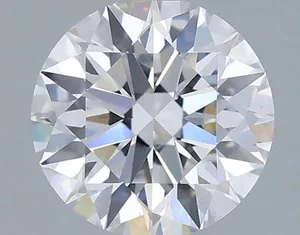
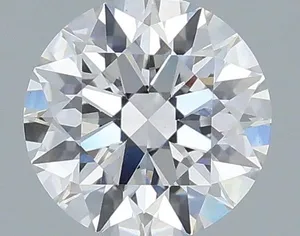
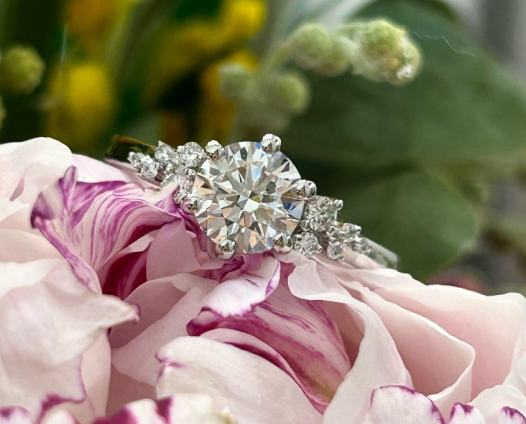
The round brilliant diamond is a popular choice for engagement rings. With 58 facets, the classic round brilliant is designed to maximise radiance and sparkle.
While purchasing a round diamond may seem straightforward, there are still important details to consider.
Excellent cut, symmetry and polish are useful starting points for comparing round diamonds; the report does not replace a view of the individual stone.
Compare light performance, apparent colour and visible inclusions under different lighting before choosing.
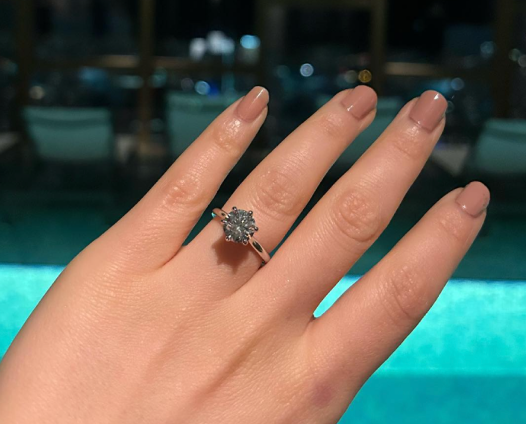
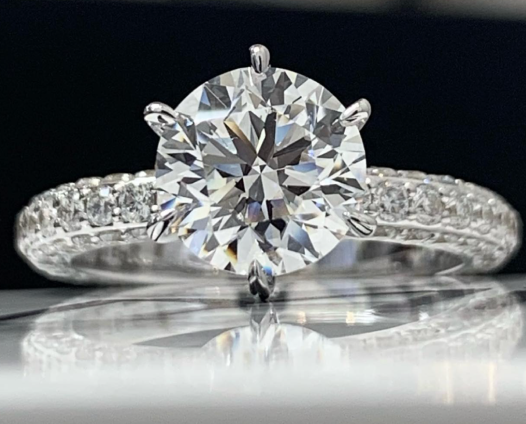
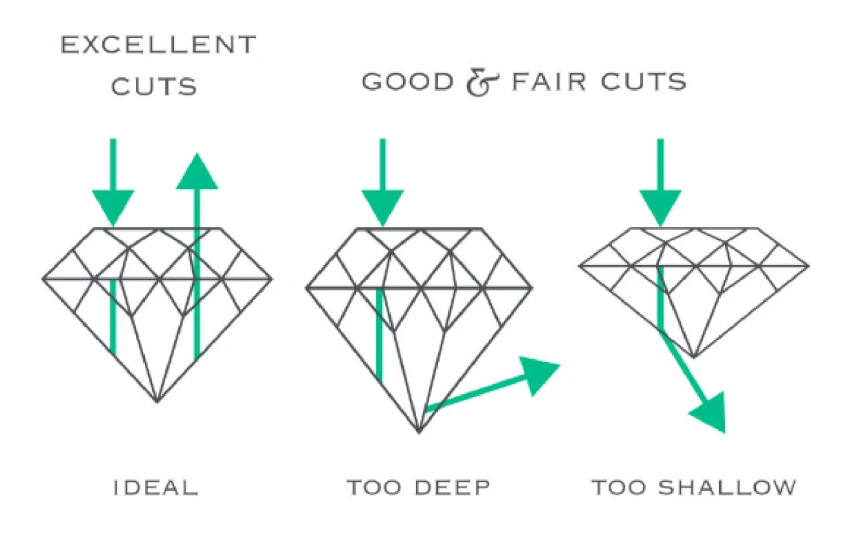
The cut grade is key to finding a diamond with exceptional sparkle. Grading laboratories have simplified this process for consumers. For GIA certificates, aim for an "Excellent" rating, and for IGI certificates, look for "Ideal." Avoid grades lower than these for the best results.
GIA · ExcellentIGI · Ideal
Round brilliant faceting can make body colour less noticeable. We use G colour as a shortlist starting point, and D–F may suit buyers who prefer colourless grades. Compare the individual stones in your proposed setting: apparent warmth varies with size, cut, lighting and the viewer, so a grade alone is not a universal visibility boundary.
These high-quality options may be rare, but the team at Anny's will go above and beyond to find the finest selections available.
Ideal · D to F colourlessShortlist starting point · G colour
Diamonds naturally display a mix of white, black, and yellow hues. Achieving balance among these colours is essential. Even D-colour diamonds can exhibit these hues due to the inherent sparkle and light reflection of the diamond.
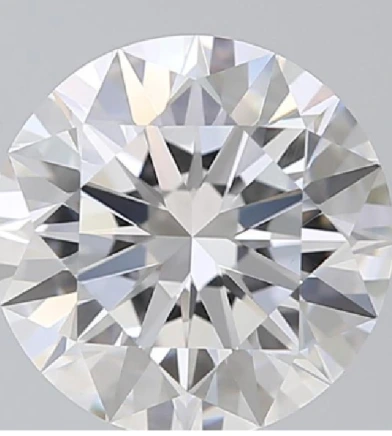
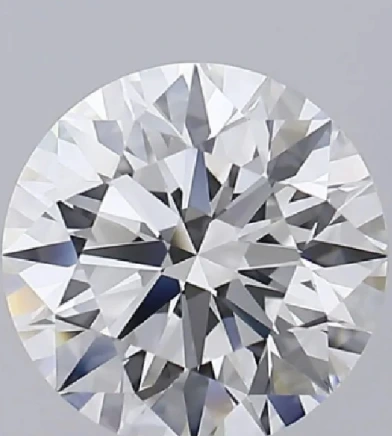
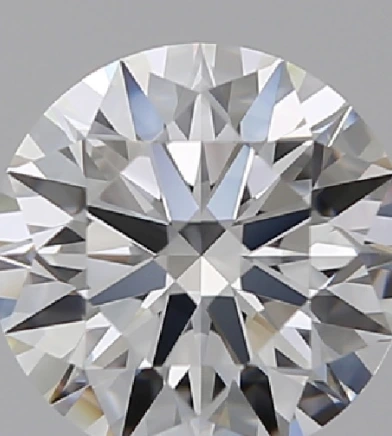
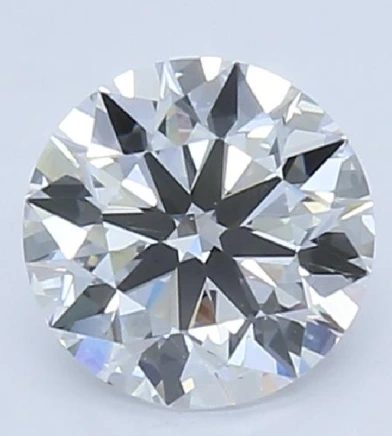
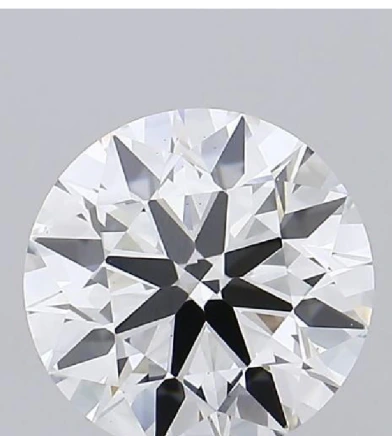
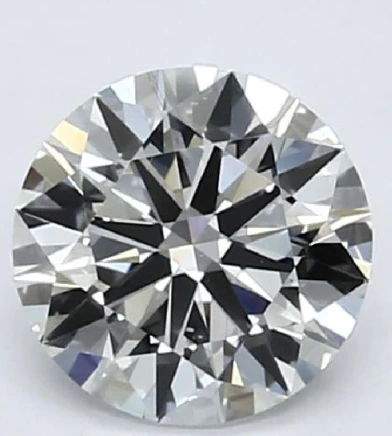
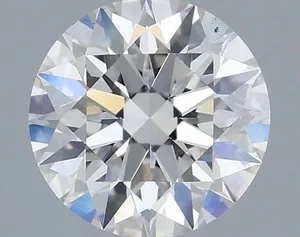
Compare inclusion visibility in each natural round diamond. Carefully selected SI1 examples can appear eye-clean, but there is no fixed percentage or grade that guarantees this. Ask us to explain the type, size and position of features in each stone on your shortlist.
Compare individual SI1 stones
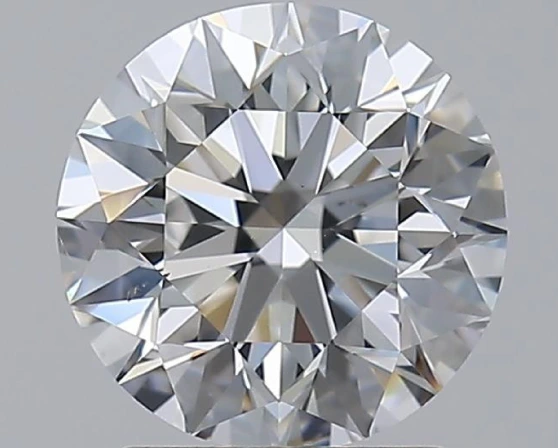
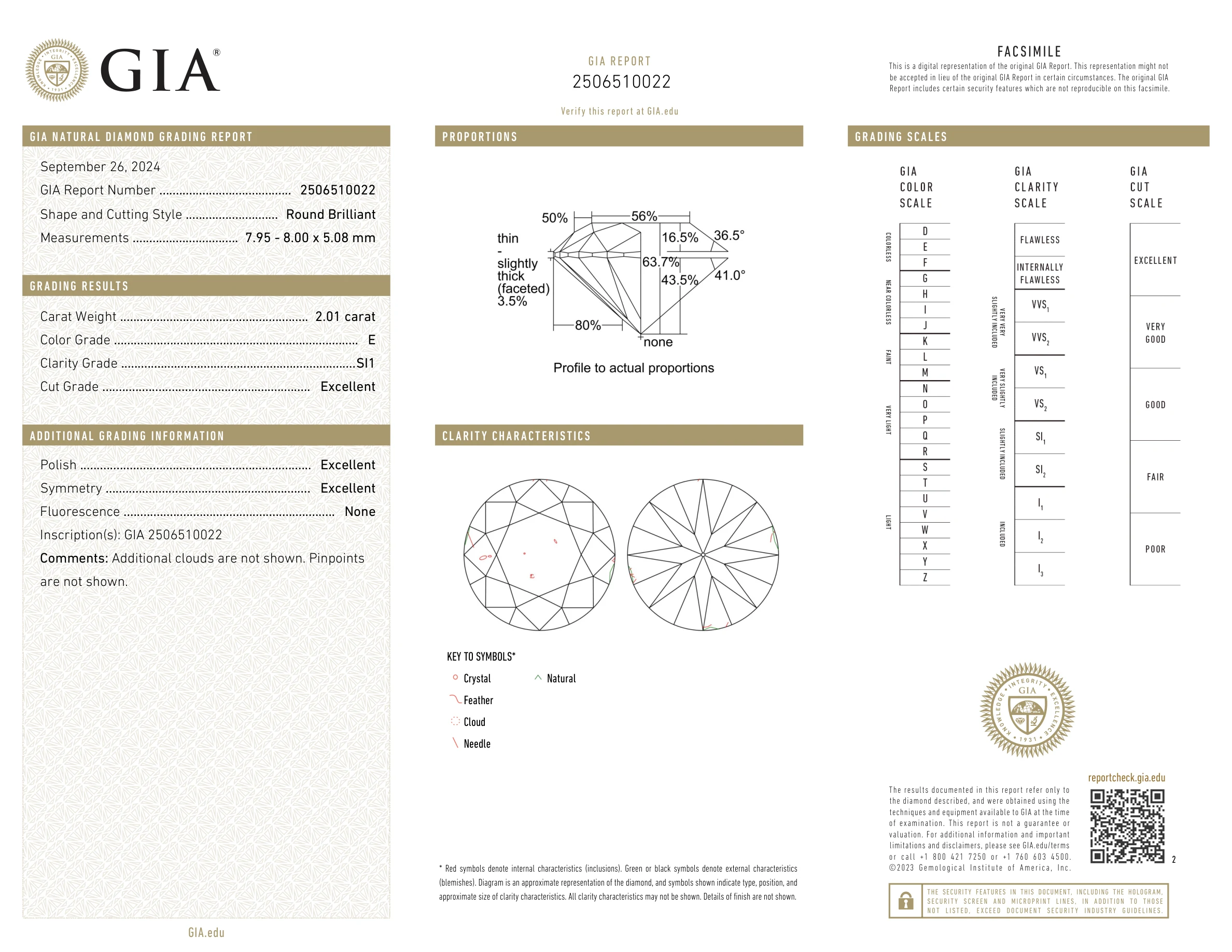
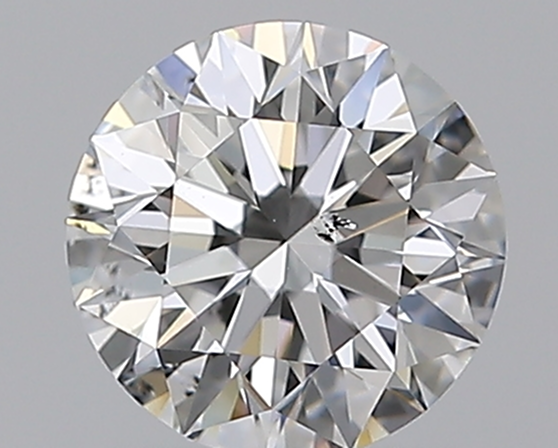
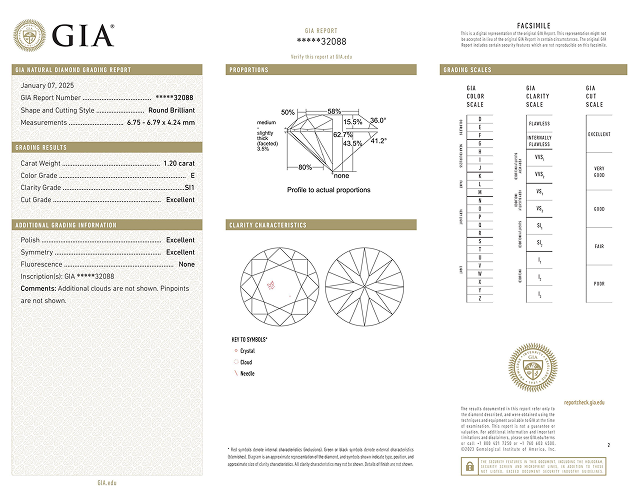
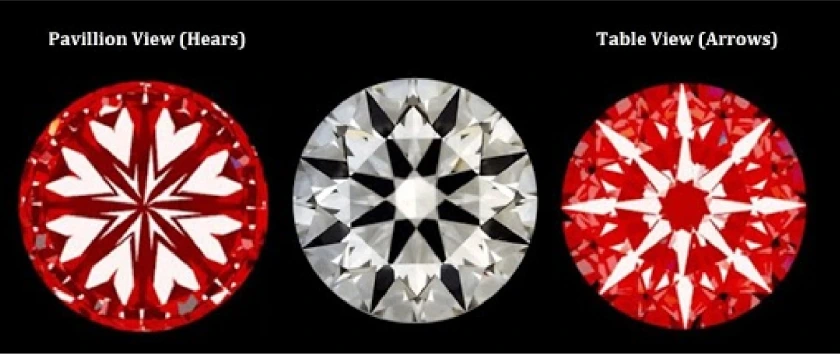
A Hearts and Arrows diamond refers to a precision-cut round diamond with exceptional symmetry. When viewed through a special tool, these diamonds exhibit a distinctive pattern.
Visible from the top of the diamond, this pattern appears as eight arrows radiating from the centre when you look down at the stone.
When viewed from the bottom, you'll see a pattern of eight hearts, which correspond to the facets on the pavilion (bottom) of the diamond.
The Hearts and Arrows pattern indicates superior optical symmetry, an important characteristic of a well-cut diamond. However, it's worth noting that not all ideal-cut diamonds exhibit this pattern. Some excellent-cut diamonds may not show the Hearts and Arrows pattern but can still be incredibly beautiful.
What a round brilliant's diameter means in carat weight, and the reverse. Round is the one shape the chart starts at 1 mm, because that is where melee begins — the accent stones in a halo or a pavé band. Every row from 0.30ct up is the median of real certified rounds in our own inventory, with the sample size beside it; below that the figures come from our diamond supplier's own book.
| Diameter | Carat weight | Typical range | Based on |
|---|---|---|---|
| 1.0 mm | 0.005 ct | — | Supplier measurement |
| 1.1 mm | 0.006 ct | — | Supplier measurement |
| 1.2 mm | 0.008 ct | — | Supplier measurement |
| 1.3 mm | 0.01 ct | — | Supplier measurement |
| 1.4 mm | 0.012 ct | — | Supplier measurement |
| 1.5 mm | 0.015 ct | — | Supplier measurement |
| 1.6 mm | 0.017 ct | — | Supplier measurement |
| 1.7 mm | 0.02 ct | — | Supplier measurement |
| 1.8 mm | 0.023 ct | — | Supplier measurement |
| 1.9 mm | 0.027 ct | — | Supplier measurement |
| 2.0 mm | 0.03 ct | — | Supplier measurement |
| 2.1 mm | 0.04 ct | — | Supplier measurement |
| 2.2 mm | 0.045 ct | — | Supplier measurement |
| 2.3 mm | 0.05 ct | — | Supplier measurement |
| 2.4 mm | 0.055 ct | — | Supplier measurement |
| 2.5 mm | 0.06 ct | — | Supplier measurement |
| 2.6 mm | 0.07 ct | — | Supplier measurement |
| 2.7 mm | 0.08 ct | — | Supplier measurement |
| 2.8 mm | 0.085 ct | 0.08–0.09 ct | Supplier measurement |
| 2.9 mm | 0.095 ct | 0.09–0.10 ct | Supplier measurement |
| 3.0 mm | 0.10 ct | 0.10–0.11 ct | Supplier measurement |
| 3.1 mm | 0.12 ct | 0.11–0.12 ct | Supplier measurement |
| 3.2 mm | 0.13 ct | 0.12–0.13 ct | Supplier measurement |
| 3.3 mm | 0.14 ct | 0.14–0.15 ct | Supplier measurement |
| 3.4 mm | 0.15 ct | 0.15–0.16 ct | Supplier measurement |
| 3.5 mm | 0.17 ct | 0.16–0.17 ct | Supplier measurement |
| 3.6 mm | 0.17 ct | 0.17–0.18 ct | Supplier measurement |
| 3.7 mm | 0.20 ct | 0.19–0.21 ct | Supplier measurement |
| 3.8 mm | 0.22 ct | 0.21–0.23 ct | Supplier measurement |
| 3.9 mm | 0.23 ct | 0.23–0.24 ct | Supplier measurement |
| 4.0 mm | 0.25 ct | 0.24–0.26 ct | Supplier measurement |
| 4.1 mm | 0.28 ct | 0.26–0.29 ct | Supplier measurement |
| 4.2 mm | 0.30 ct | — | 643 stones |
| 4.4 mm | 0.32 ct | 0.30–0.33 ct | 6,017 stones |
| 4.5 mm | 0.34 ct | 0.33–0.36 ct | 4,389 stones |
| 4.6 mm | 0.37 ct | 0.35–0.39 ct | 4,151 stones |
| 4.7 mm | 0.40 ct | 0.38–0.40 ct | 5,494 stones |
| 4.8 mm | 0.41 ct | 0.40–0.43 ct | 4,068 stones |
| 4.9 mm | 0.44 ct | 0.43–0.46 ct | 3,817 stones |
| 5.0 mm | 0.50 ct | 0.47–0.54 ct | 16,095 stones |
| 5.5 mm | 0.63 ct | 0.56–0.70 ct | 19,039 stones |
| 5.8 mm | 0.74 ct | 0.70–0.80 ct | 277 stones |
| 6.0 mm | 0.82 ct | 0.73–0.92 ct | 10,071 stones |
| 6.4 mm | 1.01 ct | 1.00–1.03 ct | 865 stones |
| 6.5 mm | 1.04 ct | 1.00–1.10 ct | 74,250 stones |
| 6.9 mm | 1.25 ct | 1.20–1.30 ct | 247 stones |
| 7.0 mm | 1.31 ct | 1.20–1.47 ct | 18,755 stones |
| 7.3 mm | 1.50 ct | 1.47–1.53 ct | 530 stones |
| 7.5 mm | 1.54 ct | 1.50–1.60 ct | 49,339 stones |
| 8.0 mm | 2.04 ct | 1.90–2.12 ct | 47,607 stones |
| 8.7 mm | 2.50 ct | 2.42–2.58 ct | 332 stones |
| 9.0 mm | 2.64 ct | 2.47–3.09 ct | 38,537 stones |
| 9.2 mm | 3.01 ct | 2.86–3.04 ct | 271 stones |
| 10.0 mm | 3.74 ct | 3.42–4.10 ct | 15,252 stones |
| 10.2 mm | 4.05 ct | 3.93–4.10 ct | 79 stones |
| 11.0 mm | 5.01 ct | 4.52–5.52 ct | 8,869 stones |
| 12.0 mm | 6.08 ct | 6.00–7.06 ct | 2,913 stones |
| 13.0 mm | 8.05 ct | 7.61–9.03 ct | 1,129 stones |
| 14.0 mm | 10.04 ct | 9.05–11.04 ct | 720 stones |
| 15.0 mm | 12.10 ct | 11.47–13.32 ct | 147 stones |
Rows from 0.30 ct up are the median of our own GIA and IGI certified stones, with the sample size shown and the typical range being the middle 80% of that bucket. Smaller sizes come from our diamond supplier's own book — the sizes and weights the trade actually deals in. Covers 1.0 mm to 15.0 mm. Snapshot 2026-08-30.
Two stones with the same diameter can differ in weight by ten per cent depending on depth, which is why each row publishes the range most stones of that size actually fall in rather than a single figure pretending to be exact. For every other shape, and a converter that works both ways, see the full diamond size chart.
Choose a carat weight to see what a natural and a lab-grown round diamond cost today, or enter your budget to see the size it buys. Each figure is the typical price of the round diamonds available through us at the grade shown under the results, worked out every night; follow its link to see the real stones.
1 ct round · Natural
about A$7,392
Typical price · based on 211 diamonds available through us
Listed now, at or under this price
1 ct round · Lab-grown
about A$1,511
Typical price · based on 423 diamonds available through us
Listed now, at or under this price
At this size, lab-grown costs about 80% less than natural.
Natural: E–F colour, VS2 clarity, excellent cut for rounds. Lab-grown: E colour, VS1 clarity, ideal cut for rounds. GST included.
Put it in an engagement ringTypical prices of the diamonds available through us, updated 10 October 2026. See every shape and size in our diamond price guide.
Round is the benchmark brilliant cut. If you want brilliant-cut sparkle in a square outline, read the Princess Cut Buying Guide; for a softer pillow outline with similar all-over sparkle, see the Cushion Buying Guide. For a single-page side-by-side across all ten shapes, see our Diamond Shape Comparison. Or jump straight to our engagement ring designs when you're ready to choose a setting.
Made personal, at Anny's
Melbourne CBD
Email us before visiting Collins Street. Please wait for our email confirmation before coming in.
Arrange your visitOur Frankston home
Visit us to talk through your ideas, explore designs and find your perfect fit.
Explore our Frankston showroomTypical engagement and bridal ring turnaround: 3–4 weeks from CAD sign-off. We also have 2-week and 48-hour options for engagement and bridal rings. Get in touch and we'll help find an option that works for your timeframe.
Typical repair turnaround: 1 to 7 business days, depending on complexity and customer urgency
Anny's Manufacturing JewellersABN 88 447 171 579