Care, Repairs & Protection
Remodelling Inherited & Heirloom Jewellery — Keep the Meaning, Change the Look
After inspection, an inherited piece may be remodelled into something you'll actually wear while keeping its meaning intact. Remodelling reshapes the look of a piece; whether stones or gold can be reused depends on their condition and construction (see our jewellery remodelling service). The short version:
- We assess whether your own gold and stones can be reused, so labour and any new materials become the main cost when reuse is suitable.
- Have it assessed first by our in-house FGAA-accredited gemmologist, so you know exactly what you have — including an acid test on the metal.
- You approve a 3D-printed model before a single piece of your heirloom metal is touched — nothing irreversible happens until you've said yes.
- If remodelling is suitable after inspection, your piece is handled at our Frankston workshop — examined, designed, set and finished by our in-house team, with the casting done by a specialist casting house.
- Re-value it afterwards for insurance, because a remodelled piece is effectively a new item.
Can I reuse my old gold and diamonds in a new design?
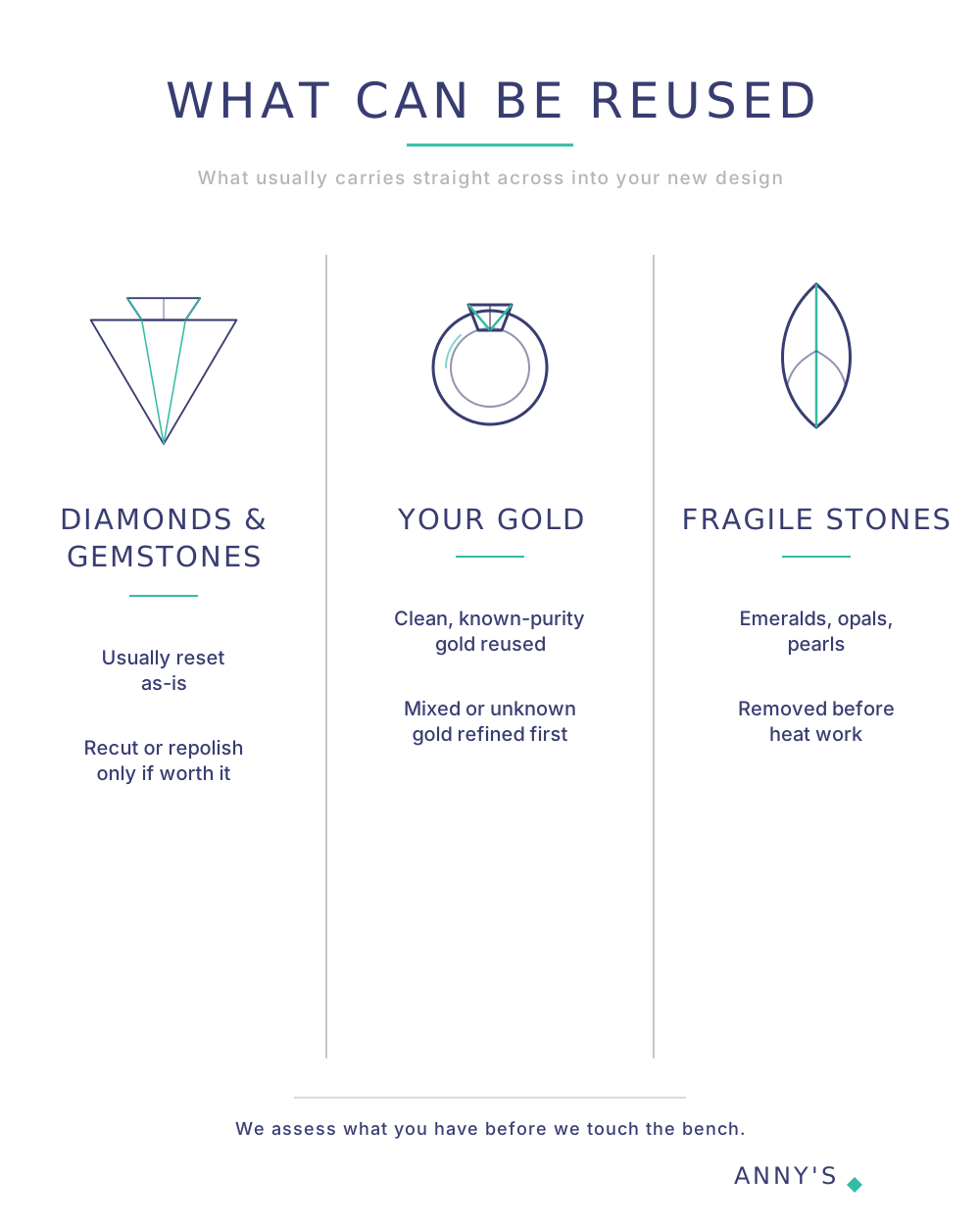
Usually, yes — the centre stone is normally the easiest to carry across, and it's the piece that holds the most meaning. The honest picture on each material:
- Your diamonds and gemstones. Following inspection, an inherited centre stone may be suitable to reset as it is. A worn stone may sometimes be recut or repolished — but that means some weight loss, so suitability depends on its condition and whether the gain in sparkle outweighs the loss. For an individual diamond, see the available GIA or IGI grading report.
- Your gold. Gold is endlessly recyclable, but old jewellery can carry traces of solder, base metals and oxides that, recast carelessly, weaken the new piece (per trade refining guidance). So clean, known-purity gold can be reused as-is, while mixed or unknown old gold is often refined first — sound, not just sentimental.
- Fragile or treated stones. Some stones don't love the bench. Emeralds — an estimated 90% or more of which are oil- or fracture-filled — are best removed before any heat work, since heat can extend their fractures and sweat the filler out; opals and pearls are soft and heat-sensitive too.
 View full size
How does jewellery remodelling work at Anny's?
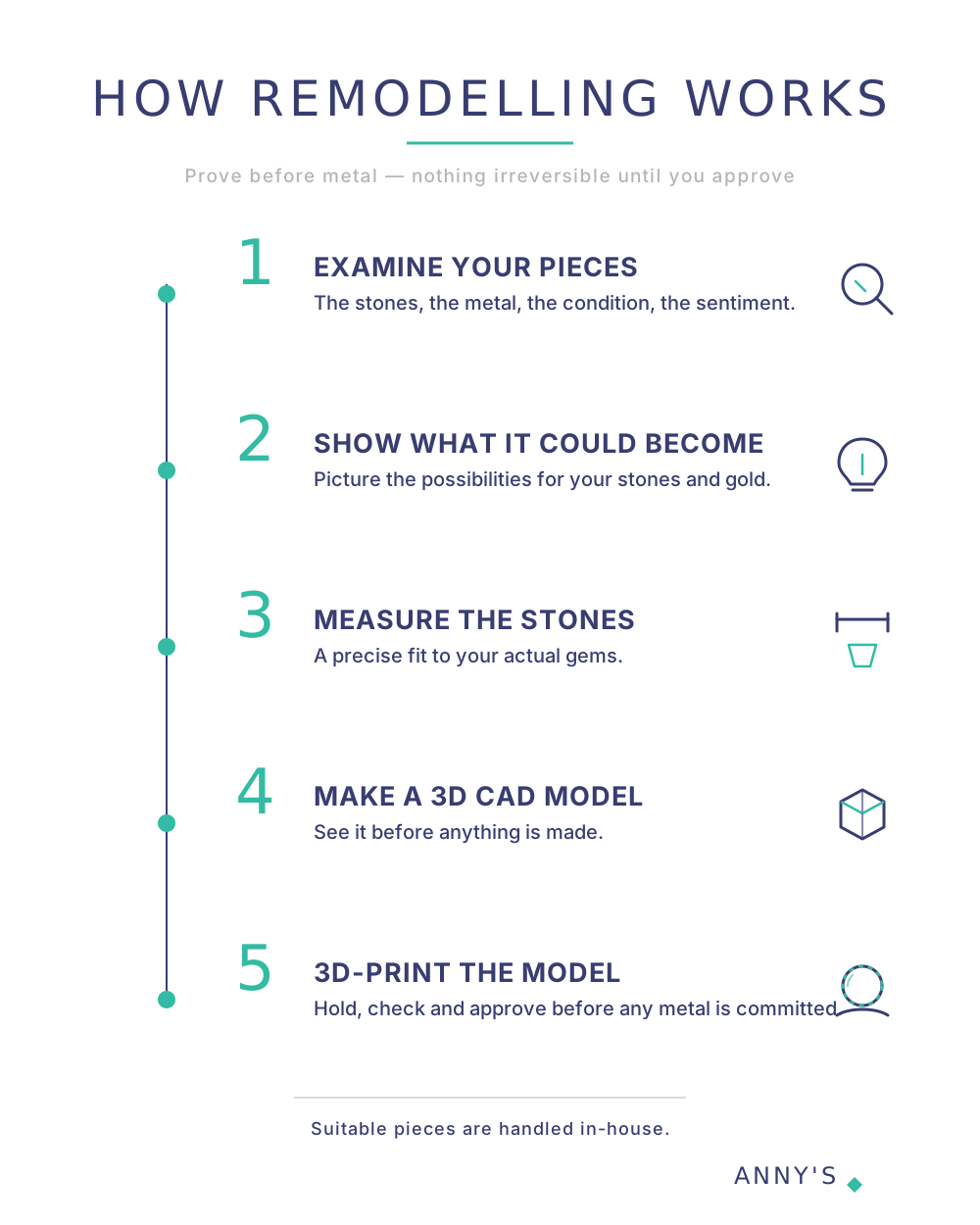
We treat every heirloom like a puzzle — working out what the pieces you have could beautifully become. The make-or-break step is the 3D-printed model you hold and sign off on, because a printed pattern can be reproduced or adjusted before anything is cast in metal (Formlabs).
- Examine your pieces — the stones, the metal, the condition, the sentiment behind it.
- Show what it could become, so you can picture the possibilities for your stones and gold.
- Measure the stones precisely, so the new design fits your actual gems.
- Make a 3D CAD model in-house, so you can see the proposed piece before anything is made.
- 3D-print the model so you can hold it, check it, and approve it — all before any heirloom metal or stones are committed.
That preview matters most on something irreplaceable: there's no second copy of your grandmother's ring, so you approve the exact design before any metal or stones are committed — and revisions to the wax model are done within an hour. For the detailed version of this prove-before-metal approach, see the custom ring journey.
 View full size
Will my piece ever leave your workshop?
Only the casting goes out. Your heirloom is examined, designed, set and finished by our in-house team, under one roof, and a specialist casting house casts the metal. The CAD designer, goldsmith and diamond setter all work in the same place at Anny's, Established in 1990 — less handling, less travel, less risk to something you can never replace.
How much does it cost to remodel a ring in Australia?
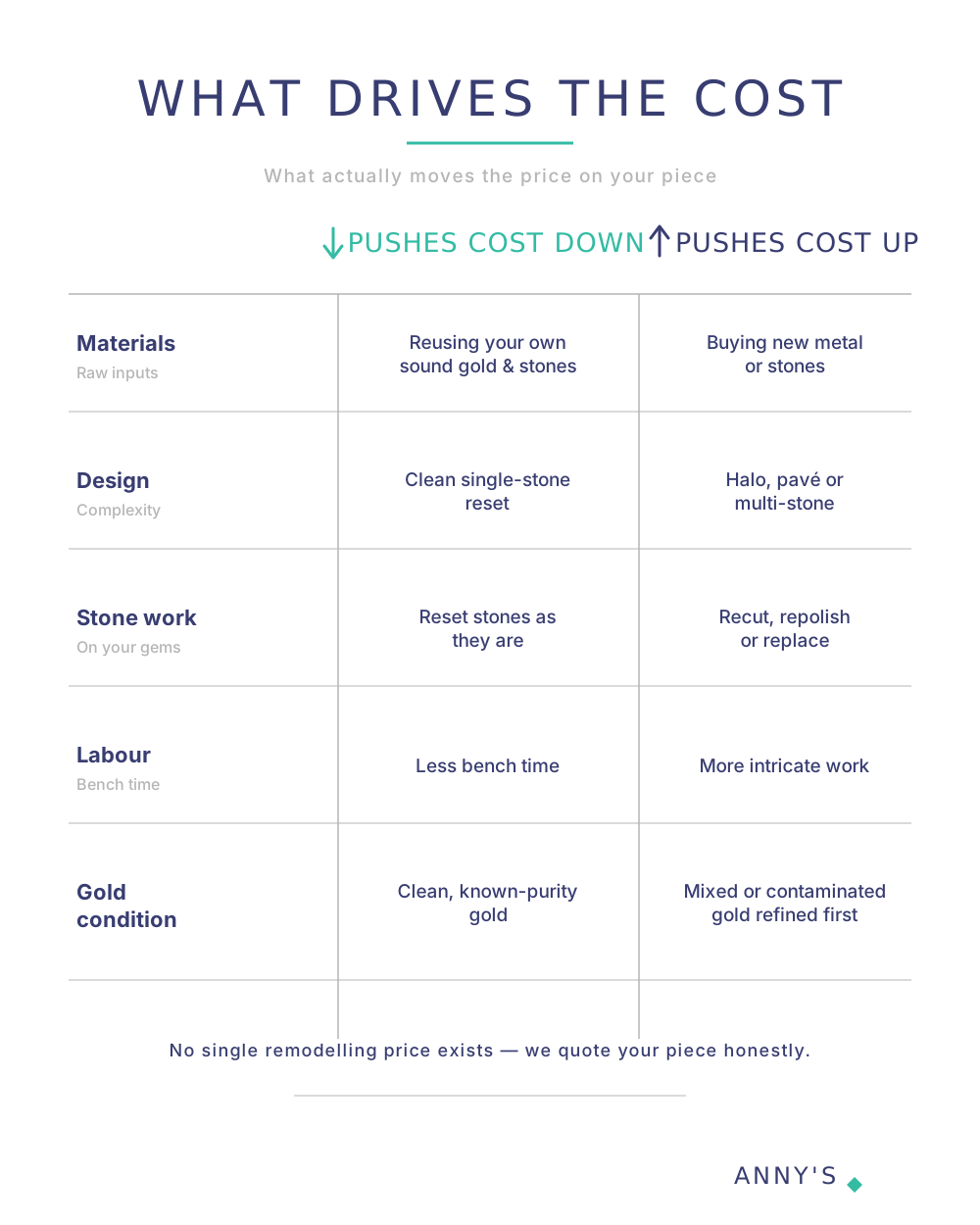
The honest answer: it depends on what we're reusing and how much new work the design needs. When your own gold and stones are sound and reused, you're not buying the raw materials again, so labour and any new metal or stones become the main cost. No neutral Australian authority publishes a single remodelling price, so we won't pretend one exists — we'll quote your piece honestly, once we've seen it. What moves the price up or down:
| Cost driver | Pushes cost down | Pushes cost up |
|---|---|---|
| Materials | Reusing your own sound gold and stones | Buying new metal or new stones |
| Design complexity | A clean, simple reset of one stone | Halo, pavé or multi-stone designs |
| Stone work | Resetting stones as they are | Recutting, repolishing or replacing worn stones |
| Labour / time | Less bench time | More intricate, time-intensive work |
| Gold condition | Clean, known-purity gold re-alloyed and reused | Mixed or contaminated gold that must be refined first |
A busier design — a halo (accent stones ringing the centre stone) or pavé (tiny stones set close so the band looks paved with sparkle) — simply adds bench time. And one thing not to assume: our engagement-ring price bands (lab-grown AUD $3,000–$6,000; natural AUD $8,000–$30,000) are for new rings. A remodel reuses materials, so it's a different sum entirely — don't read those bands across.
 View full size
Should I get my heirloom valued or the stones assessed first?
Yes — always assess before you alter. Our in-house FGAA-accredited gemmologist checks your stones for colour, clarity and condition, and we acid-test your metal in-house so you know what you've actually got. An old "18ct" stamp isn't a guarantee — a marked ring can test lower once checked. On an inherited piece, where nobody alive may know what it's really made of, that matters more than anywhere else. Assessment surfaces, before any irreversible decision:
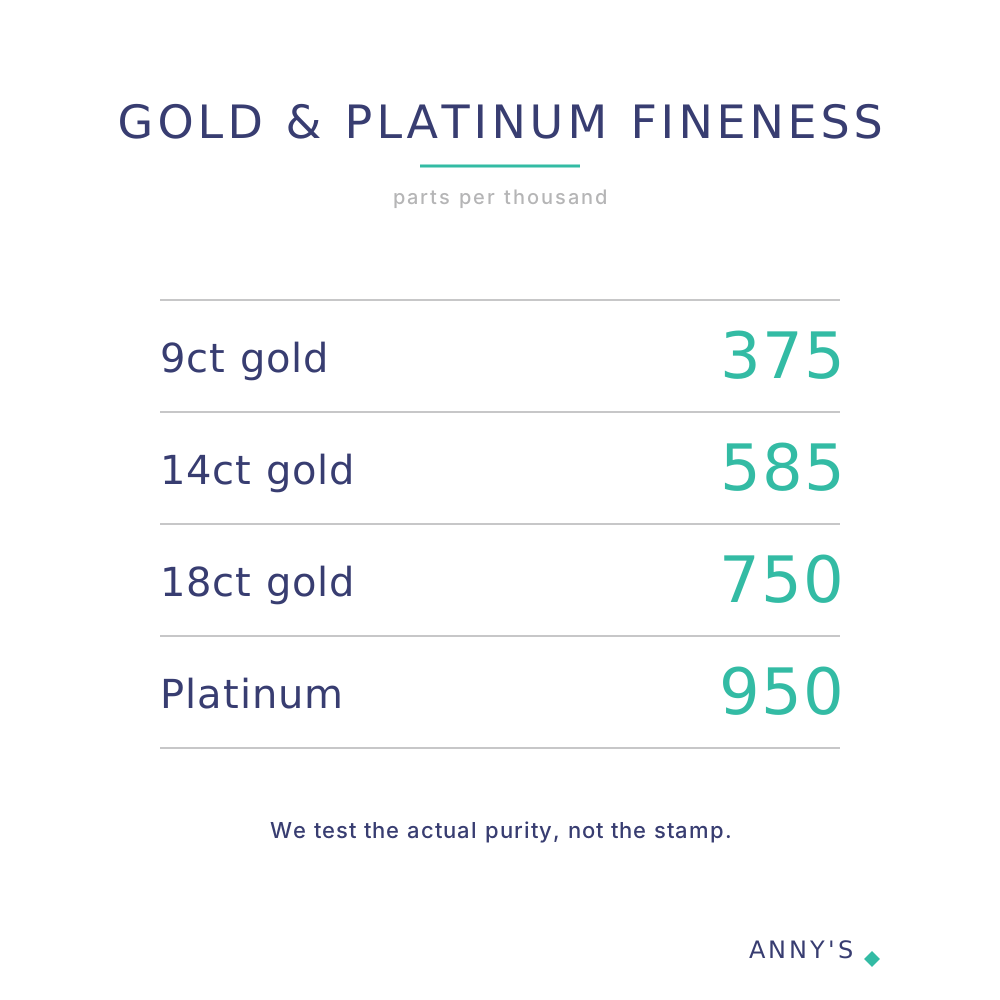
- What your metal really is. Gold fineness runs 9ct = 375, 14ct = 585 and 18ct = 750 parts per thousand, platinum typically 950 — the standard hallmarking definitions — and we acid-test the actual purity, not the stamp.
- The true condition of your stones. A diamond can be more included or tinted than you'd assumed, and some treated stones (emeralds especially) react badly to heat.
- Whether it's better kept whole. Sometimes a desirable antique cut — an old mine or old European cut, prized for the hand-cut, candlelight-era character GIA describes — is worth keeping intact rather than remade, and we'll tell you honestly if that's the better call.
For insurance, the NCJV (National Council of Jewellery Valuers) recommends reassessing a piece every two or three years. Anny's can provide an Anny's-supplied written valuation, signed by Chris Ozkoch — useful before remodelling and for re-valuing the finished piece afterwards. Confirm your insurer's requirements and current PDS before relying on it. The fee is $150 per piece, complimentary if we made or sold it to you; the assessment that tells you what your heirloom actually is costs nothing either way.
 View full size
How long does remodelling take, and will I lose the original stone or the meaning?
When the stones are suitable after inspection, the reused stones in your remodelled piece are the same physical stones from your heirloom — the actual gemstones move into the new design, so the meaning carries straight through. Most remodelling commissions take 4 to 6 weeks from the initial brief to the finished piece. More involved heirloom commissions can take up to 8 weeks. We confirm the timeframe at consultation, allowing for stone assessment, recutting and matching old metal.
On longevity, we build a little extra metal into a piece so a remade ring stands up to daily wear — quality, not a guarantee, since the ACCC notes that under Australian Consumer Law there are "no set rules for deciding whether a product is of acceptable quality, or how long a product should last for." Any care or further remodelling outcome is assessed after inspection, because condition and construction matter.
Frequently asked questions
What if my diamond is too small or a bit yellow for the new look?
You have options that don't mean replacing it. A smaller stone gains real presence with a new setting or a halo around it, and a warmer-toned stone can be flattered by a yellow- or rose-gold setting that turns its colour into a feature. Our in-house gemmologist assesses your stone first, so you choose with the full picture.
Will remodelling change my ring size, or can you adjust the fit?
If remodelling is suitable after inspection, it can be a good time to address a fit that has never been right. The approved 3D model can be sized for your finger, rather than assuming an old shank can be stretched; suitability still depends on the condition, design and materials.
Can you turn my grandmother's ring into a necklace — or a bracelet into earrings?
After inspection, compatible pieces may be redesigned as a pendant, earrings or a combined ring. Whether stones can be reset and gold reused depends on their condition, construction and suitability; bring the pieces in and we can talk through the options before any work is approved.
How do I know if my jewellery can even be remodelled?
Bring it in for a free inspection — after checking its condition, we can tell you whether gold, platinum or silver and the stones are suitable to rework. The usual limiters are worn, thin or damaged settings and the softer, fragile stones — emerald, opal and pearl in particular — which need careful handling. Walk-ins are welcome at the Frankston workshop, and we'll tell you honestly what's possible before you decide anything.
What's the difference between repairing, remodelling and a custom design?
Three different jobs. Repair restores what's already there, keeping your piece essentially as it was. Remodelling reworks your existing metal and stones into a genuinely new design. A custom design is a brand-new piece made from scratch. Repair if you love the piece as it is; remodel if you love the materials but not the design; commission custom if you're starting fresh. See what we can and can't repair and how a custom piece is designed and made.
About the author
Written by Chris Ozkoch · Reviewed by Harry Ozkoch, Master Jeweller.
Chris Ozkoch is part of the family team at Anny's Manufacturing Jewellers in Frankston, Victoria — a family business Established in 1990. Chris does the in-house CAD and 3D design work and signs Anny's-supplied written valuations; Harry Ozkoch is the Master Jeweller who leads the workshop.
Thinking about reshaping a piece that means something to you? Email us or visit our Frankston workshop — we'll talk through what it could become, and prove the design before we touch the metal. You Imagine. We Create.
Last updated: 30 August 2026 · Written by Chris Ozkoch · Reviewed by Harry Ozkoch, Master Jeweller.
Typical engagement and bridal ring turnaround: 3–4 weeks from CAD sign-off. We also have 2-week and 48-hour options for engagement and bridal rings. Get in touch and we'll help find an option that works for your timeframe.