Care, repairs & restoration
Told your ring can't be repaired? A second opinion in Frankston
Being told a ring is unrepairable does not always mean it has reached the end of its life. Some difficult jobs need a diamond setter and a goldsmith to work through the problem together.
At Anny's, both work in-house at our Frankston workshop, supported by specialist repair equipment. That gives us more ways to assess the setting, protect the stones and rebuild worn metal, including on jewellery bought elsewhere. The right solution may be a repair, a new section of band or a replacement setting.
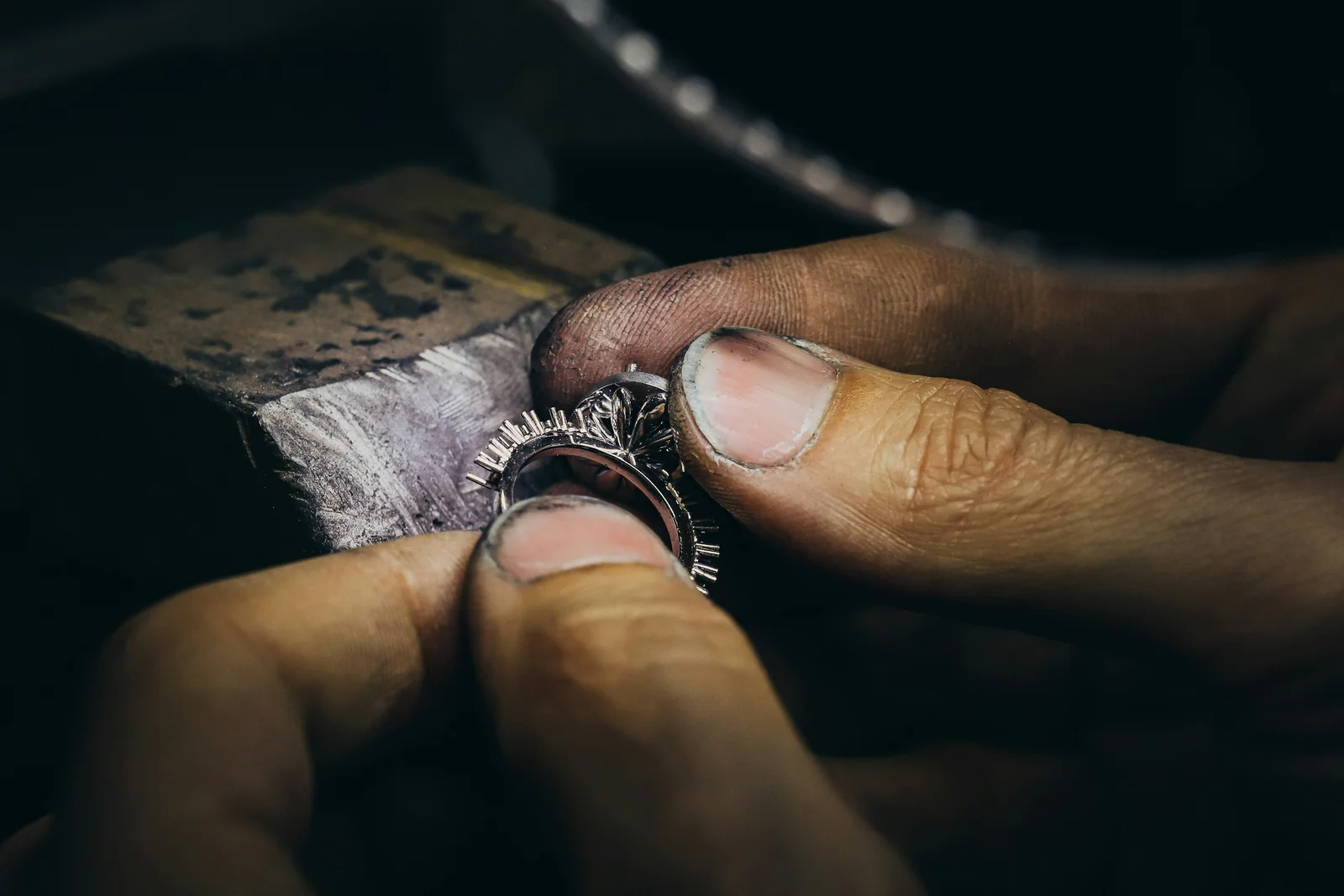
Why an in-house diamond setter matters
A difficult repair can involve two linked decisions: whether the metal can be rebuilt and whether the stones can safely remain in place. The goldsmith assesses the metalwork; the setter assesses how the stones can be removed, protected or reset.
At Anny's, both specialists can examine the ring in our workshop and plan the work together. A worn setting, for example, may need the setter to remove the stones, the goldsmith to rebuild the metal and the setter to secure the stones again. Laser welding and other specialist equipment give the team more options as the repair progresses.
Repair the damage, or rebuild the worn part?
A break and a worn-out band can look similar at first glance. Joining a break may be suitable when the surrounding metal is sound. It does not replace metal that has worn away elsewhere.
| What the inspection finds | An option to consider | What it involves |
|---|---|---|
| A localised break with sound metal around it | Rejoin the break | Prepare and join the damaged area using a suitable method. |
| Worn tips on otherwise sound claws | Retip the claws | Rebuild the small metal tips that hold the stone. |
| A thin, cracked or distorted lower band | Replace part of the shank | Fit new metal into the worn section. The shank is the band around your finger. |
| Claws or their supporting setting worn beyond a reliable repair | Replace the setting | Make or fit a suitable setting, assessing whether the existing stone can be reused. |
These are possible approaches, not diagnoses from a photograph. Several may be needed on the same ring.
If a stone moves, a claw has lifted or the band has cracked, stop wearing the piece until it has been checked. Avoid bending it back or testing the claws yourself. A loose diamond can gradually wear through its metal support, as GIA explains in its diamond care guidance.
How laser welding can help with a difficult repair
Laser welding can help us work precisely on suitable small areas and limit heat spread. Torch soldering remains useful too; the right method depends on the metal, construction and repair. LaserStar explains the difference between the two processes.
That precision does not make every stone safe to leave in place. The gemstone, existing damage, any treatments and the location of the repair all matter. Removing the stone first may be the more suitable approach, and that has to be assessed as part of the job.
For example, heat can extend existing fractures in emerald, while high heat can damage opal and pearl. Bring any gemstone reports or treatment information you have. They can help inform the assessment. See GIA's care guidance for emerald, opal and pearl.

What if the problem is the ring size?
There is no universal number of sizes every ring can move. We need to consider the metal, band thickness, stone settings, previous alterations and the change you need.
A plain gold band presents a different job from an eternity ring with stones all the way around. A larger change may require rebuilding part of the band, while some designs have little room for alteration without affecting the setting.
Alternative materials such as titanium, tungsten carbide and ceramic need advice specific to the material and maker. They cannot all be treated like a conventional gold ring.
If your knuckle is wider than the base of your finger, mention that too. Fit should account for getting the ring on and off as well as how it sits once worn.
How much of the original can you keep?
Tell us what matters most before deciding on the work: the original shape, an engraving, the stones or the feeling of wearing the same ring. A new lower band may preserve a treasured setting, while replacing the setting may change the appearance more noticeably.
If the structure is too worn for dependable everyday wear, a new mounting may still make use of suitable existing stones. GIA shows this distinction in its assessment of worn platinum jewellery.
Jewellery remodelling is another option if you want a different design. Reuse of the stones and metal needs assessment; not every component will be suitable. Keeping a fragile heirloom for occasional wear or as a keepsake can also be a meaningful decision.
Anny's ring repair prices
These starting prices help you understand the cost of common work. They apply to standard pieces in sound condition; a worn, antique or previously repaired ring may need a different approach.
| Repair | Silver | 9ct gold | 18ct gold | Platinum |
|---|---|---|---|---|
| Retip one claw | A$45 | A$65 | A$80 | A$80 |
| Retip six claws | A$240 | A$280 | A$390 | A$400 |
| Retip twelve claws | A$430 | A$540 | A$660 | A$660 |
| Retip one V-shaped claw | A$90 | A$100 | A$150 | A$160 |
| Tighten a whole ring (re-tighten every claw) | A$125 | A$125 | A$125 | A$125 |
| Remove the old setting and supply a new one | A$700 | A$850 | A$1,000 | A$1,200 |
All amounts are in Australian dollars and include GST. Prices checked against Anny's repair price guide on 20 September 2026; that schedule is effective from 28 August 2026. These are starting estimates, not a quote for your piece.
The published guide lists sizing down at A$150–A$350 and sizing up one size at A$180–A$400+ for a typical band. Width, metal, settings and the size change affect the quote. Complex bands can exceed these ranges.
Replacing a worn section of band, rebuilding an unusual setting or combining several repairs requires an individual quote after inspection. We can explain which work is needed before you decide.
What happens when you bring it to Anny's?
Bring the piece to 92 Young Street, Frankston. Walk-ins are welcome; no appointment is required.
- Show us the problem and its history. Bring any loose parts, previous repair information and gemstone reports. Tell us what another jeweller found and whether you want everyday wear or careful preservation.
- Discuss the options after inspection. We look at the piece, explain the proposed work and identify any parts that may need replacing. Complex jobs may need further assessment before a firm quote.
- Agree on the work and timing. The price depends on the work required, materials and any stone removal or resetting. Mention an important date early so we can discuss a realistic timeframe before you proceed.
Our full jewellery repair price guide also covers chains, clasps, finishing and other common work.
Two useful questions
Can you assess a ring bought somewhere else?
Yes. You are welcome to bring in jewellery bought elsewhere, inherited pieces and rings from jewellers who no longer trade. What we can offer depends on the piece's condition and construction.
Can I email photographs first?
Yes. Email clear photographs and a short description to info@annys.com.au. Photographs can start the conversation, but confirming the repair method and quote may require an in-person inspection.
Bring your ring in for a second opinion
We will help you understand the options and what each would mean for your piece.
Frankston workshop: 92 Young Street, Frankston.
Hours: Monday–Friday 10am–5pm; Saturday 10am–3pm.
Walk-ins welcome. No appointment required.