Natural Diamonds — Buyer's Guide for Melbourne
A natural diamond is pure carbon that crystallised deep inside the Earth under enormous heat and pressure, then travelled up towards the surface in volcanic rock long before there was anyone here to look for it. It is the same material as a lab-grown diamond. Origin, availability and individual quality affect price; report formats also vary by laboratory, service and date.
Most guides stop at "rarer, therefore dearer". That's true, and on its own it isn't much help. What follows is what the rarity actually looks like in numbers we can show you, what a grading report will and won't tell you about a stone, and what happens to a diamond between a supplier's tray overseas and your hand.
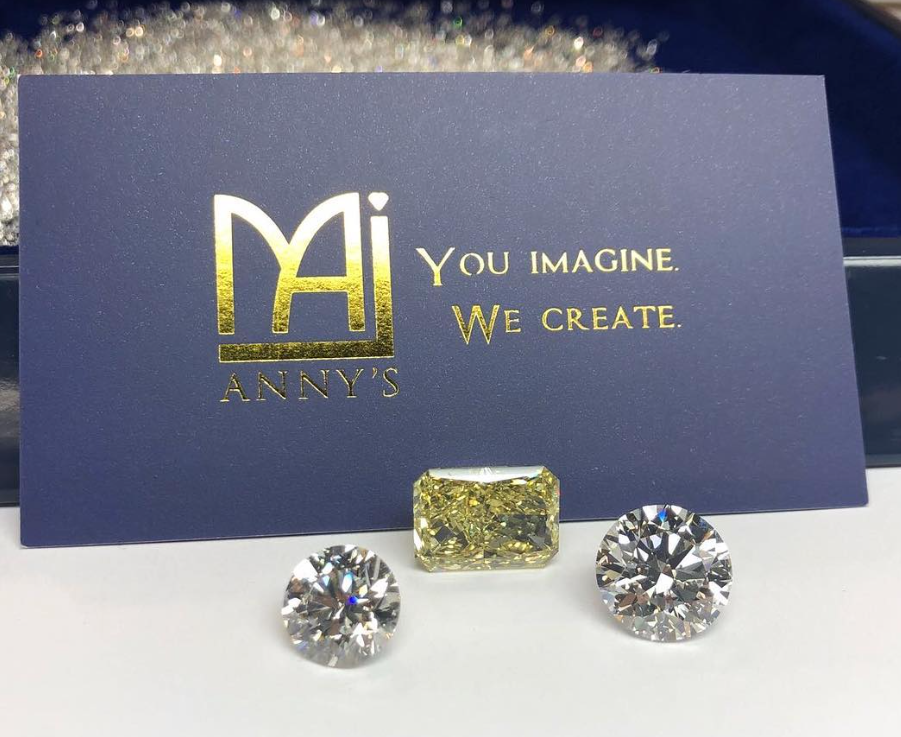
Natural diamonds in the live supplier inventory we search on your behalf.
Every natural stone carries a GIA report. Not one is uncertified.
No I, J, K or below, and there never has been — at those grades we find the tint strong enough to be visibly noticeable.
Formal, scheme-backed meaning for diamonds through the Kimberley Process.
What makes a natural diamond different?
Origin and supply — honestly, not much else. Put a natural and a lab-grown diamond of the same grade side by side and no loupe and no jeweller's eye will separate them; it takes proper testing equipment.
It formed the way carbon does under extraordinary conditions — deep in the Earth's mantle, under heat and pressure working over geological time, then carried up towards the surface in rare volcanic pipes of a rock called kimberlite. Our lab-grown diamonds guide sets out the pressure and temperature a reactor has to reproduce to do the same job in a few weeks.
What can't be reproduced is the supply. It's finite and inherited: nothing forming underground now will surface on any timescale that matters to us, so every natural diamond that will ever be sold is already here.
Our Frankston bench keeps equipment that tells natural, lab-grown and moissanite apart. Walk in and have a stone checked, whoever you bought it from.
There's no Kimberley-equivalent scheme for coloured stones. On a sapphire or an emerald, "conflict-free" means the seller's own assurance rather than an international certification.
A two-carat finished stone isn't "twice" a one-carat stone in any economic sense, because the crystal it was cut from was far rarer to start with. That one fact drives nearly everything about how natural diamonds are priced.
Finite supply shapes what we can put in front of you. A diamond isn't picked off a shelf; it's sourced — the stones behind the figures above are a live supplier feed we search on your behalf, and the one you end up with is a stone we've requested, had inspected and brought into the country for you. The full colour scale runs D to Z, but the tinted end of it isn't something you have to navigate here. Browse the natural diamonds, or tell us the shape and the budget and we'll do the searching.
What won't a diamond certificate tell you?
Quite a lot — and this is the part of buying a natural diamond that quietly costs people money.
A GIA report records the quality characteristics covered by its service. Where a laser inscription is present, it provides one check against that record. Read the measurements, identifying features and comments too, then assess how the stone looks.
A dark, bow-shaped shadow sitting across the middle of an elongated cut — an oval, a marquise or a pear. This contrast is affected by cut, lighting and viewing position, including light blocked by the observer. Judge whether it remains distracting as the stone moves.
A hazy, lifeless cast that can flatten a stone no matter how well it grades. Neither appears anywhere on a GIA or IGI report.
So a diamond can come back with an immaculate certificate and still look shadowed or dull in your hand — an awkward problem if you're buying online, because you can't see a bowtie in a product photo.
Our answer is unglamorous: a person looks at every stone. Before a diamond ships to us, an independent quality-control person overseas physically inspects it, specifically for bowtie and milkiness. If something's off, it doesn't leave — we go back and find you another one.
We've gone further into the tinge and milkiness side of this, including the supplier-side data a jeweller can see and you can't, on what diamond tinge and milkiness are. It's worth ten minutes before you spend five figures.
What certification should you look for?
For a natural diamond, GIA — every one we can source carries a report, as the figures at the top of this page set out.
Worth saying plainly, because it gets muddled elsewhere: that describes our suppliers, not a law of the industry. GIA grades lab-grown diamonds too — 30,920 of the lab-grown stones in the same feed carry GIA reports. It's simply that lab-grown supply arrives overwhelmingly IGI-certified, about 96% of it in our case. IGI lab-grown reports provide individual quality grades. Since 1 October 2025, GIA's eligible colourless-to-near-colourless lab-grown service uses Premium or Standard overall assessments. Older GIA reports can have different formats; compare the actual report and service. If you want the detail on how they compare and when the difference matters, our GIA vs IGI certification guide works through it.
- Buy certified.
- Where an inscription is present, compare it with the laboratory's official record alongside the stone's measurements and identifying features. An inscription alone is not conclusive authentication.
- Compare stones within the same lab where you can — it's the only genuinely like-for-like read.
What the report grades, it grades well; just don't ask it to tell you what the stone looks like.
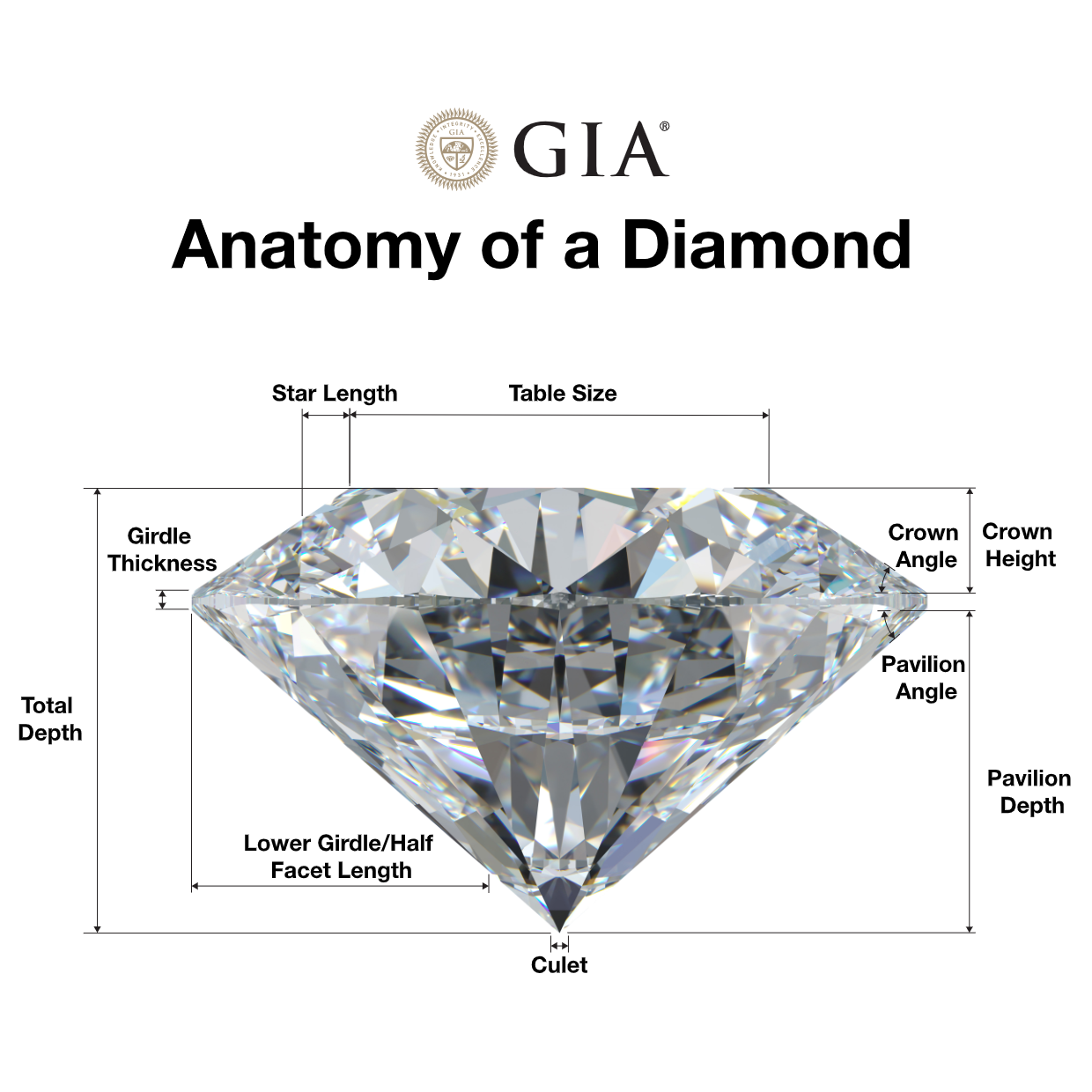
A diamond grading report is the scientific blueprint of a stone's quality characteristics. A GIA diamond grading report is your assurance that your diamond is a natural diamond, with disclosure of any treatment to enhance colour or clarity. The report provides the clear evidence that is vital to a confident purchase. A GIA Diamond Grading Report not only provides expert analysis of Colour, Cut, Clarity and Carat Weight, it also contains a plotting diagram that clearly shows a diamond's inclusions and clarity characteristics. The GIA Diamond Dossier® includes these without the graphical representation of the clarity characteristics. All GIA reports contain security features to prevent them from being forged or duplicated. GIA does not buy or sell diamonds, making an independent diamond grading report from GIA an unbiased assessment of the diamond.
Reproduced unaltered from the GIA Retailer Support Program, hence the American spelling. The last line is the part that matters: GIA doesn't trade in diamonds, so its read on a stone has nothing riding on the sale.
How does natural diamond pricing work?
Not in a straight line, and that's the whole story. The only honest way to show it is to hold the stone's quality still and change one thing at a time. So here is a like-for-like price list: every diamond below is E colour, VS2 clarity, no fluorescence, Excellent cut — a genuinely fine, eye-clean, white specification that most people actually buy at — and the only things that move are the weight and the shape.
| Carat | Round brilliant | Oval | Oval vs round |
|---|---|---|---|
| 0.80ct | $3,621 (31) | $3,611 (2) | — |
| 0.90ct | $4,958 (24) | $4,243 (12) | 14% less |
| 1.00ct | $7,573 (79) | $6,918 (37) | 9% less |
| 1.50ct | $16,222 (39) | $14,894 (16) | 8% less |
| 2.00ct | $32,883 (21) | $29,296 (11) | 11% less |
Median asking price in AUD including GST, read from our supplier feed on 3 September 2026. The figure in brackets is how many stones that median is drawn from. Carat labels are trade bands — "1.00ct" means 1.00–1.09ct. Prices move with the market, and the exact stones turn over weekly.
Price is not proportional to size
Going from 0.80ct to 2.00ct multiplies the weight by two and a half, and the price by nine. The reason is visible in the price of a single carat, which climbs the whole way up.
A carat costs $4,527 when you buy it inside a 0.80ct stone and $16,360 when you buy it inside a two-carat one — nearly four times as much for the identical grade of material. You're not paying that because a jeweller decided to charge it. You're paying it because large, clean natural rough gets scarcer faster than it gets bigger.
| Carat | Per carat |
|---|---|
| 0.80ct | $4,527 |
| 0.90ct | $5,509 |
| 1.00ct | $7,498 |
| 1.50ct | $10,815 |
| 2.00ct | $16,360 |
The step from 0.90ct to 1.00ct
That is about a tenth of a carat more diamond for 53% more money — $4,958 becomes $7,573 — because one carat is a threshold the whole trade prices against, and because a cutter will sacrifice yield to land above it rather than below.
If you are near that line and the number printed on the report matters less to you than the stone does, a well-cut 0.90ct is the best value on this page.
A difference of roughly two tenths of a millimetre. Nobody has ever noticed.
Fancy shapes cost less than round — here's how much
Round is the most expensive shape in every carat band, and the reason is waste. Rough crystals are broadly octahedral, so rounding one off throws away more of it than almost any other outline — a round brilliant typically yields around 40% of its rough, where an oval keeps considerably more. You are paying for the part that ended up as dust.
At an identical E / VS2 / no-fluorescence specification, the oval column above runs 8–14% under round from 0.90ct up.
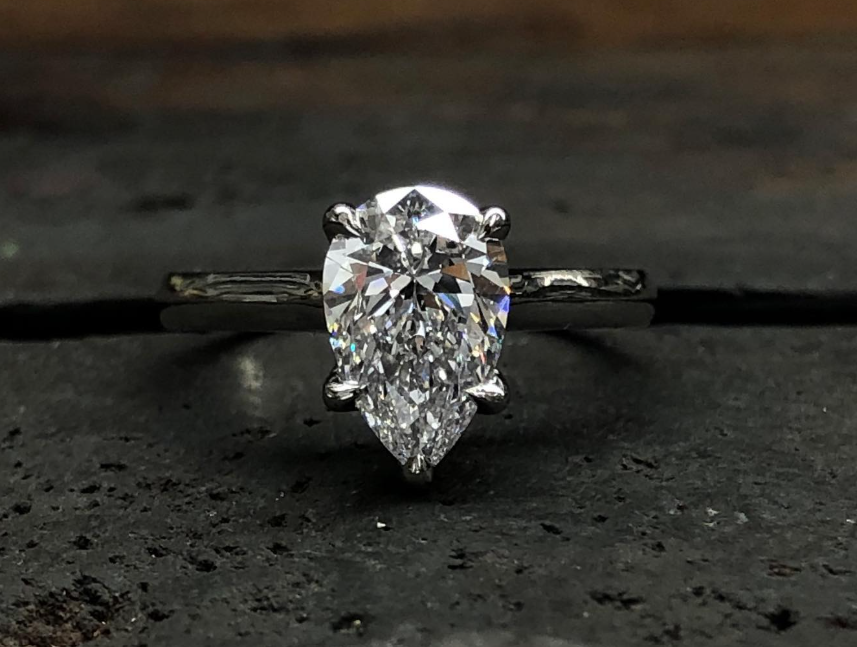
An oval also spreads its weight along its length rather than down into the pavilion, so it reads larger than a round of the same weight while costing less — the one place in diamond buying where the cheaper option is also the bigger-looking one.
The 0.80ct row is drawn from just two stones, so read it as a sighting rather than a market rate — and why it is thin is itself worth knowing: cutters push oval rough past the 0.90ct and 1.00ct thresholds wherever they can, so supply below them dries up.
Standard GIA reports do not assign ovals the overall cut grade used for round brilliants. IGI offers fancy-shape cut grading, and separate light-performance reports may be available. The oval “Excellent cut” label in this comparison is listing terminology, not a standard GIA overall cut grade. Check the actual document and assess the stone in motion.
Lab-grown does the opposite of all of this
Matched to the same specification, its price per carat falls as the stone gets bigger — about $1,487 per carat at 0.80ct down to $1,084 at two carats — because production scales rather than compounds.
E VS2 and no fluorescence in both cases. That contrast explains the gap between them better than any percentage. If you are genuinely torn, the discount at each carat weight and a matched-specification anchor are set out in our lab-grown vs natural diamonds guide.
There's no natural diamond under $1,000 in the range we search, not one, so if that's the budget the honest conversation is about a lab-grown stone or a coloured gemstone rather than a very small natural.
A finished natural-diamond engagement ring at Anny's typically lands between AUD $8,000 and $30,000 — the whole ring, designed, made and set, not the loose stone.
Why buy your natural diamond from Anny's?
Because three separate people look at your stone before you're committed to it, and one of them isn't on our payroll.
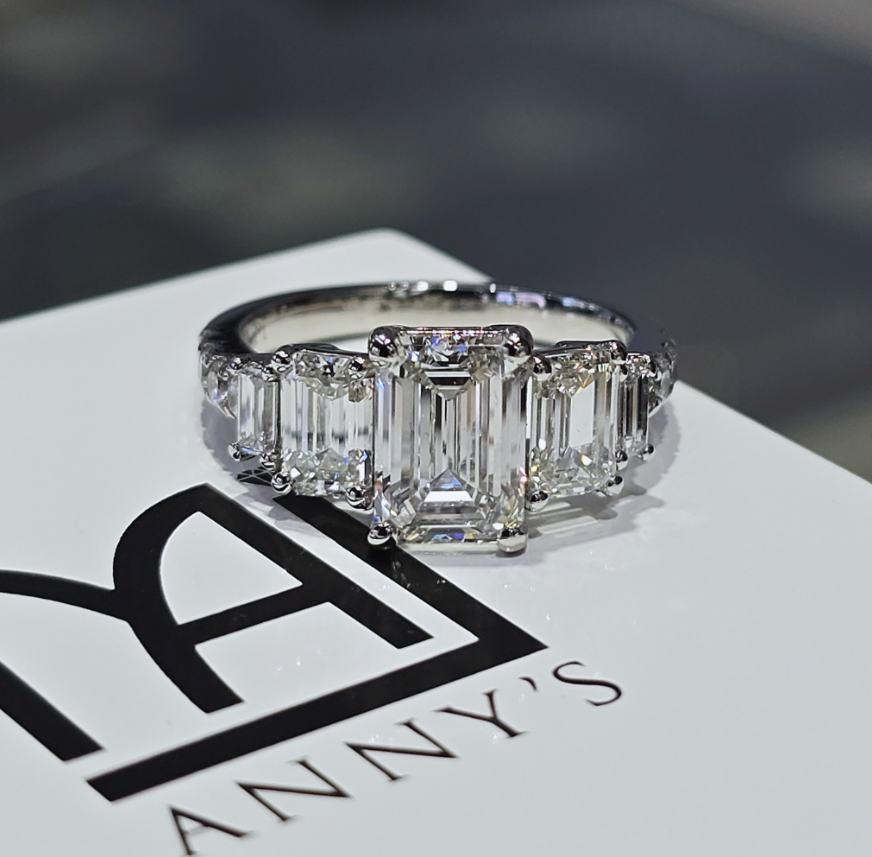
Inspects the stone before it ships, looking for the bowtie and milkiness no report grades.
Checks it again on arrival in Melbourne, before it goes any further.
The diamond stays in our showroom throughout the seven-day decision period. If it isn't right, tell us within that window. We arrange its return to the supplier and refund the deposit less a $150 return fee for shipping and customs. Over half the range is return-eligible rather than all of it, so ask us whether the stone you're looking at qualifies before you commit. It's a real viewing window with a known cost attached, not a blanket returns policy, and we won't dress it up as one.
We've been a family business in Melbourne since 1990 — over 36 years, with a team of about ten makers working in-house. Walk-ins are welcome at the Frankston workshop; it's a working bench, not a showroom with a bench out the back. The Collins Street showroom is for engagement and wedding rings; email us before visiting.
Everything you buy from us comes with Lifetime Cleaning and Polishing, and engagement and wedding rings can be resized free — one free resize within the first 2 months, for a change of up to three ring sizes. See Anny's Guarantee for what else is covered.
Common questions
Is a natural diamond harder or more durable than a lab-grown one?
No — they're identical. Both score 10 on the Mohs scale, both share the same refractive index, and neither yellows, clouds or loses its fire. Durability in practice is about the setting rather than the stone: claws wear thin over decades of daily knocks, which is why we'd rather see a ring back on the bench every couple of years for a check.Can you source a natural fancy coloured diamond?
Yes — pink, yellow, blue and so on. They aren't on the website yet, so there's nothing to browse, but we have access to natural fancy colour and can search for you. It's a different market from white diamonds and it sits well above them on price, so it's a conversation rather than a price list. Tell us the colour and the budget.How long does it take to make a ring around a natural diamond?
Plan on roughly seven working days for the stone to arrive once it's secured, then 3–4 weeks from CAD sign-off to make the ring. If the workshop has capacity we can sometimes turn a custom piece around in one to two weeks, but that depends entirely on what's on the bench — ask before you count on it.Do you charge to value a natural diamond ring?
Valuations are $150 per piece, and complimentary if we made or sold it to you. Chris Ozkoch signs them, and they're written for insurance and market-value purposes. Any piece bought from us over $3,000 comes with a complimentary certificate as standard, so most of our own customers never need to pay for one.Why choose a natural diamond over a lab-grown one?
Because of what it is. A natural diamond formed in the Earth's mantle over a span of time that is hard to hold in your head, and it was carried up and cut for you — that origin is the whole of the difference, and it is not something a reactor can offer. What it costs you is size: at any given budget a lab-grown stone will be larger and cleaner. Neither is the wrong answer. We sell both, we will set them side by side for you, and we will not push you toward either.
Every natural diamond we can search carries a GIA report
Tell us the shape and the budget and we'll do the looking.