Melbourne CBD
Melbourne showroom
257 Collins Street, Level 3Melbourne VIC 3000
Email us before visiting Collins Street. Please wait for our email confirmation before coming in.
Arrange your visitCare, Repairs & Protection
Two things protect an engagement ring: the right insurance cover, and a current valuation. The valuation sets the figure you seek cover for — always retail replacement value, what it would cost to replace the ring new today, not what it would resell for. The cover decides where and how you're protected: a ring is often worth more than the per-item cap on a basic home/contents policy, so it usually needs to be specified, with portable cover for when you wear it out. We don't sell insurance and we don't compare policies; our part is an Anny's-supplied written valuation, signed by Chris Ozkoch, that you can provide to your insurer — $150 per piece, complimentary if we made or sold it to you, and we'll value a ring even if we didn't make it. Confirm your insurer's requirements and current PDS before relying on it. As for revaluing: the trigger is gold, not the calendar — more on that below.
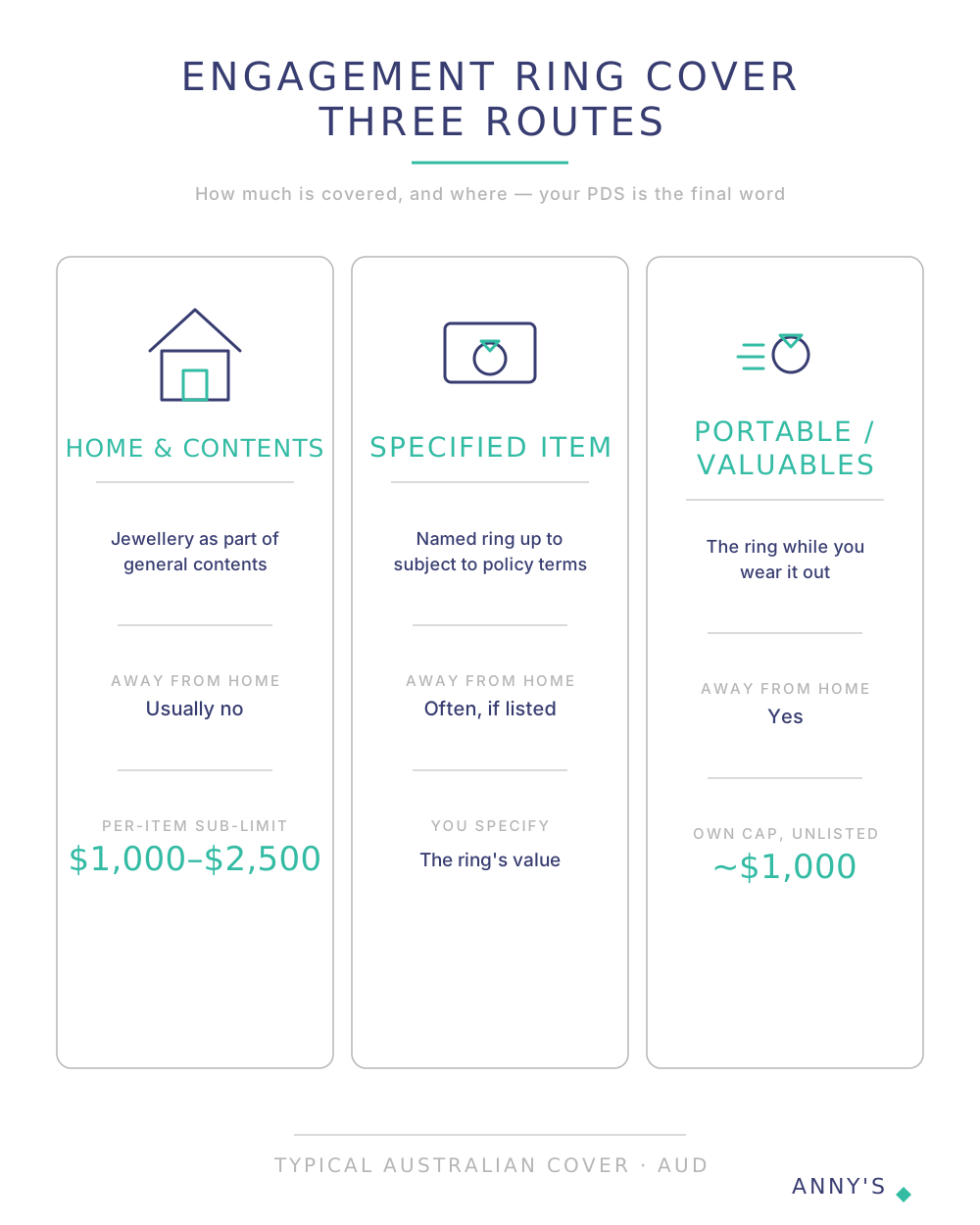
In Australia you've really got three ways to insure an engagement ring. Home and contents covers your belongings as a group, but jewellery carries a per-item sub-limit. Specifying (listing or scheduling) records the ring at a value your insurer accepts for the policy. Portable contents ("personal valuables") protects the ring away from home — as MoneySmart (ASIC) explains, it "protects some of your belongings away from the house," usually with its own cap, and "may be an optional extra." A higher-value ring may need specified and portable cover; check your insurer's current PDS and requirements.
And we'll be straight: we don't sell insurance and we don't recommend a particular insurer.
 View full size
It comes down to how much is covered and where. Limits vary a lot, so your PDS is always the final word:
| Cover type | What it covers | Away from home? | Typical limit / do you specify? | Best for |
|---|---|---|---|---|
| Home & contents (unspecified) | Jewellery as part of your general contents, mainly at home | Usually no | Per-item sub-limit, commonly around $1,000–$2,500 | Lower-value pieces within the cap |
| Specified / listed item | The named ring, subject to the policy terms | Often, if listed for away-from-home use | Give your insurer the ring's current value and its requested documentation | An engagement ring worth more than the cap |
| Portable / personal valuables | The ring while you wear it out and about | Yes — that's the point | Own per-item cap (often around $1,000 unlisted); list higher-value items | A ring worn daily, outside the home |
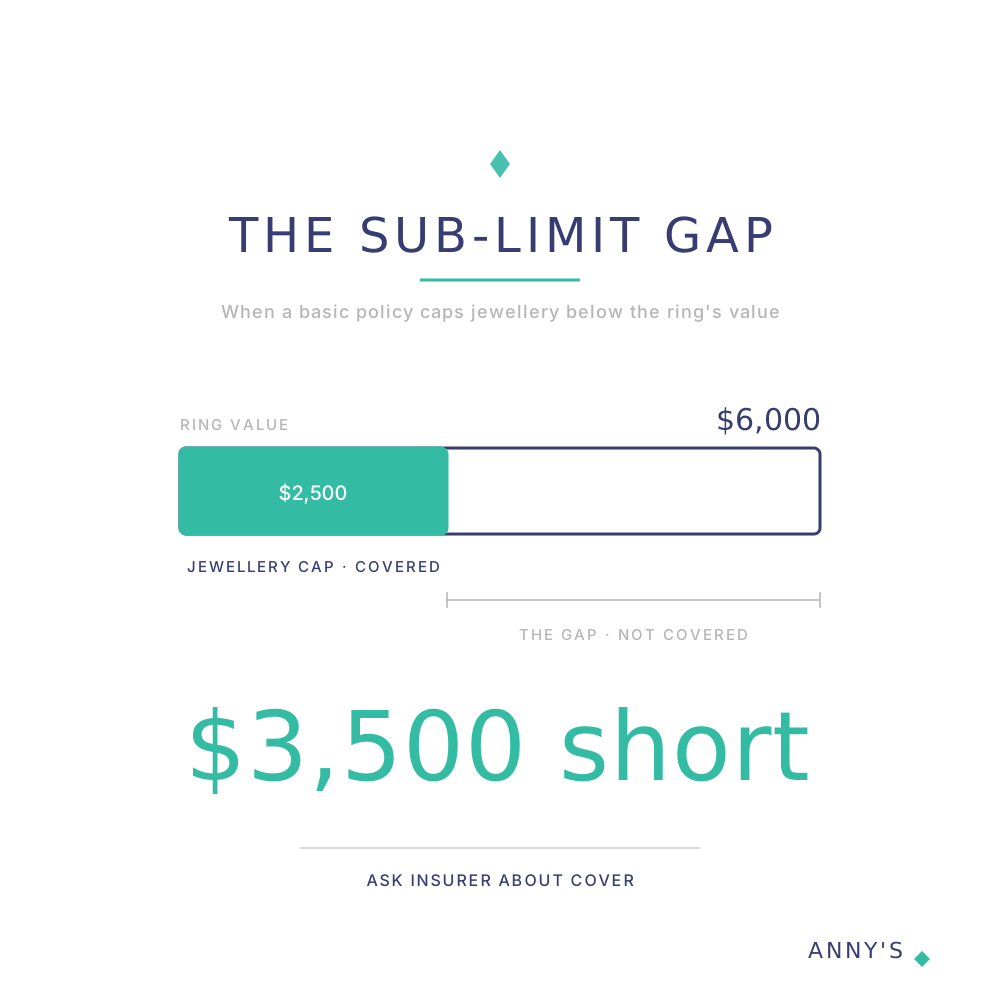
A sub-limit is the most an insurer will pay for one item, even if your total contents sum insured is much higher. For unspecified jewellery, that per-item cap commonly sits around $1,000–$2,500 — and an engagement ring can quietly sail past it. A $6,000 ring that hasn't been listed, on a policy that caps jewellery at $2,500, leaves you $3,500 short if it's lost. That shortfall is underinsurance — which MoneySmart (ASIC) defines as when your insurance "won't cover the full cost to rebuild, repair or replace what you've lost." Ask your insurer whether specifying the ring and adding portable cover meet its current PDS requirements.
 View full size
Many insurers ask for a current valuation, but requirements vary. Anny's can provide a written valuation signed by Chris Ozkoch for you to give your insurer; the insurer decides the insured value and documentation it accepts under the current PDS. MoneySmart warns that "many people pick a number that sounds right" only to find it "may fall well short of what's needed," so check the policy before relying on any valuation.
Our jewellery valuations and insurance guidance can provide an Anny's-supplied written valuation signed by Chris Ozkoch; confirm with your insurer and current PDS that it meets their requirements.
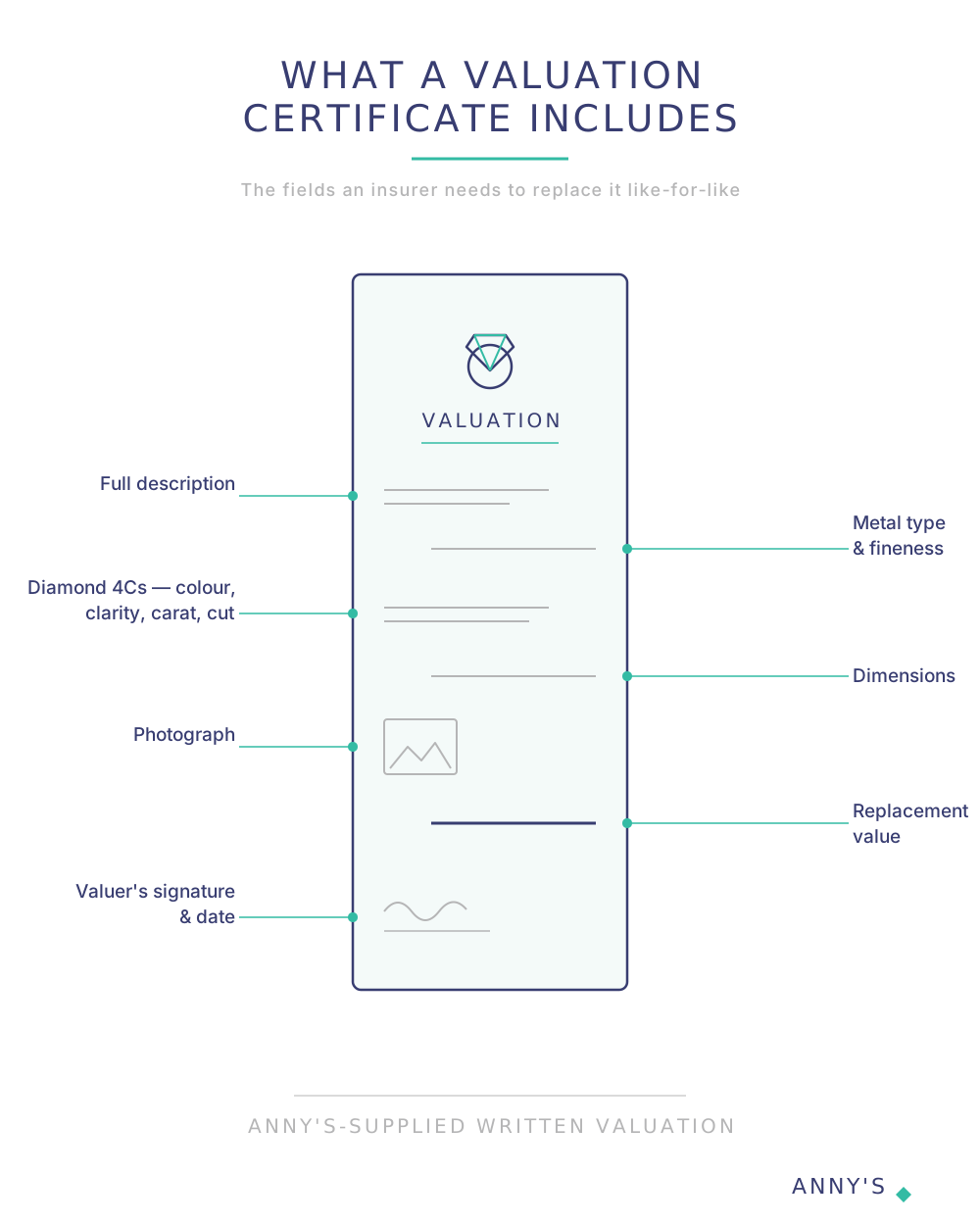
A sound insurance valuation describes the ring in enough detail to replace it like-for-like — in the NCJV's words, "a full description and a statement explaining the purpose of the valuation and the intended market." A good certificate typically states:
A word on requirements, because they vary. We provide an Anny's-supplied written valuation signed by Chris Ozkoch. If an insurer specifies a particular form, credential or process, confirm it with them and your current PDS before requesting a valuation.
When you buy a piece from us valued over $3,000, that written valuation comes complimentary — covering the detail set out above, signed by Chris Ozkoch. For an individual diamond, we use the available GIA or IGI grading report for that stone rather than a certification label.
 View full size
Industry guidance is to revalue roughly every two to three years. The National Council of Jewellery Valuers advises that an item's value "can fluctuate," so it should be "reassessed every two or three years to ensure it is current and meets your insurance requirements." (The Jewellers Association of Australia is a touch tighter, suggesting about every two years.)
Our own advice is a little different, and we think more useful: watch the gold, not the calendar. With the large fluctuations in gold prices, if your piece is heavy — a decent amount of gold in it — we'd say yes, get it revalued. That's the real trigger. A substantial 18ct band or a solid setting carries enough metal that a move in the gold price changes what it would cost to replace, sooner than a fixed interval would catch it. A light, stone-dominated ring drifts far less.
Exchange rates and diamond prices move too, so a figure that was right three years ago can leave you under- or over-insured today. Your insurer may set its own schedule, so check your PDS — and MoneySmart advises reviewing your cover every year and after any big purchase.
Yes — we value rings we didn't make, including inherited and older pieces. This matters most if you've been left a ring with no paperwork: an insurer may ask for current documentation before offering or updating cover. Our fee is $150 per piece — complimentary if we made or sold it to you. It's the same figure whatever the ring turns out to be worth, so you know the cost before you hand it over.
There's a quiet reason to choose your valuer carefully. As the Jewellers Association of Australia points out, in Australia "individuals are not required to be members of a professional body to provide jewellery valuation services" — so anyone can hang out a sign. That's why our valuations are signed by a named family jeweller, Chris Ozkoch, with gem and diamond authority anchored by our in-house FGAA-accredited gemmologist and Master Jeweller Harry Ozkoch — real people at a real bench standing behind the figure. It's part of being looked after for life at our family workshop, established 1990: the same bench that values a ring can remake it.
They do two different jobs: a grading report gives the facts, a valuation gives the value. A GIA or IGI diamond report sets out the individual stone's 4Cs and identity but states no price — as GIA explains, "no appraisal value is stated," and IGI takes the same position. A valuer can use the grading-report facts and current retail replacement pricing to prepare a valuation; your insurer then decides the cover and documentation it accepts. Build it on the actual report available for that stone and it is clearer; build it on a guess and it's just a number. That's why our diamonds have GIA or IGI grading reports.
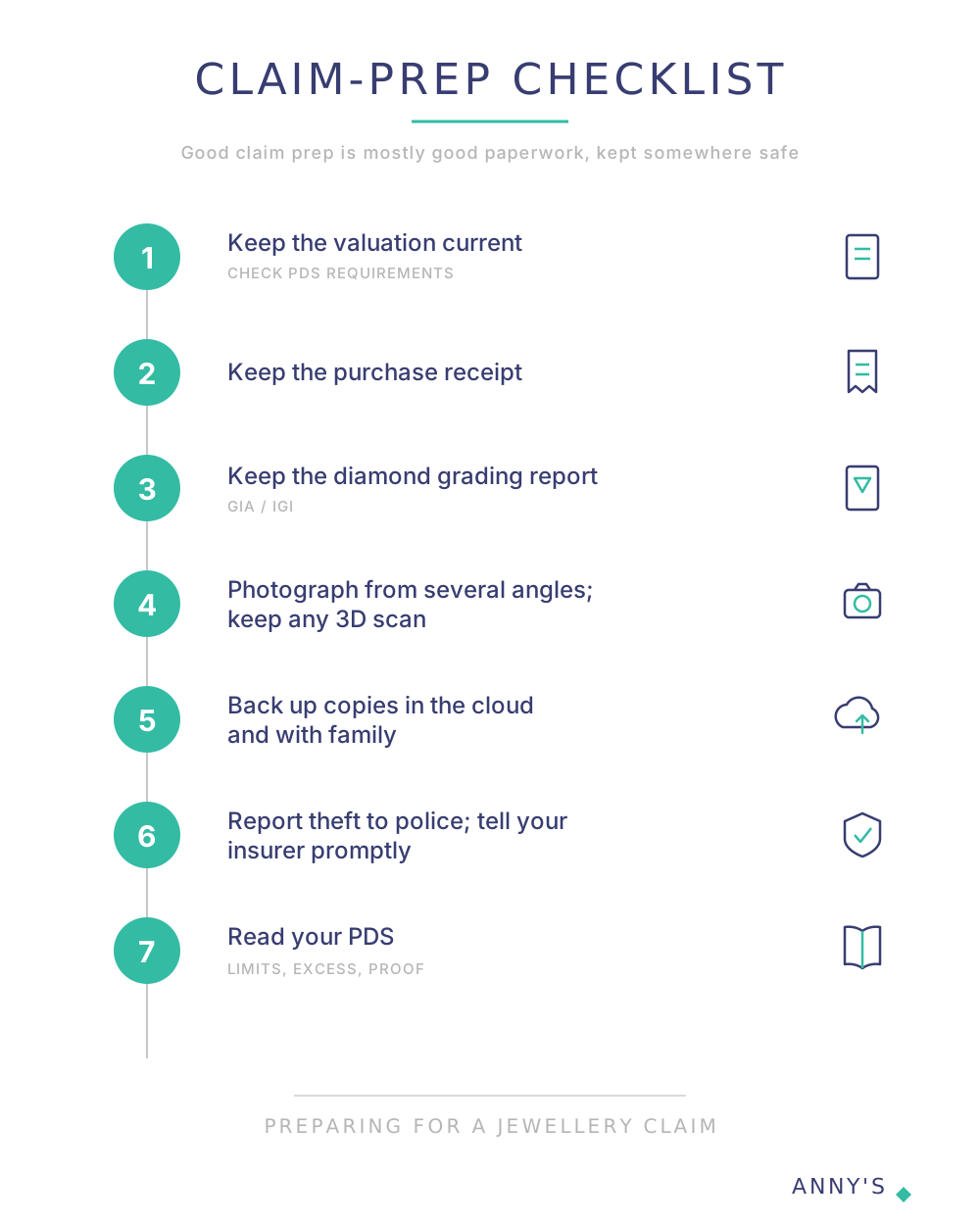
Good claim prep is mostly about good paperwork, kept somewhere safe. Here's the checklist we'd give a customer across the counter, in line with the Jewellers Association of Australia's advice:
One honest thing to expect: as the JAA notes, many policies "reserve the right to have a jewellery item repaired or replaced by a jeweller of their choice — even if the item was a one-off designer piece." Some, though, let you come back to your original jeweller — and for a piece we made and still hold the grading report for, that means the very maker can recreate it.
 View full size
Replacement value is what it would cost to buy the piece new today, at full retail — that is the figure an Anny's-supplied written valuation can state for your insurer to consider. Resale value is what you'd actually be paid selling the same piece second-hand, and it typically sits well below replacement value. The two numbers measure genuinely different things, and mixing them up is one of the most common insurance mistakes we see across the counter.
MoneySmart (ASIC) makes the same point about insurance generally: standard "new for old" cover pays the full cost of replacing your belongings with new ones, "which often cost more" than the worn items they replace. The Jewellers Association of Australia notes that a valuation can be prepared against different markets — "retail replacement, deceased estate, auction reserve and more" — that "can vary significantly"; for insurance, it should always be retail replacement, not one of the others.
| Value type | What it means | What it includes | Used for | Typically |
|---|---|---|---|---|
| Replacement value | What it costs to buy the piece new today, at full retail | Materials, labour and current retail mark-up | Your valuation certificate and insured sum | The higher figure |
| Resale value | What you'd actually be paid selling the piece second-hand | Only what a buyer is willing to pay for a pre-owned piece | Selling privately, trading in, or an estate/auction value | The lower figure — often well below replacement value |
None of this is specific to engagement rings. The same gap applies to any piece of fine jewellery — gemstones and precious metals generally don't appreciate the way collectibles or antiques sometimes do, so resale usually sits well below replacement, whatever the piece.
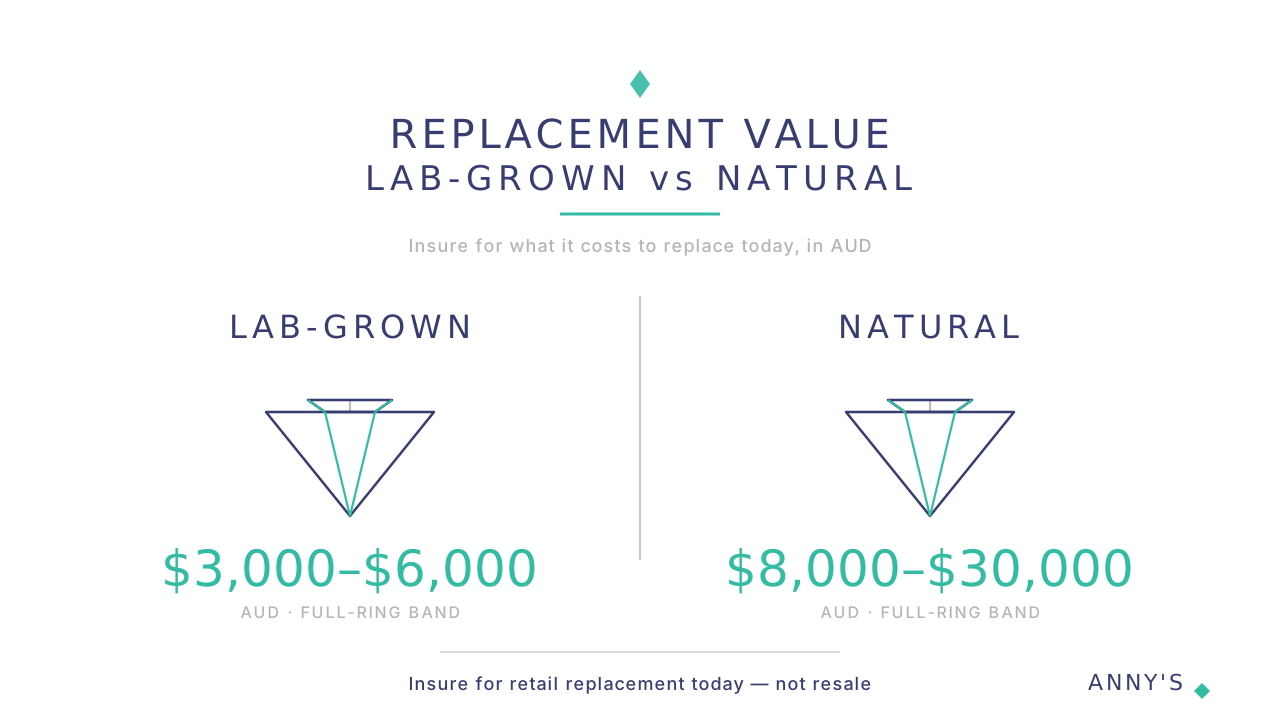
For engagement rings specifically, lab-grown diamonds make the replacement-value point sharply: their retail prices have fallen in recent years, so the replacement cost — and the right sum insured — can actually drop over time, the opposite of what most people assume. As a rough guide, our lab-grown engagement rings sit around AUD $3,000–$6,000 and natural-diamond rings around AUD $8,000–$30,000 — revisit the figure at each revaluation rather than assuming it only moves upward.
 View full size
Fees vary between valuers, so ask yours upfront. Ours is straightforward: $150 per piece — complimentary if we made or sold it to you. On a piece bought from us valued over $3,000, the certificate comes with it.
A lost receipt does not necessarily end a claim. MoneySmart (ASIC) notes that useful claim evidence includes "serial numbers, receipts, warranties, photos, condition and the date of purchase" — keep a current valuation certificate, clear photos and any bank or purchase record, then ask your insurer what it accepts for the particular claim. This is why keeping a valuation on hand matters even for a ring you've owned for years — see the claim-prep checklist above.
No — and we'd rather be straight about this. A valuation is a replacement figure for insurance, not a promise the ring will grow in value or fetch that amount second-hand. Treat your ring as something meaningful to protect and replace — never as an investment.
No — a valuer prices the physical piece: its metal, stones and what it would cost to remake, not what it means to your family. An heirloom's worth to you is priceless; ask your insurer whether it requires a current valuation based on replacement value for the particular policy — see can you value a ring you didn't make above.
About the author: Written by Chris Ozkoch, who signs Anny's-supplied written valuations, and reviewed by Harry Ozkoch, Master Jeweller. Anny's Manufacturing Jewellers is a family business in Frankston, Victoria, Established in 1990, with gemmology anchored by FGAA-accredited gemmologist Lisa D.
Last updated: 30 August 2026.
Whenever you're ready, Email us about a valuation or insuring your ring. Before relying on a valuation, confirm your insurer's requirements and current PDS.
Typical engagement and bridal ring turnaround: 3–4 weeks from CAD sign-off. We also have 2-week and 48-hour options for engagement and bridal rings. Get in touch and we'll help find an option that works for your timeframe.
Made personal, at Anny's
Melbourne CBD
Email us before visiting Collins Street. Please wait for our email confirmation before coming in.
Arrange your visitOur Frankston home
Visit us to talk through your ideas, explore designs and find your perfect fit.
Explore our Frankston showroomTypical engagement and bridal ring turnaround: 3–4 weeks from CAD sign-off. We also have 2-week and 48-hour options for engagement and bridal rings. Get in touch and we'll help find an option that works for your timeframe.
Typical repair turnaround: 1 to 7 business days, depending on complexity and customer urgency
Anny's Manufacturing JewellersABN 88 447 171 579