Engagement Rings
How Much Does an Engagement Ring Cost in Australia? (2026)
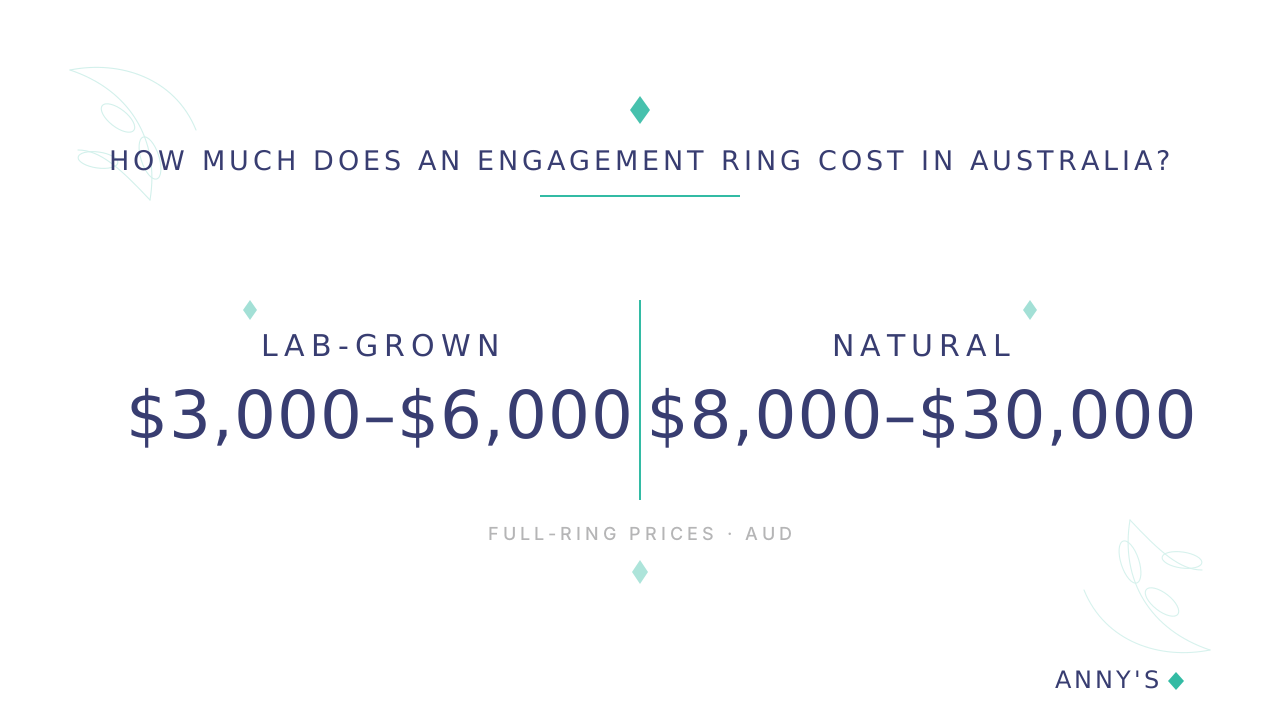
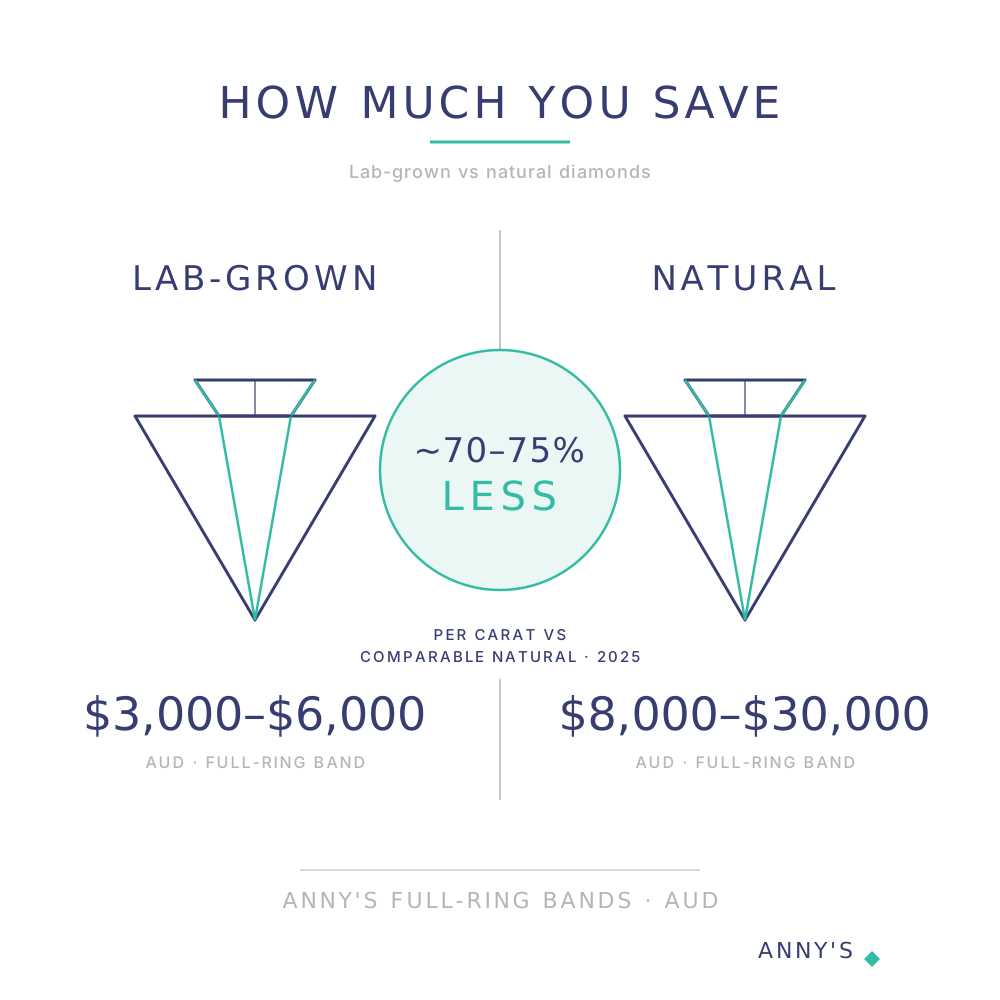
Here's the short, honest answer we'd give you across the counter: at Anny's, a lab-grown-diamond engagement ring usually runs AUD $3,000–$6,000, and a natural-diamond ring AUD $8,000–$30,000. Those are full-ring prices — centre stone, metal and setting all in, not loose-stone quotes — and where you land comes down mostly to the diamond. The published Australian average is around AUD $5,854, right in the lab-grown band, so most budgets land more comfortably than that big natural range suggests. Below: what really drives the price, whether the "two months' salary" rule deserves a second thought (it doesn't), and how to get the loveliest ring for your money.
| Ring type at Anny's | Typical AUD band (full ring) | What's driving the price |
|---|---|---|
| Lab-grown-diamond engagement ring | $3,000–$6,000 | Lab-grown centre stone, your choice of metal and setting |
| Natural-diamond engagement ring | $8,000–$30,000 | Natural centre stone (carat + 4Cs the biggest lever), metal, setting complexity |
Have a browse of Anny's engagement rings to see where your budget lands, or how we choose our diamonds with GIA or IGI grading reports. Worth knowing up front:
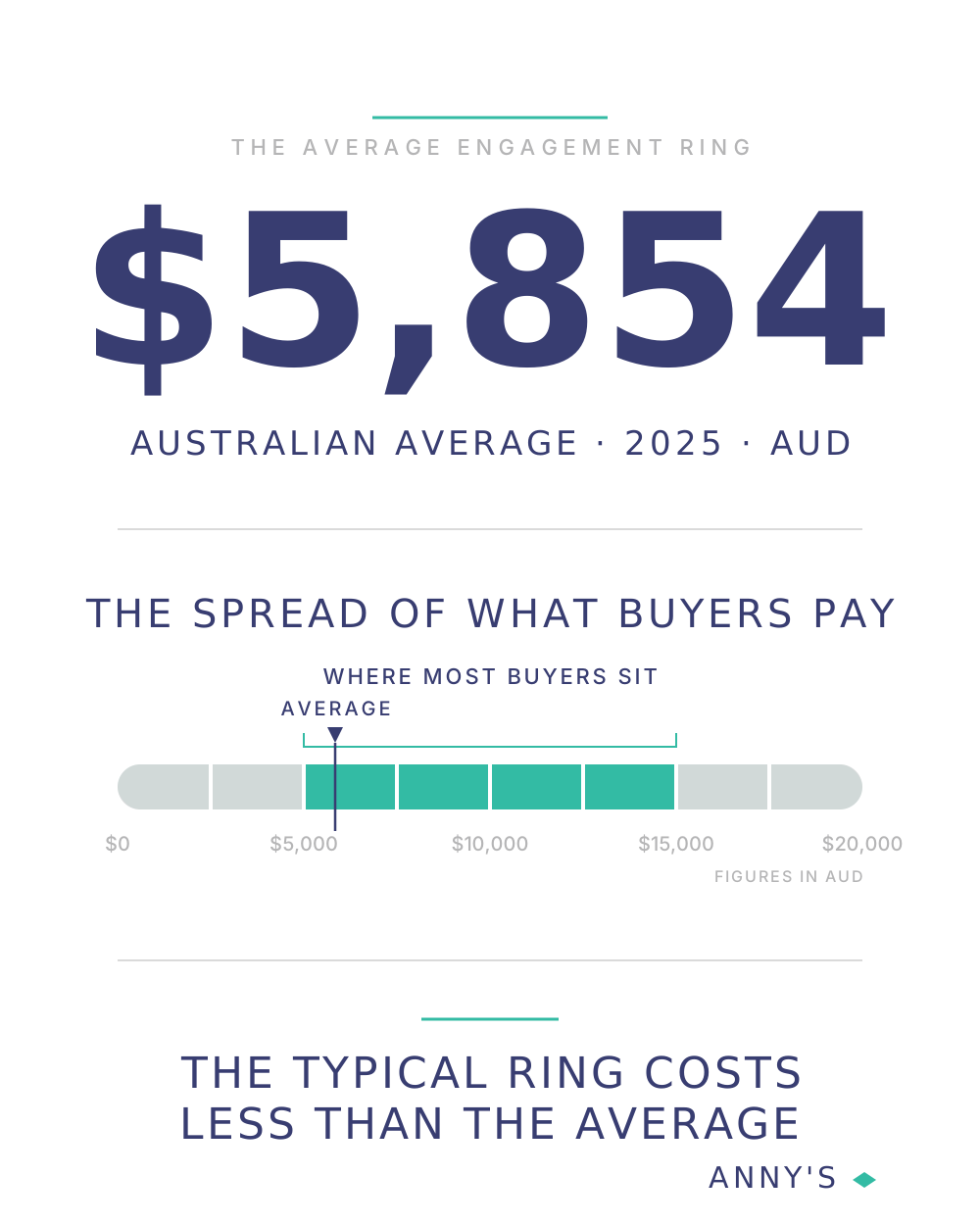
- Most Australian buyers spend between $5,000 and $15,000 (Q Report) — the national average is a guide, not a target.
- Lab-grown's discount grows with the stone: on our own matched F/VS2 figures, 76.3% less at one carat, from about 40% at 0.30ct to about 92% at 2ct and above.
What's the average spend on an engagement ring in Australia?
The best recent figure is around AUD $5,854, published by specialist jewellery insurer Q Report and drawn from 2025 wedding-industry survey data rather than its own claims book (Q Report, updated July 2026). It's a single national average across every kind of ring, so treat it as a guide rather than a target: Q Report puts the majority of Australian buyers between about $5,000 and $15,000, with the $5,854 average sitting inside that range, close to its lower bound.
Honestly? There's no official Australian figure — the Bureau of Statistics lumps engagement rings in with watches and handbags under "personal effects" (ABS methodology) — so we go by the big wedding surveys, and just as much by what we see across our own bench every week; city overheads nudge prices up a little, quieter regions a little down.
 View full size
How much should you actually spend? (Is the "two months' salary" rule real?)
Spend what feels right for your life — not some fixed slice of your income. The "two (or three) months' salary" idea isn't an old tradition at all: it came out of 20th-century De Beers advertising, run by agency N.W. Ayer, whose work for the diamond firm began in September 1938 (Daily Maverick, 2021). The "salary" figure kept creeping up — one month's pay in the 1970s–80s, "which subsequently increased to circa two to three months" (Sotheby's) — until by the 1980s it was in the ad copy itself: "How can you make two months' salary last forever?" (Al Jazeera, September 2025). A figure that conveniently keeps climbing isn't a tradition; it's an ad budget. Set your own number, based on what you can comfortably afford and what your partner would love.
What matters more than the total is where it goes. Every ring balances three things — band weight, stone size, and certification grade — and the money doesn't sit evenly across them. A bigger or better centre stone is money you can see; a thicker band or a higher cert grade is mostly invisible in a photo, showing up later in how the ring wears and how airtight the paperwork is. Neither is wrong to prioritise. But a ring built too light to hit a lower number can look identical in a photo to one built properly — the difference only shows up on the hand and at the valuation desk — so it pays to know where your dollars are visible before you set the budget.
What drives the price of an engagement ring?
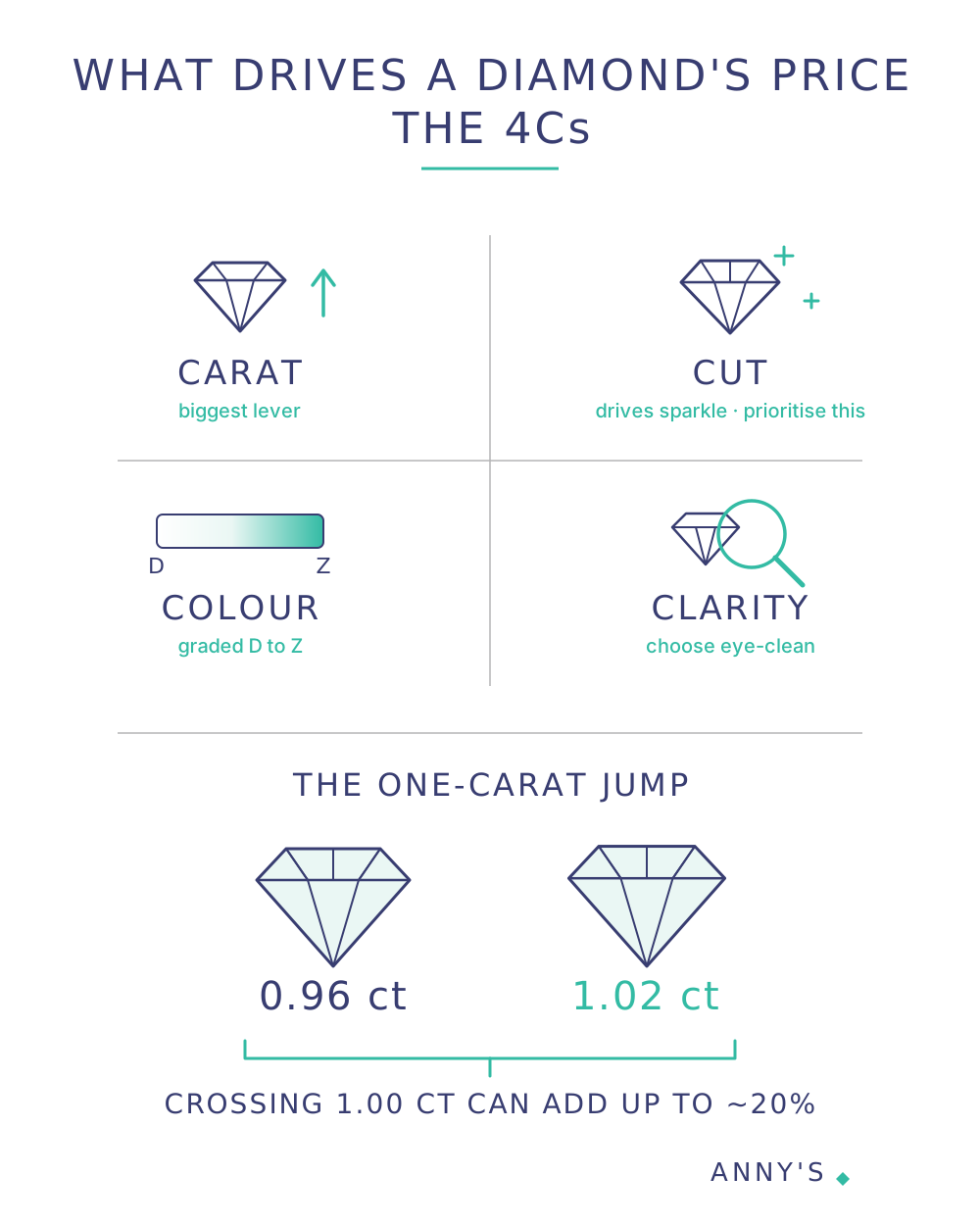
Nearly all of it comes back to the diamond — specifically the 4Cs. Carat (weight) is the single biggest lever — price climbs faster than weight, because bigger gem-quality stones are genuinely rarer, and nudging past a "magic size" like 1.00ct can add a real jump for a difference your eye will never catch. Cut matters most for beauty — a poorly cut stone looks flat no matter its colour or clarity, so if there's one C to spend up on, make it cut. And colour and clarity are where you can quietly save — a near-colourless, eye-clean diamond often looks identical to a pricier grade. One boundary worth knowing: our diamond feeds run D through H, the top of the colour scale, so there's no I, J or lower to trade down into — you're choosing within the best part of the range. Each C is written up properly in our Diamond Education hub: what makes diamond cut the most important C, how diamond colour is graded, and diamond clarity explained.
 View full size
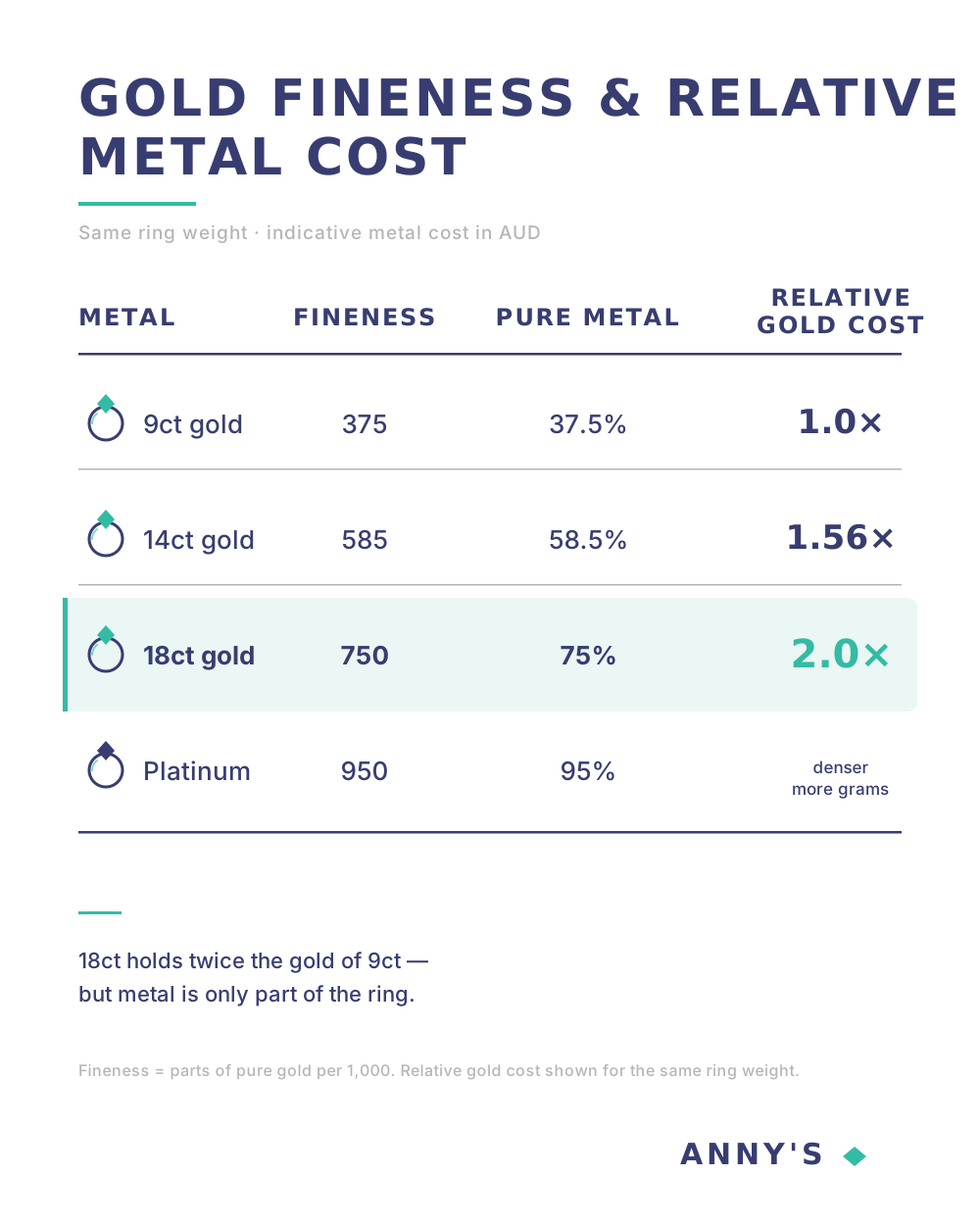
Two more levers sit outside the stone. The metal is a smaller slice of the total than most people expect, so swapping it won't halve your price — 18ct gold holds twice the gold of 9ct, and platinum costs a touch more because it's denser, so a ring uses more grams (we work in 9ct, 14ct and 18ct gold plus platinum). The setting is the other: a plain solitaire is among the kindest on the budget, while halo, pavé and three-stone designs add small diamonds and a fair bit of hand-setting at the bench (GIA) — so the design often shifts where the money goes rather than piling more on.
 View full size
Lab-grown vs natural diamonds — how much can you save?
First things first: a lab-grown diamond is a real diamond — chemically and optically identical to a mined one. And the saving is our own Australian number, not an overseas average: matched on an identical specification — 1.00–1.09ct, F colour, VS2 clarity — across the live inventory we search, the natural median is AUD $6,359 and the lab-grown median AUD $1,509. The lab-grown stone is 76.3% lower: a difference of $4,850 on the same spec.
But there is no single discount figure, because it scales with the size of the stone. On that same matched spec the gap runs from about 40% at a third of a carat to about 92% at two carats and above — which is why you'll meet different percentages if you shop around. BriteCo's ~72.8% in 2025, up from 26.6% in 2019 (BriteCo, 2025 Report) is a US per-carat average across all sizes; Q Report's 70–90% is an Australian retail spread at one carat (see the FAQ below); ours is a matched-spec median — three points on the same rising curve, not competing claims. And the gap is still widening: analyst Paul Zimnisky tracked it reaching as much as 80% by the end of 2022, and lab-grown wholesale dropped about 37% year-on-year through Q3 2025 (Edahn Golan, October 2025) — lovely news if you're buying today, and the honest reason we'd never call a lab-grown diamond an "investment." Our companion guide, lab-grown vs natural diamonds in Australia, sets out the full band-by-band table.
There's no wrong answer here: lab-grown stretches your budget further, while a natural carries that sense of rarity and traditionally holds more resale value — though no diamond is a sure store of value, and even natural prices have softened lately (Money, 2026). Pick the diamond you love within your budget, not as a bet on the future. We offer both with GIA or IGI grading reports for individual diamonds, and our naturals are conflict-free — the full story is in our lab-grown diamonds guide.
 View full size
What does a $10,000 engagement ring actually get you?
At Anny's, around $10,000 typically buys a solitaire with a 1 to 1.2-carat natural diamond, hand-built in a setting of your choice — or, if you'd rather go bigger, a lab-grown centre of about 4.5 carats, with 5 carats and above available, for the same budget. That 4.5ct is the median lab-grown stone at the $9,000–$10,000 mark in the inventory we search; stones of 5ct and above are about four in ten of what you'd be shown at that money, which is why we quote 4.5ct rather than a rounder, bigger-sounding number.
Either way, the money goes into the centre stone, the metal and the making. At Anny's the team works under one roof — diamond setter, goldsmith and CAD designer side by side in our Frankston workshop, with only the casting sent to a specialist casting house — so there's no chain of contractor mark-ups, no automatic "custom" surcharge, and custom manufacture takes approximately 3–4 weeks from CAD sign-off, subject to design complexity and workshop capacity. We sit happily in the middle of the market — never the cheapest, never the dearest: where some jewellers build a ring as light as they can to save on metal, we quietly add a little extra at the wear-points — roughly $300–$500 more — so your ring is built to last, not to fail early. We've been doing this as a family since 1990 — come along on the journey of a custom ring, or read our story — established 1990.
 View full size
What else should you budget for? (certification, valuation and insurance)
A few small things beyond the ring itself:
- Grading report: a GIA or IGI grading report sets out the 4Cs for the individual stone in black and white — it's what your valuation and insurance both lean on.
- Valuation: Anny's can supply a written valuation signed by Chris Ozkoch. Check your insurer's current PDS and requirements before relying on it for cover; any purchase over $3,000 comes with the relevant Anny's-supplied documentation (see our custom-made service). Consider updating it as values and your insurer's requirements change.
- Insurance: specified-item cover — added to your home contents or taken out on its own — looks after you for loss, theft and damage.
- Lifetime care: we include lifetime cleaning and polishing plus free insured shipping, so there's not much to spend once the ring is yours.
Frequently Asked Questions
How much does a 1-carat diamond ring cost in Australia?
A 1-carat round brilliant lab-grown diamond usually runs around AUD $1,200–$3,000, while a natural 1-carat sits closer to AUD $6,000–$13,500 — a 70–90% difference at that size (Q Report, updated July 2026). Our own matched-spec figure, 76.3% less (F/VS2), sits inside that spread. Those are loose stones; metal and setting add more. The round brilliant is the most loved shape and often the dearest — see round brilliant diamonds or compare diamond shapes.
What's the cheapest way to make an engagement ring look bigger?
Go for a halo or pavé setting around a smaller centre stone, and keep that centre just under a "magic size" (say 0.90ct). Together they can lift the look noticeably without lifting the budget — a little trick we use all the time.
How long does a custom engagement ring take to make?
Custom manufacture takes approximately 3–4 weeks from CAD sign-off, subject to design complexity and workshop capacity. Consultation, sourcing and design approval happen before that window. Ready to Ship pieces dispatch from our warehouse in 1–3 business days; delivery time is additional.
Can you negotiate price at a jewellery store?
We don't haggle or discount — instead, "we try to compare apples to apples and match where fair." To check any quote is fair, ask for the gram weight and the certification grade, then compare those figures side by side: two similar-looking rings can differ a great deal in metal weight, and a photo will never show you that. It's a fairness check, not a bargaining table.
Want to see exactly what your budget buys? Have a browse of Anny's engagement rings, then Email us about visiting our Frankston workshop, or before visiting our Melbourne showroom. We'll talk through the stone, the metal and the design in plain English, and help you get the loveliest ring for your money — no pressure, just good advice. You Imagine. We Create. For Collins Street, please wait for our email confirmation before coming in.
Typical engagement and bridal ring turnaround: 3–4 weeks from CAD sign-off. We also have 2-week and 48-hour options for engagement and bridal rings. Get in touch and we'll help find an option that works for your timeframe.