Engagement Rings
Three-Stone (Trilogy) Engagement Rings: What They Mean and How to Choose Yours
A three-stone (or "trilogy") engagement ring sets a centre stone between two side stones — and it carries more than one meaning. GIA records the three stones as "yesterday, today and tomorrow", as "friendship, love and fidelity", or as "mother, father and child"; the familiar "past, present and future" wording came later, from a De Beers campaign. Beyond the story, the real decisions are proportion (centre-dominant or evenly graduated), side-stone shape, and setting — two side stones sit more exposed than a single centre stone, so claw choice matters more here than on a solitaire. And splitting carat weight across three stones can cost less than one larger stone of the same total weight, because diamond pricing jumps at round "magic" carat sizes.
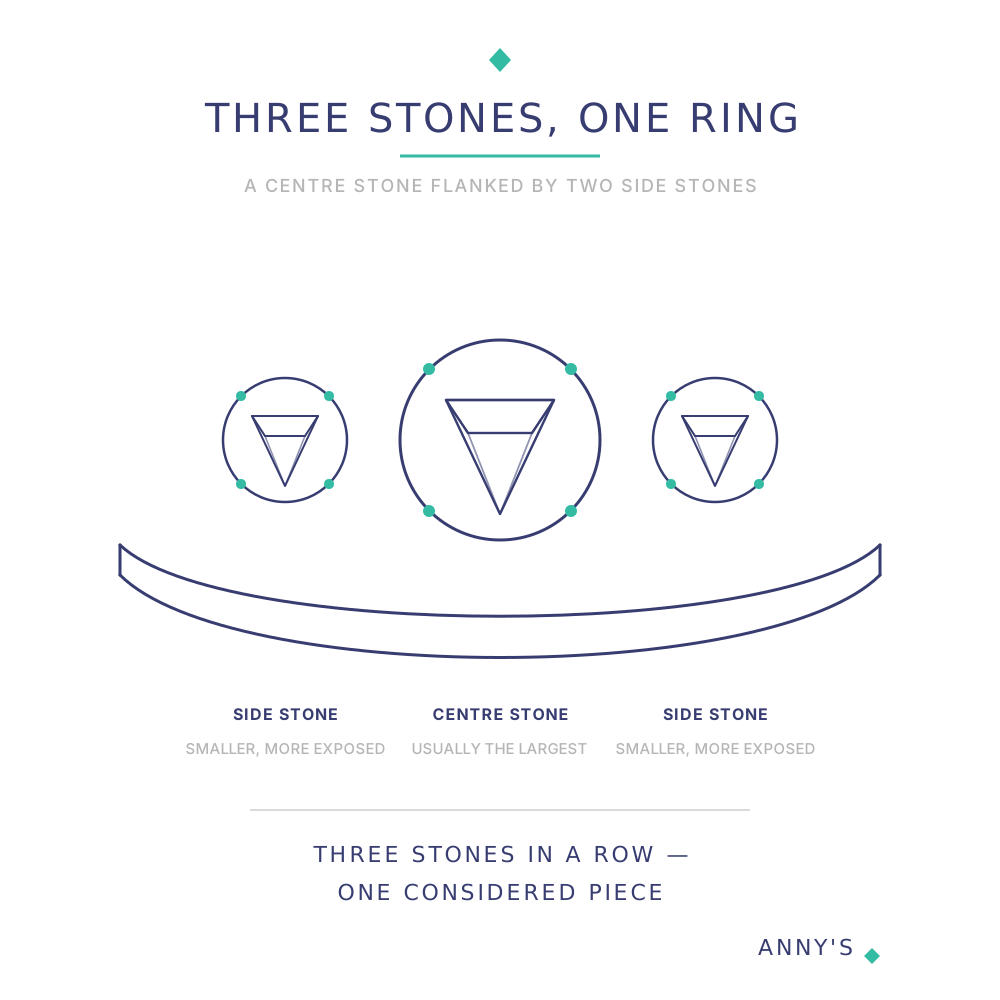
What is a three-stone (trilogy) engagement ring, and how is this guide different?
A three-stone (or trilogy) engagement ring sets three gemstones in a row along the band — typically one centre stone flanked by two side stones. We've already compared trilogy against solitaire, halo, pavé and bezel settings in engagement ring settings explained; trilogy is one of the five settings we hand-craft most often. This guide covers what that comparison doesn't: proportions, side-stone shape pairings, why two side stones need more thought than one, and the buyer maths of three smaller stones versus one bigger one. If a single hero stone is more your style, see our solitaire engagement ring guide instead.
Multi-stone designs are genuinely popular: among engagement rings with a clear diamond centre stone, The Knot's 2024 Jewelry and Engagement Study found 51% of styles feature a diamond accented by side stones or other details, against 32% that are just a diamond solitaire — though the study doesn't break three-stone rings out from that wider "accented" group. There's a sparkle argument too: at equal size and quality, GIA says a three-stone diamond ring will have more sparkle than a diamond solitaire, simply because there are more faceted surfaces catching the light.
Where does the "past, present, future" meaning come from?
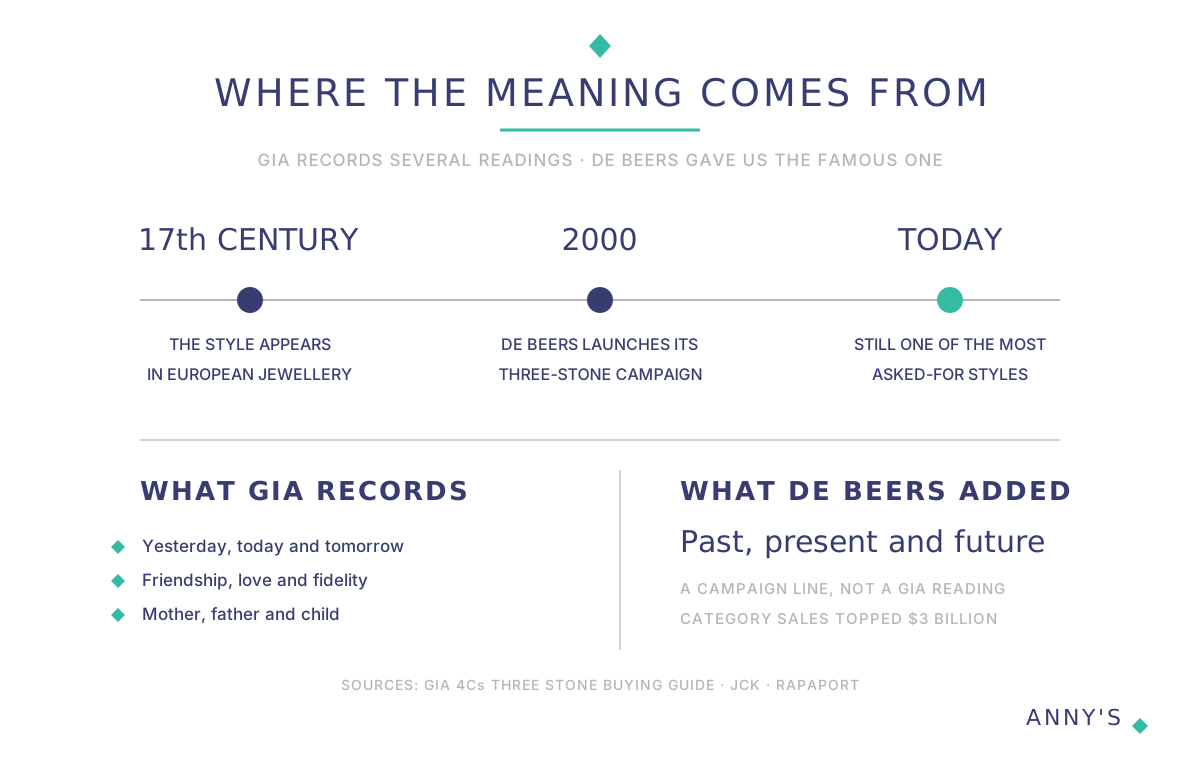
Three-stone rings date back at least to the 17th century, and GIA records several meanings for them — among them the three stones as "yesterday, today and tomorrow", as "friendship, love and fidelity", or as "mother, father and child". Notice what isn't anywhere on GIA's page: the exact phrase most people know. "Past, present and future" came from De Beers. Trade press reports the campaign began in 2000, promoted at first as the "three-stone anniversary ring"; once "past, present, and future" proved the stronger positioning, it was broadened to three-stone bracelets and necklaces too. The category topped $3 billion in sales, with growth cooling from 74% in 2002 to a still-enormous 57% the year after. Rapaport lists "Three-Stone" alongside "Journey" and "Right Hand Ring" as one of De Beers' great category-wide campaigns, all run under the "A Diamond Is Forever" umbrella. Those are historical trade figures from the mid-2000s, not a current market read — but they explain why one phrasing out of several ended up feeling like the official one.
So take your pick, or take none of them. Plenty of the couples we talk to choose a three-stone ring purely because they love the look, and nobody needs to explain their ring's meaning to anyone.
 View full size
Centre-dominant or evenly graduated — which three-stone proportion should you choose?
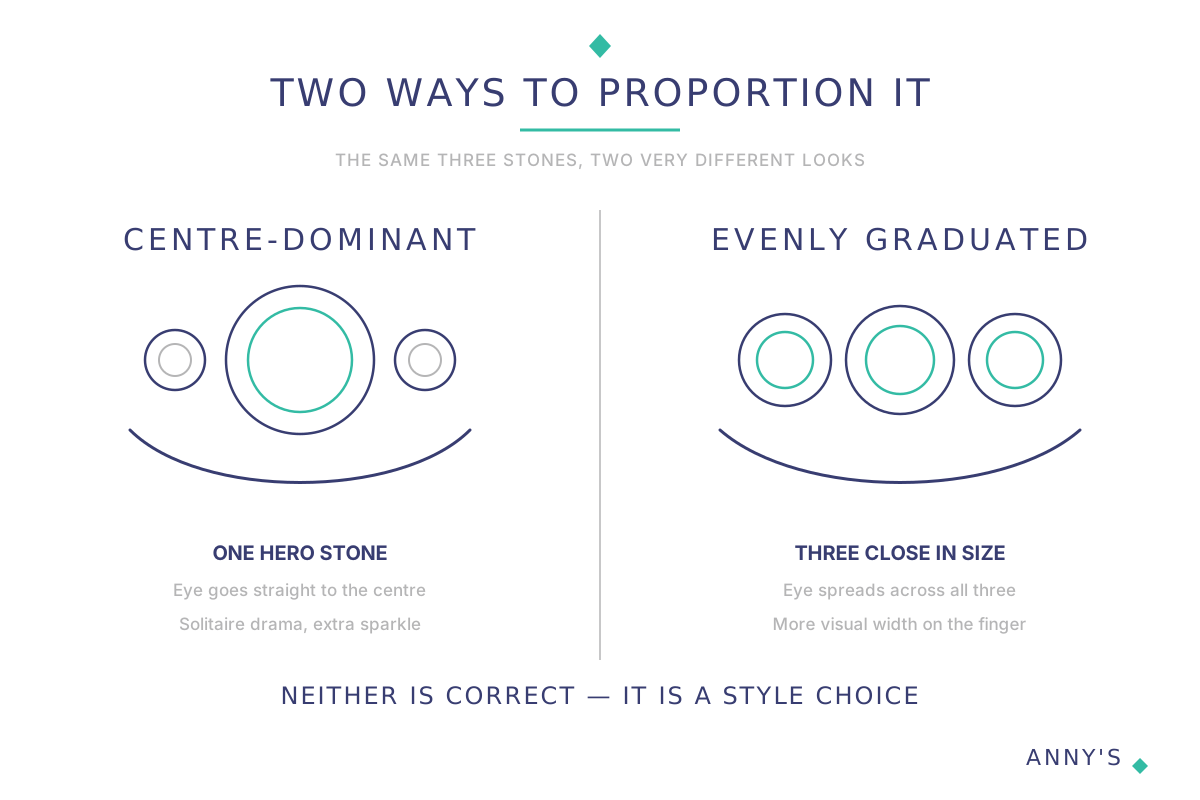
A three-stone ring reads completely differently depending on how the three stones are sized against each other: centre-dominant, where one clearly larger stone commands the eye, or evenly graduated, where all three stones sit closer in size and read as a considered row. Neither is "correct" — it's a style choice, not a technical one. Evenly graduated spreads more of the total carat weight to the edges, which can make the whole ring look wider across the finger for a similar spend.
| Proportion style | The look | Where the eye goes | Best for |
|---|---|---|---|
| Centre-dominant | One clearly larger hero stone; side stones are supporting players | Straight to the centre stone | Buyers who love a solitaire's drama, with a little extra sparkle either side |
| Evenly graduated | Three stones closer in size, read as a considered row | Spreads across all three stones | A more contemporary, architectural look; more visual width across the finger |
 View full size
What side-stone shapes pair well with your centre stone?
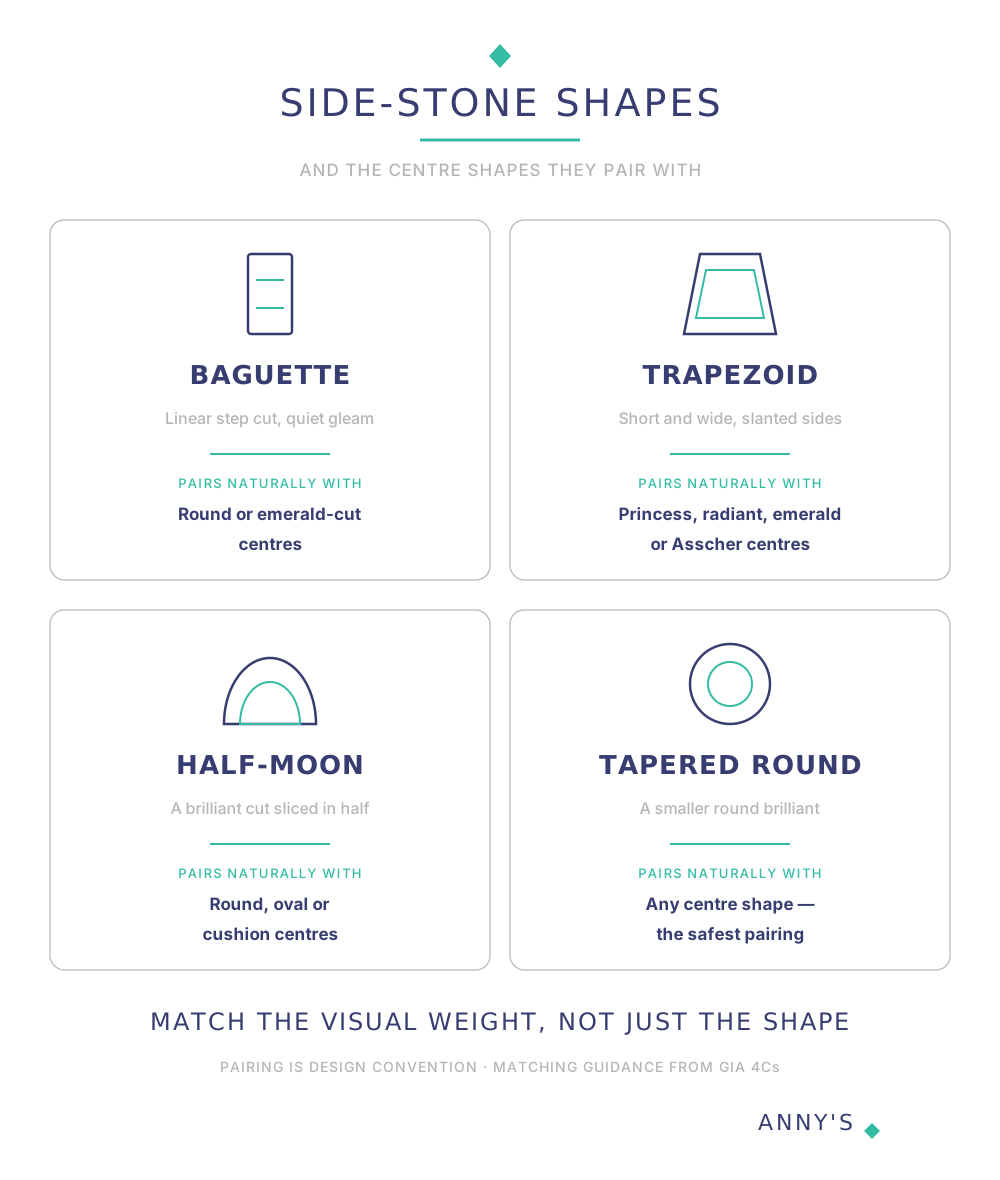
The four side-stone shapes we're asked for most are trapezoids, baguettes, half-moons and tapered rounds. Each pairs naturally with certain centre shapes, because their edges either echo or contrast the centre stone's outline — that's what makes a three-stone ring read as one considered piece rather than three stones sharing a band.
A baguette is a step-cut shape — rectangular facets running in parallel steps up the stone rather than the triangular facets of a brilliant cut, which is why step cuts "show off the stone's color and clarity and produce a subtle gleam" instead of fire, as the International Gem Society puts it. Baguettes come straight (perfectly parallel sides) or tapered (angled inward toward the centre stone). A trapezoid adds two slanted sides that continue a square centre's own corners; a half-moon is a brilliant cut sliced in half, its curved edge hugging a rounded outline; a tapered round is simply a smaller round brilliant, sized down from the centre.
| Side-stone shape | The look | Pairs naturally with |
|---|---|---|
| Baguette (straight or tapered) | Linear, step-cut, quiet glassy gleam rather than fire | Round or emerald-cut centres |
| Trapezoid | Short, wide, slanted sides echo a square outline | Princess, radiant, emerald or Asscher centres |
| Half-moon | A brilliant cut sliced in half; curved edge hugs the centre | Round, oval or cushion centres |
| Tapered round | A smaller round brilliant, simply scaled down | Any centre shape — the safest, most classic pairing |
GIA's own guidance backs this up. Keep the side stones within a colour grade or two of the centre stone and make sure their cut and clarity match or complement it; keep them proportionate — not so large they compete, not so small they disappear behind the fingers either side. And don't be afraid to mix shapes deliberately: GIA points to a trilliant (a triangular cut) on either side of a marquise, oval or princess-cut centre as a pairing that would "frame the center stone nicely". Ask for a grading report on the side stones as well as the centre — every one of our certified diamonds comes with one. And see compare diamond shapes for the full range of centre-stone shapes first.
 View full size
Are three-stone rings less durable than a solitaire?
Not inherently — but two side stones genuinely need more thought than one centre stone, because they sit closer to the edges of your finger, nearer where your hand knocks against doorframes and bags through the day. The general durability principles — claw count, setting height, how often to check claws — are covered in engagement ring settings explained.
What's specific to a three-stone ring: you're making a shape-and-setting decision for two stones, not one. A pointed side-stone shape (marquise or pear, say) needs the same protective V-claws — claws bent into a V to cup a pointed corner — that a pointed centre stone would. And because side stones sit right at the ring's shoulders, a well-built, slightly heavier claw earns its keep more there than around a protected centre stone. Each stone's setting deserves the same care the centre stone gets — a judgement call our in-house setters make with you at the bench, not off a size chart.
Three smaller stones or one larger stone — which costs more?
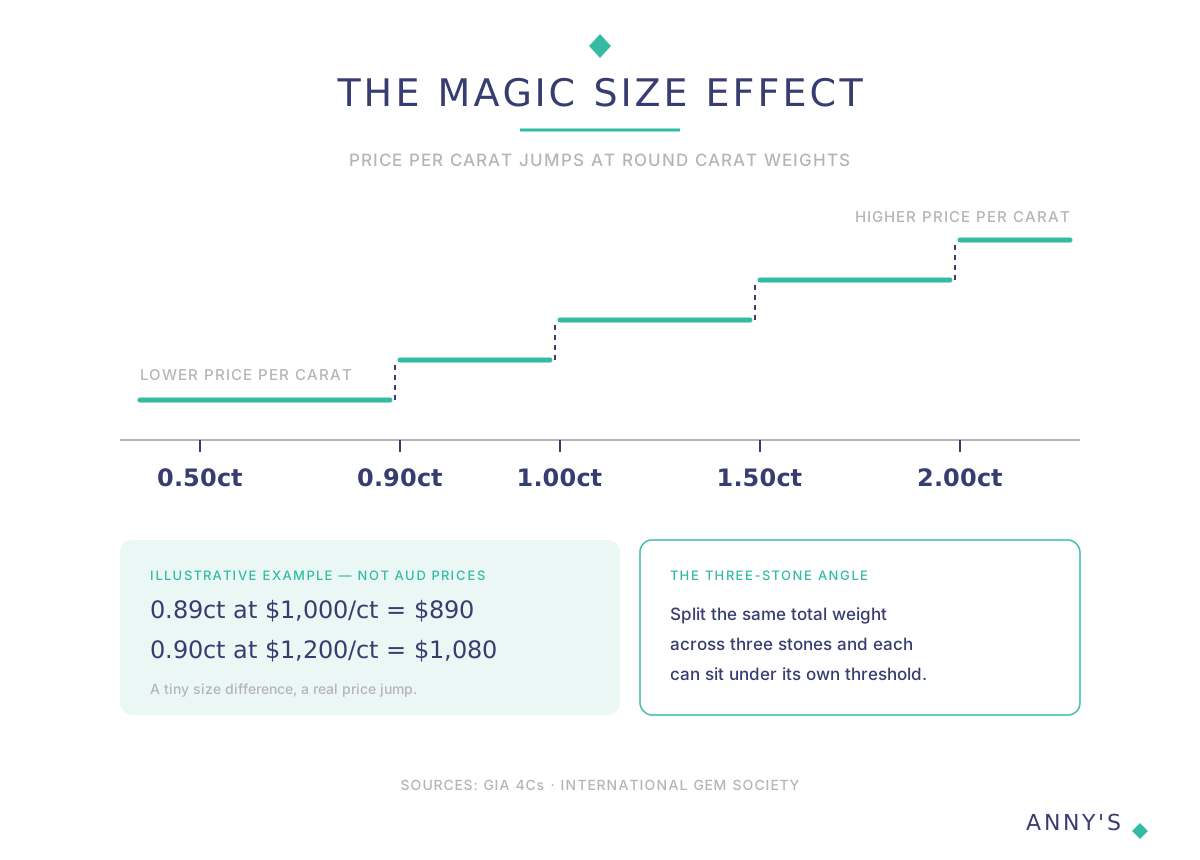
Genuinely useful buyer maths, and it isn't as simple as "three stones cost three times as much." Diamond pricing jumps disproportionately at round "magic" carat weights, because demand concentrates at those easily-marketed sizes. GIA counts 0.25ct, 0.50ct, 0.75ct and 1.00ct among them, and puts the effect plainly without attaching a number to it: diamonds at or just above a magic size are "generally more expensive per carat than diamonds that weigh a little less," so dropping a few points below one can save you money. The International Gem Society lists the thresholds further up the scale — 0.90ct, 1.00ct, 1.50ct, 2.00ct and beyond. Split the same total carat weight across three smaller stones, each sitting comfortably under its own threshold, and you can genuinely pay less than for one larger stone that tips just over one.
Here's the mechanism, in the International Gem Society's own worked example (illustrative figures, not AUD market prices): if diamonds between 0.50–0.89ct sell at $1,000 per carat, an 0.89ct stone costs $890 — but once a stone crosses 0.90ct the rate might jump to $1,200 per carat, making a barely-bigger 0.90ct stone cost $1,080.
It isn't a one-way rule: three stones also mean three separate cuts, certificates and settings, which adds its own cost — so the real answer depends on where each stone's weight actually falls, not a blanket "three is always cheaper." As a general anchor, Anny's engagement rings run roughly $3,000–$6,000 AUD with lab-grown diamonds and $8,000–$30,000 AUD with natural diamonds, and a three-stone build sits within those same bands rather than a separate price tier.
 View full size
How would Anny's design a custom three-stone ring for you?
Exactly the same process as every custom piece — consultation, in-house CAD design, a 3D-printed wax model, then casting by a specialist casting house and setting at our bench. From CAD sign-off, custom manufacture takes approximately 3–4 weeks, subject to design complexity and workshop capacity; how a custom engagement ring is made walks through the full sequence. The wax model matters even more here than on a single-stone design: you see the real arrangement — sizes, gaps, how the side stones sit against the centre — on a model you can hold, before anything is cast. Small changes at the 3D-print stage are usually made within the hour; we'll confirm the timing of larger changes. And if you're drawn to a coloured centre or side stone, that's genuinely one of our specialties — sapphire and ruby especially, backed by our FGAA-accredited gemmologist, who helps pair stones so the colours and cut sit together. Take a look at our coloured gemstones or browse Anny's engagement rings, then Email us.
 View full size
Frequently Asked Questions
Do all three stones have to be diamonds?
No — a coloured centre or side stone is a genuinely popular choice, and it's one of the combinations we're asked for most, especially sapphire and ruby paired with a diamond. Our in-house, FGAA-accredited gemmologist helps make sure the colours and cuts sit together as a considered set rather than a mismatch.
Can I convert my solitaire into a three-stone ring later?
Often, yes, depending on your existing setting — it's one of the upgrade paths we take on. See upgrading or resetting your engagement ring for how a conversion like this generally works, and bring your ring in so we can look at what's actually possible with your specific stone and setting.
The best way to choose your proportions and side-stone shapes is to see a few arrangements on your own hand. Visit our Frankston workshop (walk-ins welcome), or Email us before visiting our Melbourne CBD showroom for engagement and wedding rings. You Imagine. We Create. For Collins Street, please wait for our email confirmation before coming in.
Written by Chris Ozkoch, who does Anny's in-house CAD work and signs the workshop's valuations. Reviewed by Harry Ozkoch, Master Jeweller — a diamond setter since age 16 and the JAA Australasian Jewellery Awards People's Choice winner (2019) for "A Drop Of Love." Anny's is a family business established in 1990 in Frankston, Victoria.
Sources
- GIA 4Cs — "Three Stone Engagement Ring Buying Guide" — 4cs.gia.edu
- The Knot — 2024 Jewelry and Engagement Study — theknot.com
- JCK — "De Beers '04-MULA: Three-Stone Jewelry and Right-Hand Rings" — jckonline.com
- Rapaport — "De Beers Shows That Good Branding is Forever" — rapaport.com
- International Gem Society — "A Guide to Gem Cutting Styles" — gemsociety.org
- GIA 4Cs — "How to Select Diamond Side Stones for Engagement Rings" — 4cs.gia.edu
- GIA 4Cs — "Nine Things About Diamond Carat Weight You Need to Know" — 4cs.gia.edu
- International Gem Society — "Diamond Carat Weight, Value, and Size" — gemsociety.org
Typical engagement and bridal ring turnaround: 3–4 weeks from CAD sign-off. We also have 2-week and 48-hour options for engagement and bridal rings. Get in touch and we'll help find an option that works for your timeframe.