Melbourne CBD
Melbourne showroom
257 Collins Street, Level 3Melbourne VIC 3000
Email us before visiting Collins Street. Please wait for our email confirmation before coming in.
Arrange your visitEngagement Rings
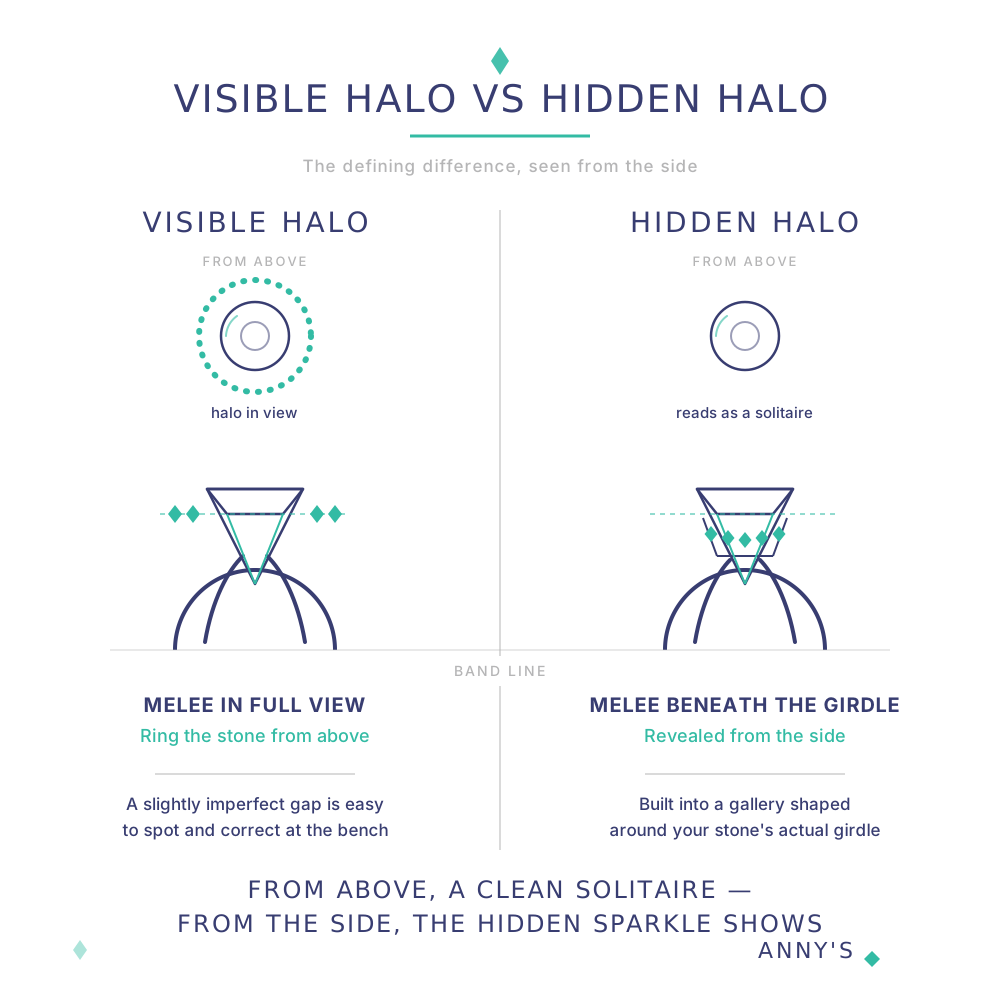
The short answer? A hidden halo tucks a ring of small diamonds into the gallery beneath your centre stone, so from above it looks like a clean solitaire — and only from the side does the hidden sparkle show. The look is simple. Making it sit exactly right against your stone's girdle is the hard part, and it's what separates a hidden halo that genuinely earns its name from one that just looks like an unfinished halo underneath. The way to judge any hidden halo is from the side, not just the top-down view every photo shows you.
A hidden halo is a ring of small accent diamonds set into the gallery beneath the centre stone, rather than visibly circling it from above. From directly above it reads like a plain solitaire; tilt the ring or catch it from the side, and the concealed diamonds show themselves.
 View full size
That's a genuinely different structure from a standard (visible) halo, where the accent diamonds sit in full view around the stone — we've covered that general comparison, along with Anny's other four most-loved settings, in engagement ring settings explained. Read that first for the general picture. This guide goes deeper on the two things that matter once you're considering a hidden halo specifically: why it's genuinely harder to make well, and how to judge whether one has been made well.
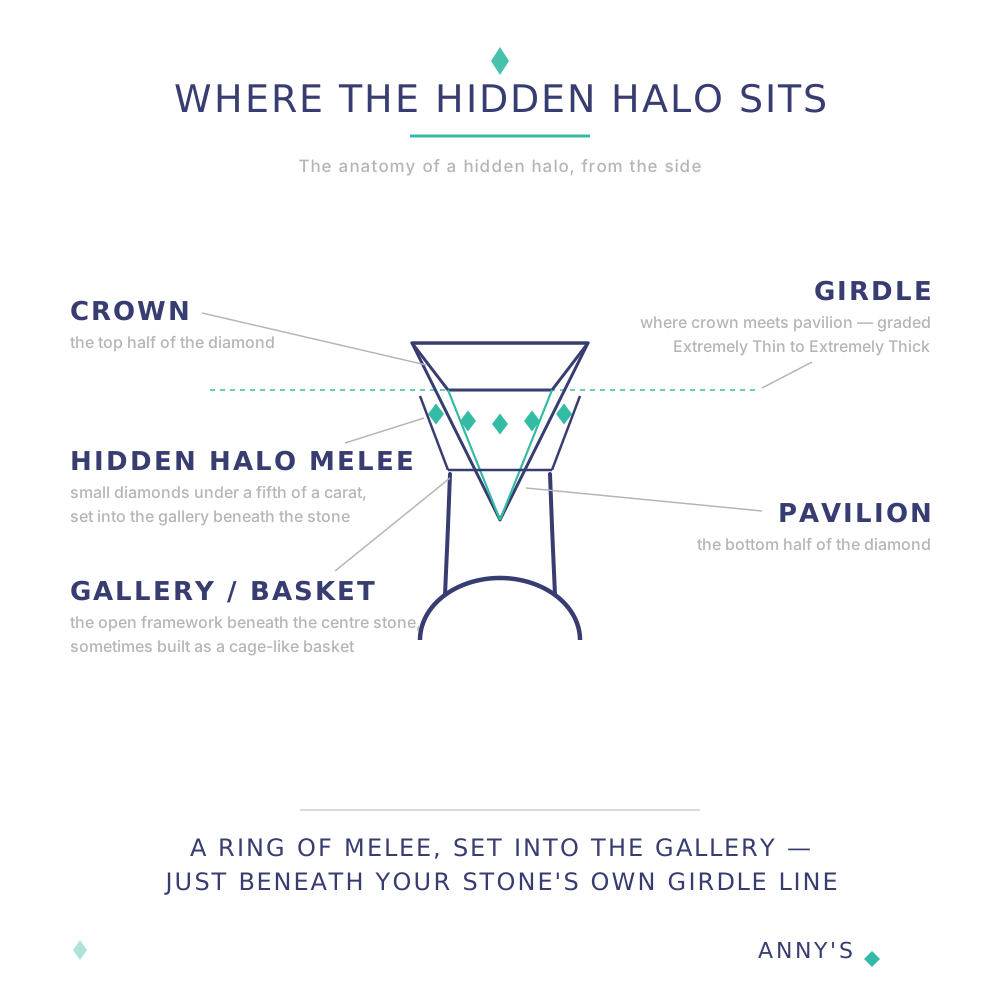
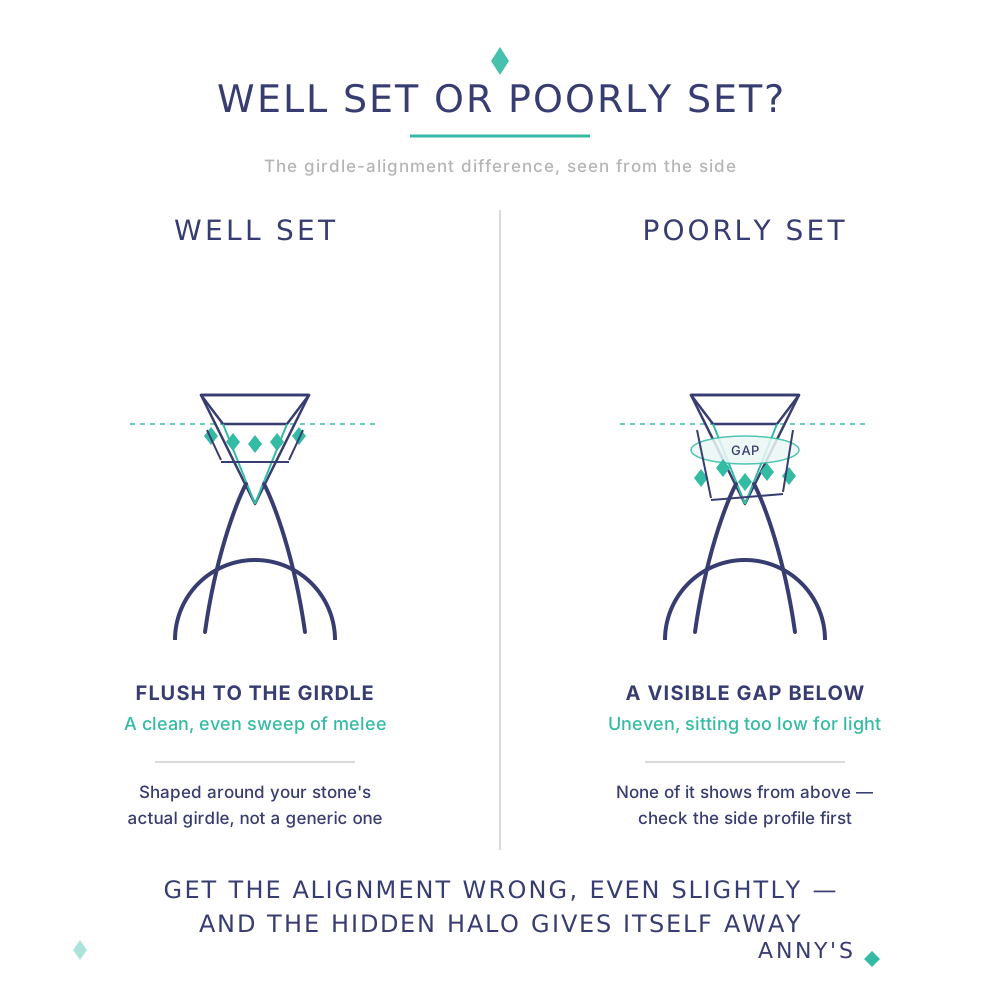
Here's the honest, bench-level answer: a hidden halo's small diamonds have to sit precisely at your centre stone's girdle line — the narrow band where the crown (the top half of the diamond) meets the pavilion (the bottom half). No two stones are identical there, which is exactly the problem: GIA grades girdle thickness across eight descriptions, from “extremely thin, very thin, thin, medium, slightly thick, thick, very thick, and extremely thick.”[1] Get that alignment wrong, even slightly, and the hidden halo either sits too far from the stone to add any real sparkle, or leaves a visible gap under the girdle that gives the whole thing away.
The small diamonds themselves have a name: melee (GIA writes the pronunciation as “meh-lee”). GIA “defines melee as small diamonds, either single cut or full cut, weighing less than 1/5 carat” — noting that “the exact size range of melee varies from country to country and from one segment of the trade to another” — and that melee “can be as small as 0.001 ct (1/1000 of a carat).”[2] In a hidden halo, that melee sits in the gallery — the open metal framework directly beneath the centre stone, sometimes built as a basket, which Stuller's bench guide describes as “an open, basket-like structure that holds the stone with prongs.”[5]
 View full size
A visible halo is comparatively forgiving to set well, because its melee sit in full view — a slightly imperfect gap is easy to spot and correct at the bench before the ring reaches you. A hidden halo's melee are tucked out of casual sight, built into a gallery shaped around your stone's actual girdle, not a generic one. A classic goldsmithing reference makes the same fit-precision point about bezel setting: “a poor fit at this stage will not improve later on.”[3] The same discipline applies here, arguably more so — a crooked visible halo gets noticed and fixed, while a crooked hidden halo can go unnoticed until someone checks it from the side.
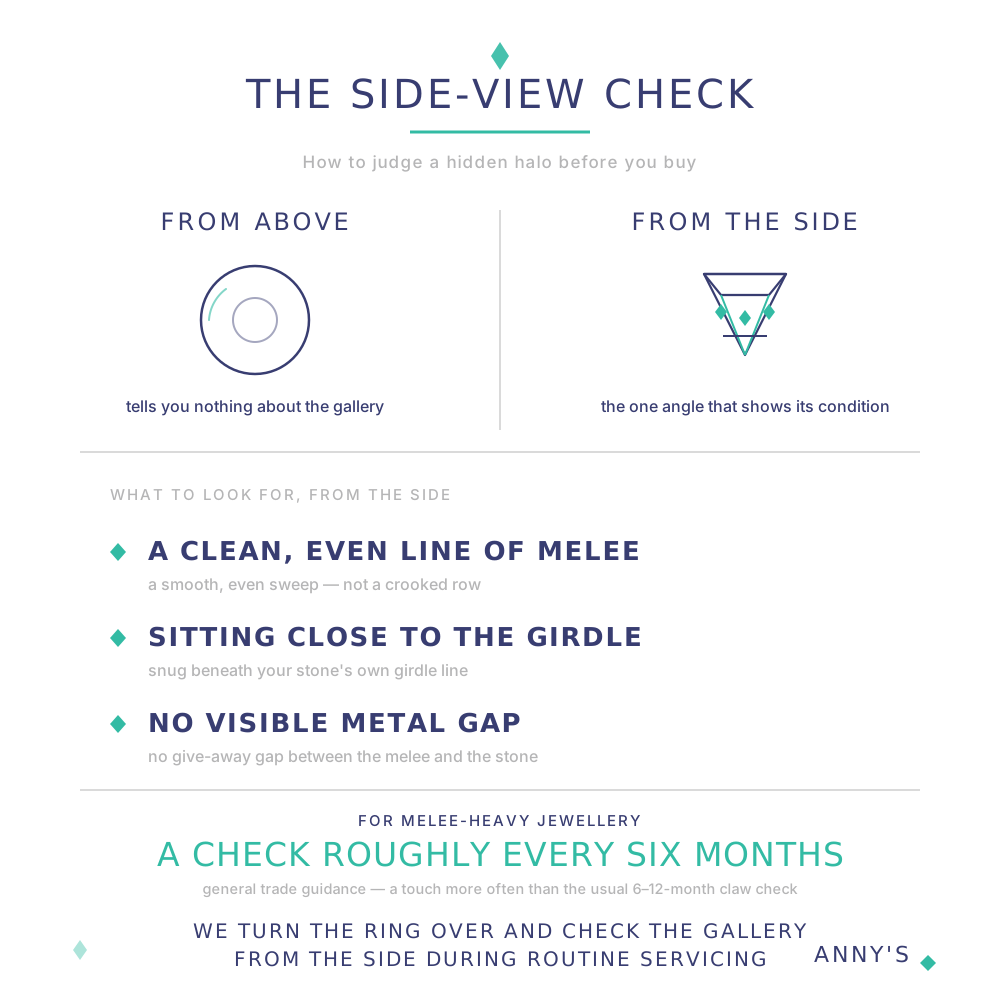
You'll usually spot it from the side, exactly where a hidden halo is supposed to shine. A poorly fitted gallery shows a visible metal gap between the melee and the girdle, an uneven or crooked line of stones instead of a clean sweep, or diamonds sitting too low to catch light. None of that shows from above — which is precisely why it's worth checking the side profile before you commit, not just the top-down view every photo shows you.
We build the setting in CAD around your actual stone, not a generic girdle size, and design and set it in-house, with only the casting done by a specialist casting house — so the same eyes checking the fit are the ones who designed it. That's how we keep a hidden halo's melee sitting tight against your stone's real girdle, not an average one.
It starts with a 3D scan. Our Artec Micro 3D scanner captures your existing stone or ring accurate to within microns[4] — a genuine, high-precision starting point rather than a tape measure and a guess. From there, Chris builds the hidden-halo gallery in CAD, in-house, around your stone's real girdle position rather than a stock template. That's the whole point of designing it digitally: every stone position and the symmetry of the gallery can be set and checked before any metal exists.
The other half is the team. The CAD designer, the jeweller and the diamond setter are all in-house, under one roof, working the same piece together — a specialist casting house casts the metal, but every fit check against your stone happens at our bench. See how a custom engagement ring is made for the full CAD-to-casting sequence we use on every custom piece, hidden halos included.
If you're wondering about reworking an existing ring into a hidden halo, talk to us — it depends entirely on the ring, and it sits within our custom and remodelling service.
 View full size
Yes, with one honest caveat: because the melee sit concealed under the centre stone, they're genuinely harder to check at a glance than an exposed claw or a visible halo stone, even though the metalwork holding them is no different from any other small-stone setting. It's a visibility issue at inspection time, not a strength issue while you're wearing the ring.
A quick glance from above tells you nothing about a hidden halo's condition. General trade guidance for jewellery carrying plenty of small stones suggests a check roughly every six months — a touch more often than the 6-to-12-month claw check we recommend generally (see engagement ring settings explained). At Anny's, we turn the ring over and check the gallery from the side during routine servicing — the one extra step a hidden halo needs that a plain solitaire doesn't.
 View full size
A little, yes — the concealed diamonds add sparkle and depth from certain angles, lifting the overall look of the ring. It won't change your centre stone's apparent size the way a full visible halo can, because a hidden halo isn't framing the stone from above; it's adding a quiet layer of brilliance underneath.
Generally yes, because you're paying for extra small diamonds and the extra bench time to set a concealed gallery accurately — the same cost logic as any halo-family setting. We don't have a hidden-halo-specific price separate from our whole-ring bands, so ask us at consultation for a figure based on your actual design.
It takes real setting and CAD experience, because the whole point is precise alignment to your stone's girdle — something a generic template can't guarantee. Ask to see the ring from the side before you judge the work; that's where a hidden halo either delivers or falls flat.
No — a hidden halo is a defined ring of melee set into the gallery specifically beneath the centre stone's girdle, while pavé is a broader technique of setting many small stones close together anywhere on a piece, often along the band. See engagement ring settings explained for how pavé compares to the other settings.
Written by Chris Ozkoch, who does Anny's in-house CAD and 3D-design work and signs Anny's-supplied written valuations. Reviewed by Harry Ozkoch, Master Jeweller — a diamond setter since the age of 16 and the JAA Australasian Jewellery Awards People's Choice winner (2019) for “A Drop Of Love.” Anny's Manufacturing Jewellers is a family business Established in 1990 in Frankston, Victoria, with a collaborative in-house team of around ten who design, set and finish every piece side by side.
Curious what a hidden halo would look like on your own stone? Email us about visiting our Frankston workshop, or browse Anny's engagement rings for inspiration first.
[1] GIA — “Diamond Cut: Anatomy of a Round Brilliant” — gia.edu — accessed 25 July 2026 (page body fetched; the eight girdle-thickness descriptions confirmed verbatim). Replaces the previously cited grading-booklet PDF, which no longer resolves.
[2] GIA 4Cs — “Melee Diamonds: Tiny Diamonds, Big Impact” — 4cs.gia.edu — accessed 6 July 2026.
[3] Ganoksin — “Brepohl on Stone Settings” — ganoksin.com — accessed 6 July 2026.
[4] Artec 3D — 3D scanning solutions for jewellery — artec3d.com — accessed 6 July 2026.
[5] Stuller Bench Jeweler — “A Jeweler's Guide to Common Jewelry Settings” — stuller.com — accessed 6 July 2026; page body re-fetched and the basket wording confirmed verbatim 25 July 2026.
Additional approved references (opened 6 July 2026): Stuller Bench Jeweler — “A Jeweler's Guide to Common Jewelry Settings” · ACCC — Consumer rights and guarantees.
Typical engagement and bridal ring turnaround: 3–4 weeks from CAD sign-off. We also have 2-week and 48-hour options for engagement and bridal rings. Get in touch and we'll help find an option that works for your timeframe.
Made personal, at Anny's
Melbourne CBD
Email us before visiting Collins Street. Please wait for our email confirmation before coming in.
Arrange your visitOur Frankston home
Visit us to talk through your ideas, explore designs and find your perfect fit.
Explore our Frankston showroomTypical engagement and bridal ring turnaround: 3–4 weeks from CAD sign-off. We also have 2-week and 48-hour options for engagement and bridal rings. Get in touch and we'll help find an option that works for your timeframe.
Typical repair turnaround: 1 to 7 business days, depending on complexity and customer urgency
Anny's Manufacturing JewellersABN 88 447 171 579