Asscher Buying Guide
Written by Chris Ozkoch · Reviewed by Harry Ozkoch and Lisa D FGAA · Updated 2026-09-27
The asscher cut diamond sits in the same step-cut family as the emerald — same hall-of-mirrors effect, same demand for high clarity — but with a square outline that reads instantly as Art Deco. Done well it's one of the most architectural cuts a diamond can take. Done poorly the open facets surface every inclusion. Below: what makes an asscher an asscher, how the 4Cs apply, how it compares to emerald, and which settings flatter the shape.
Asscher anatomy — the windmill, the 58 facets, and what makes it tick
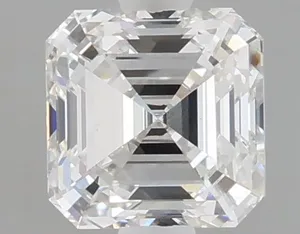
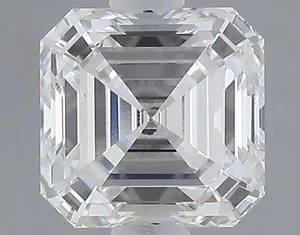
An asscher is a square step cut — typically 58 facets — with cropped corners that read as octagonal at very close range. The signature visual check is the windmill pattern: look straight down at the table and a well-cut asscher shows a four-pointed star of light reflections, formed by the perfect alignment of the pavilion facets. A muddled or asymmetrical windmill tells you the cutter compromised on symmetry, and the price should reflect it.
Ideal asscher proportions
Aim for a length-to-width ratio of 1.00-1.05 (square, with very slight rectangular tolerance), depth under 67%, and table under 69%. Asscher cutters trade these against each other — a slightly deeper stone hides more carat weight in the pavilion but spreads less from above. We'd rather see a stone face up well at 1.5ct than one that grades beautifully on paper but reads small in the setting.
Buying an asscher — what to prioritise
Carat
Asschers face up smaller than rounds at the same carat — typically 5-10% smaller from above — so allow for a little extra weight if face-up size matters.
Colour
G is a useful starting point for a shortlist. Step cuts can show body colour readily, but apparent warmth varies with the individual stone, setting, lighting and viewer.
Clarity
VS2 is a useful starting point. The open facets can make inclusions easier to see, but visibility depends on their type, size and position. Inspect the individual stone.
Cut
GIA Excellent symmetry and polish. Cutter skill matters more on an asscher than on a round brilliant because the windmill pattern is unforgiving.
Asscher vs emerald — what to choose
Same cut family, different proportions. Asscher is square (L/W close to 1.00), emerald is rectangular (L/W typically 1.30-1.50). Asscher reads more Art Deco; emerald reads more elongated and modern. An emerald spreads a touch larger per carat from above. If you're drawn to one but unsure of the other, see them side by side at our Frankston workshop. If you prefer a rectangular outline, read the Emerald Buying Guide.
Carat-spread vs round — why an asscher looks smaller at the same weight
Carat is mass, not size. A round brilliant spreads more than an asscher because more of its weight sits in the crown and less in the pavilion. At 1.50ct, a round typically measures ~7.3mm across, an asscher ~6.3mm across the table. That gap closes at higher weights but never disappears.
Setting recommendations
Bezel and double-claw settings reinforce the geometric outline and the Art Deco association. A four-claw solitaire reads more modern. Halo settings work but tend to soften the architectural feel — we'd usually recommend a tight-fit hidden halo over a large surface halo for an asscher.
Lab-grown vs natural asscher
Both origins are diamond; assess each stone's appearance individually. IGI lab-grown reports give individual grades. Since 1 October 2025, GIA's eligible colourless-to-near-colourless lab-grown service uses Premium or Standard overall assessments. Older GIA formats can differ, so compare the actual report and service. Lab-grown options can offer higher individual grades within the same budget. Read more about lab-grown diamonds.
Asscher cut diamond size chart
The carat-spread point above, in numbers. Read an asscher's face-up measurement against the round chart at the same weight and the gap is plain. Every row from 0.30ct up is the median of real certified asschers in our own inventory, with the sample size beside it — a shape this thinly traded is exactly where a chart copied from another retailer goes wrong.
| Diameter | Carat weight | Typical range | Based on |
|---|---|---|---|
| 2.0 mm | 0.047 ct | — | Calculated |
| 2.5 mm | 0.093 ct | — | Calculated |
| 3.0 mm | 0.16 ct | — | Calculated |
| 3.5 mm | 0.25 ct | — | Calculated |
| 3.8 mm | 0.31 ct | 0.30–0.33 ct | 80 stones |
| 4.4 mm | 0.50 ct | 0.50–0.52 ct | 86 stones |
| 4.9 mm | 0.71 ct | 0.70–0.73 ct | 112 stones |
| 5.0 mm | 0.80 ct | 0.72–0.90 ct | 278 stones |
| 5.5 mm | 1.02 ct | 0.95–1.08 ct | 2,163 stones |
| 6.0 mm | 1.30 ct | 1.10–1.50 ct | 959 stones |
| 6.3 mm | 1.51 ct | 1.50–1.55 ct | 203 stones |
| 6.5 mm | 1.55 ct | 1.50–1.73 ct | 1,843 stones |
| 6.9 mm | 2.00 ct | 1.97–2.10 ct | 119 stones |
| 7.0 mm | 2.04 ct | 1.97–2.10 ct | 1,967 stones |
| 7.5 mm | 2.53 ct | 2.26–2.64 ct | 604 stones |
| 8.0 mm | 3.04 ct | 2.89–3.42 ct | 969 stones |
| 9.0 mm | 4.09 ct | 3.91–5.04 ct | 792 stones |
| 10.0 mm | 5.26 ct | 5.02–6.33 ct | 305 stones |
| 11.0 mm | 8.01 ct | 7.05–8.93 ct | 94 stones |
| 12.0 mm | 10.07 ct | 9.36–11.02 ct | 92 stones |
Rows from 0.30 ct up are the median of our own GIA and IGI certified stones, with the sample size shown and the typical range being the middle 80% of that bucket. Smaller sizes come from our diamond supplier's own book where it carries the shape, and are calculated from the trade weight formula where it does not. Covers 2.0 mm to 12.0 mm. Snapshot 2026-08-30.
Asscher is one of the four shapes our diamond supplier's melee book does not carry, so the rows below 0.30ct are calculated from the trade weight formula and labelled as such. For every other shape, and a converter that works both ways, see the full diamond size chart.
How much does an asscher diamond cost?
Choose a carat weight to see what a natural and a lab-grown asscher diamond cost today, or enter your budget to see the size it buys. Each figure is the typical price of the asscher diamonds available through us at the grade shown under the results, worked out every night; follow its link to see the real stones.
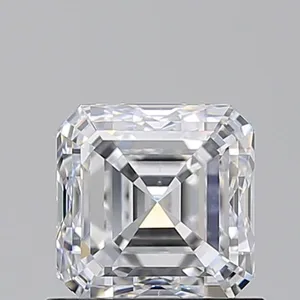
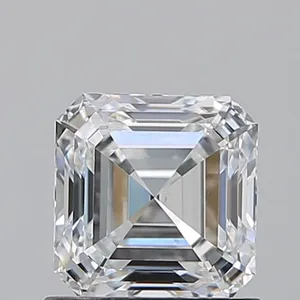
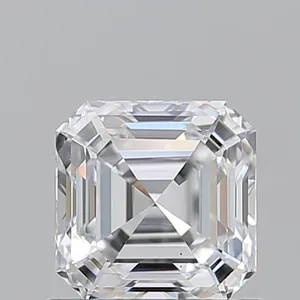
1 ct asscher · Natural
about A$5,243
Typical price · based on 12 diamonds available through us
Listed now, at or under this price
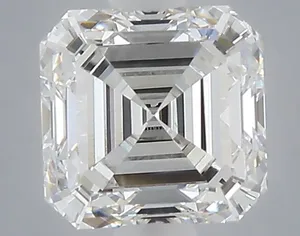
1 ct asscher · Lab-grown
about A$1,534
Typical price · based on 19 diamonds available through us
Listed now, at or under this price
At this size, lab-grown costs about 70% less than natural.
Natural: E–F colour, VS2 clarity, excellent cut for rounds. Lab-grown: E colour, VS1 clarity, ideal cut for rounds. GST included.
Put it in an engagement ringTypical prices of the diamonds available through us, updated 7 October 2026. See every shape and size in our diamond price guide.
Email us about viewing asscher stones at our Frankston workshop. Or compare asscher against other shapes. Back to Diamond Education. When you're ready, browse our engagement ring designs or read the Cushion Buying Guide for a softer pillow alternative.
Common questions
Why does clarity matter more in an asscher than a round?
An asscher's open step-cut facets can make inclusions easier to see. We use VS2 or better as a shortlist starting point, but inclusion visibility depends on the type, size and position of features and on the individual stone. Compare the stone under different lighting.What clarity and colour grade should I buy for an asscher?
G colour and VS2 clarity can be useful starting points for a step-cut asscher. Apparent colour and inclusion visibility vary with the stone, setting, lighting and viewer. Compare F / VS1 too if budget allows; higher grades may or may not offer a visible difference that matters to you.How does an asscher compare to an emerald cut?
Asscher and emerald are both step cuts with the same hall-of-mirrors effect, but the asscher has a square outline (length-to-width ratio close to 1.00) while emerald is rectangular. Asscher faces up a touch smaller per carat than emerald and shows inclusions slightly more, but the symmetry of the square is its visual signature.Does an asscher look smaller than a round at the same carat?
Yes — an asscher has a smaller face-up area per carat than a round brilliant of the same weight, because more of the carat sits in the depth (the pavilion). Typically an asscher reads about 5-10% smaller from above than a round of the same carat. If face-up size is the priority, an oval or pear will spread more.What is the windmill pattern, and why does it matter?
Look straight down at a well-cut asscher and you'll see a four-pointed windmill of light reflections in the table — the signature of correct facet alignment. A muddled or asymmetrical windmill tells you the cutter compromised on symmetry, and once you notice it, you can't unsee it.What carat weight makes the hall-of-mirrors effect most striking?
The hall-of-mirrors effect (the visual depth created by parallel step facets reflecting each other) becomes really striking at 1.5 carat and above. Below 1.0 carat the effect is present but subtle; at 2.0 carat it dominates the stone's character.What setting style suits a vintage or Art Deco asscher ring?
Bezel and double-claw settings flatter the asscher's geometric outline and reinforce its Art Deco association. A four-claw solitaire works too if you want a more modern, less period-styled ring — we'll talk through both at the design stage.