Engagement Rings
Solitaire Engagement Rings: The Bench Jeweller's Guide to Prongs, Mountings and How They're Made
Honestly? Once you've settled on a solitaire, the real decisions are still ahead: 4 claws or 6, a raised cathedral or a lower basket, and how those claws actually get made. Four claws show more of your diamond; six hold it more securely. A cathedral stands taller and more dramatic; a low-set or basket mounting sits closer to your hand and resists snagging for daily wear. Every claw at Anny's is hand-cut from wire and shaped to your exact stone at our Frankston bench — not pulled from a catalogue of pre-cast mountings — so we can walk you through what these choices really mean.
What is a solitaire, and how is this guide different from our settings comparison?
A solitaire holds a single centre stone with no accent stones — GIA defines a diamond solitaire as “any piece of jewelry with a single diamond,” and notes that many engagement ring buyers choose the setting “for its classic elegance and its ability to showcase the beauty of the stone.”[1] We've already compared solitaire against halo, trilogy, pavé and bezel settings in our full guide to engagement ring settings — start there if you're still choosing a style.
This guide picks up from there: claw count, mounting height, and how a claw is actually made at the bench — what our setters get asked once a solitaire's decided.
4 claws or 6 — which should hold your stone?
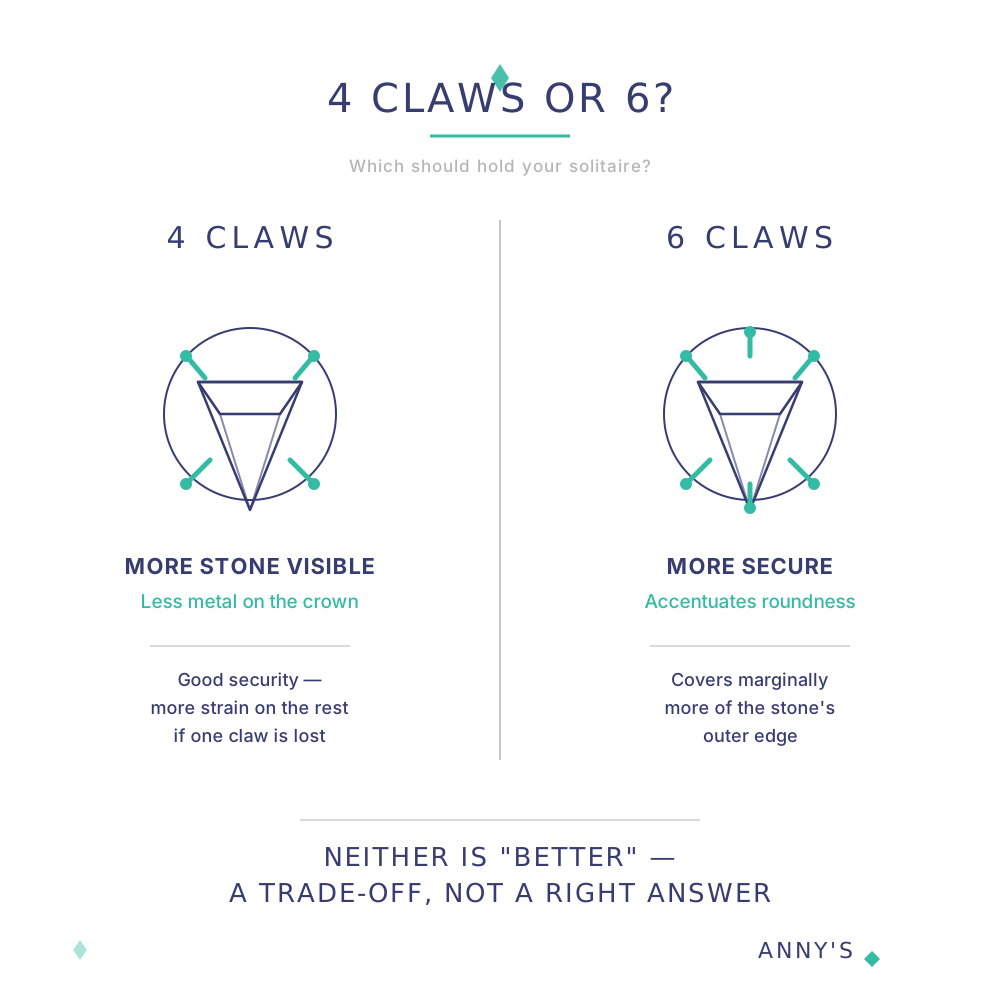
Four claws show more of your diamond and use less metal; six claws are more secure if one is ever damaged, and slightly better protect the stone's girdle (the narrow band around a diamond's widest point) — but cover marginally more of the stone. Neither is “better.” It's a genuine trade-off between visibility and security.
GIA puts it plainly: “If a prong is accidentally sheared off in a four-prong setting, the center stone can easily fall out (and get lost)... if a prong breaks in a six-prong setting, chances are the center stone will remain firmly in place.”[2]
 View full size
| Claw count | The look | Light & visibility | Security | Best for |
|---|---|---|---|---|
| 4 claws | Minimal metal; stone reads slightly squarer on round diamonds | More of the stone's crown and girdle is visible | Good — but losing one claw puts more strain on the rest | Smaller stones; buyers who want the diamond to dominate the look |
| 6 claws | Slightly more metal; accentuates a round diamond's roundness | Covers marginally more of the stone's outer edge | Stronger — the stone typically stays held even if one claw fails | Larger stones; everyday-wear peace of mind |
Does claw count change how big or bright my diamond looks?
Claw count changes how much diamond you can see, not how bright it sparkles. GIA sets this out as a myth — “Four prongs allow more light to enter the diamond, giving the stone more sparkle” — and answers it with the fact: “A diamond's sparkle is determined by the quality of its cut, not by the number of prongs in a setting.”[2] Sparkle comes from cut — see our round-cut diamonds guide.
Is a 6-claw setting always safer for a bigger stone?
Generally, yes — GIA states plainly that “six prongs hold a diamond more securely in place,” and that “six prongs offers better protection to the diamond's girdle than four prongs.”[2] A bigger stone concentrates more daily knock-stress onto fewer contact points, so extra claws spread that load. Worth knowing that GIA's one size-specific note actually runs the other way, and it's about looks rather than security: diamonds “smaller than a half a carat may be overshadowed by all the prongs.”[2] So there's no carat threshold above which six claws become compulsory — it's a judgement our setters make with you, based on your actual stone.
Cathedral or low-set — how does mounting height change everyday wear?
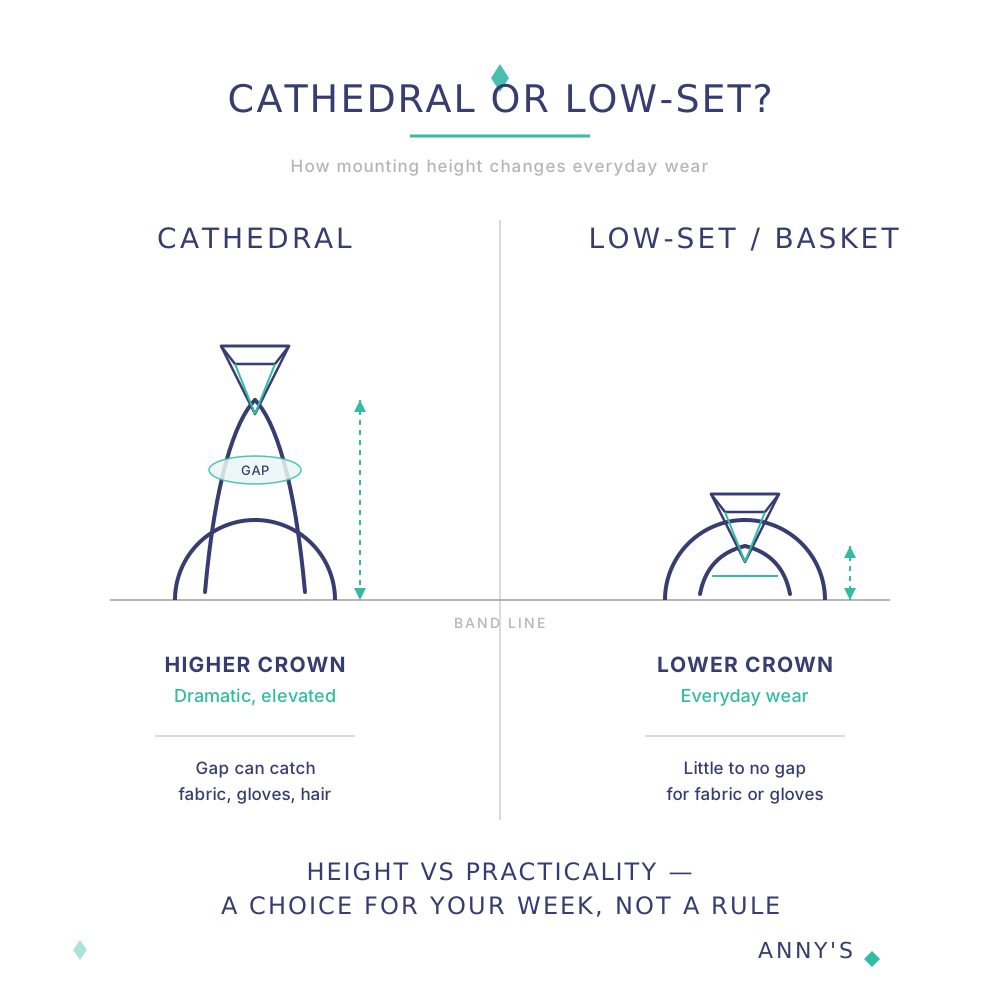
A cathedral setting raises your stone on arched metal shoulders for height and drama; a low-set or basket mounting sits it closer to the finger, trading height for practicality. Neither is right or wrong — it comes down to how your hands work through a normal week.
The name comes straight from architecture. GIA notes that the cathedral setting “gets its name from its aesthetic similarities to an old cathedral” — “its sweeping nature is reminiscent of the vaulted ceilings and pleasing arches of these places of prayer.”[1] A low-set mounting does the opposite, keeping the stone's crown close to the band.
| Mounting | The look | Height | Snag risk | Best for |
|---|---|---|---|---|
| Cathedral | Dramatic, elevated; arched shoulders draw the eye up | Higher crown — the stone stands proud of the band | Higher — the gap under the stone can hook loose fabric, gloves and hair | Buyers who want the stone to make a statement, and gentler daily use |
| Low-set / basket | Understated, close to the finger; the stone sits within the hand's line | Lower crown — closer to flush with the band | Lower — little to no gap for fabric or gloves to catch | Trades, nursing, parents, the gym — genuinely active hands |
 View full size
What is a basket setting, and how is it different from a cathedral?
A basket setting is a claw head with horizontal metal bands running between the claws, forming a small cradle beneath the stone. Stuller's bench-jeweller guide describes it as “an open, basket-like structure that holds the stone with prongs” — “strong and versatile settings but require regular prong checks, especially on higher-wear rings.”[5] The general rule is that gem settings “with more metal are stronger, especially if you plan to wear a jewelry item daily,”[3] which is why a basket suits a larger stone — at the cost of covering slightly more of its side.
A cathedral is about height; a basket is about the head's structure, and can sit low and flush just as easily as raised. Our setters build the two independently, mixing a supportive basket with whichever height suits you.
Will a cathedral setting catch on gloves, pockets or hair?
More often than a low-set mounting — the raised shoulders leave a small gap under the stone for loose fabric, gloves or hair to catch on. It's a conversation our setters have often with hands-on clients (nursing, trades, hairdressing, raising young kids), and part of why we build extra thickness into every mounting (roughly $300–$500 more in metal) for real daily wear.
How are the claws on a solitaire actually made?
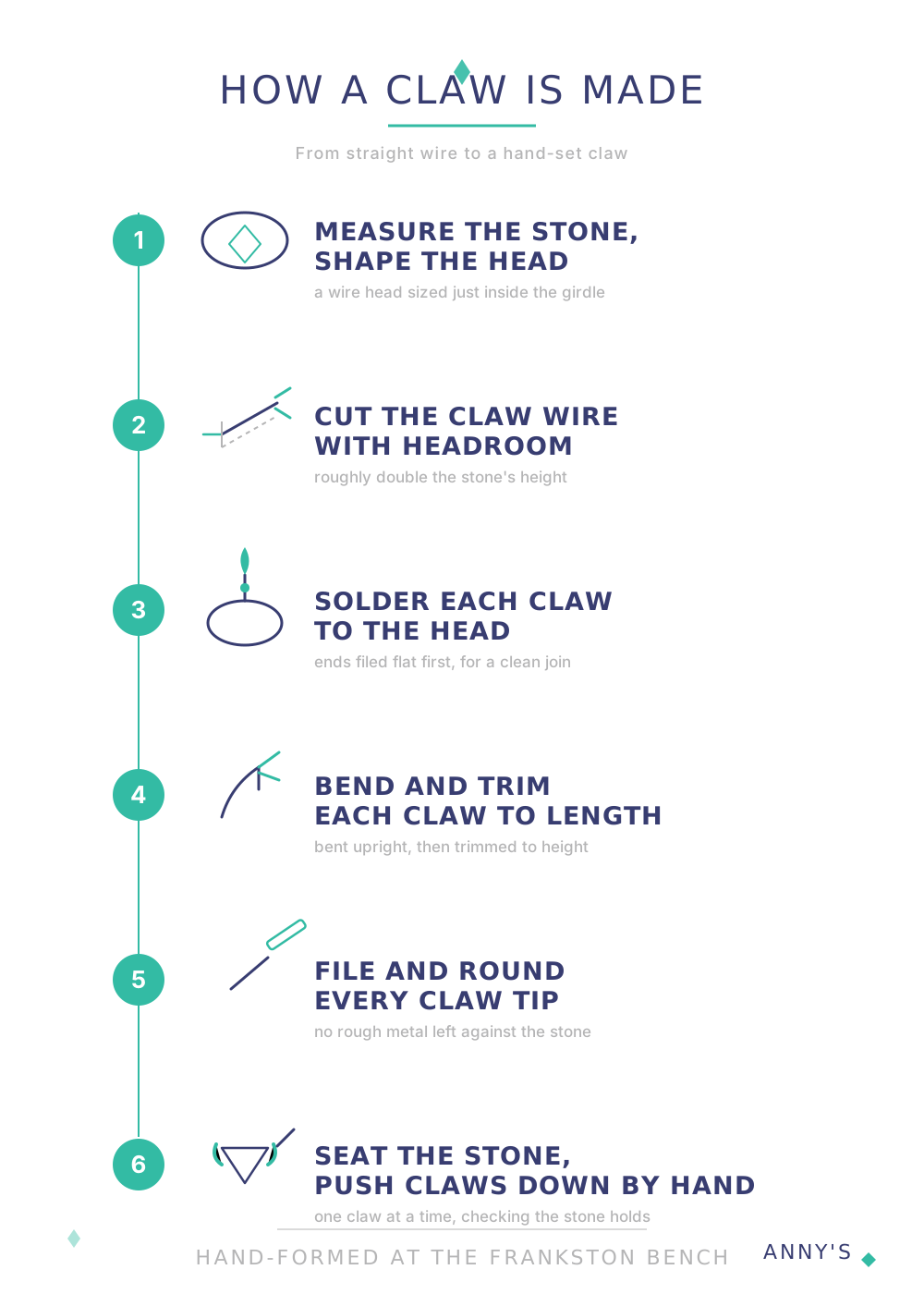
Every claw on your solitaire starts as a straight length of wire, not a pre-cast shape — our setters measure your stone, shape each claw by hand, then set them one at a time. It's a hands-on process most buyers never see, and it's why a claw fits your specific diamond, not an average one.
- Measure the stone and shape the head. The setter forms a wire head sized just inside the stone's girdle, so the claws grip close to the diamond's actual edge.
- Cut the claw wire with headroom. Each claw is cut long enough to wrap over the crown — a rough bench guide is roughly double the stone's height, since excess is trimmed away later.[4]
- Solder each claw to the head. The ends are filed flat first, then soldered on for a clean, strong join.[4]
- Bend and trim each claw to length. Once soldered, the claws are bent to sit upright, then trimmed to the exact working height.[4]
- File and round every claw tip. Sharp cut ends are smoothed with needle files so no rough metal sits against the stone.[4]
- Seat the stone and push the claws down by hand. Each claw is pushed down over the crown one at a time, checking the stone doesn't move before moving to the next.[4]
 View full size
A setter is always weighing up thin claws that show off more stone against claws thick enough to grip it through years of daily knocks.[3] That judgement call is what a real bench setter brings and a mass-produced mounting can't — Harry Ozkoch has been making it since he started setting diamonds at 16. For the fuller journey from sketch to finished ring, see how a custom engagement ring is made.
How do I choose between these solitaire variations for my lifestyle?
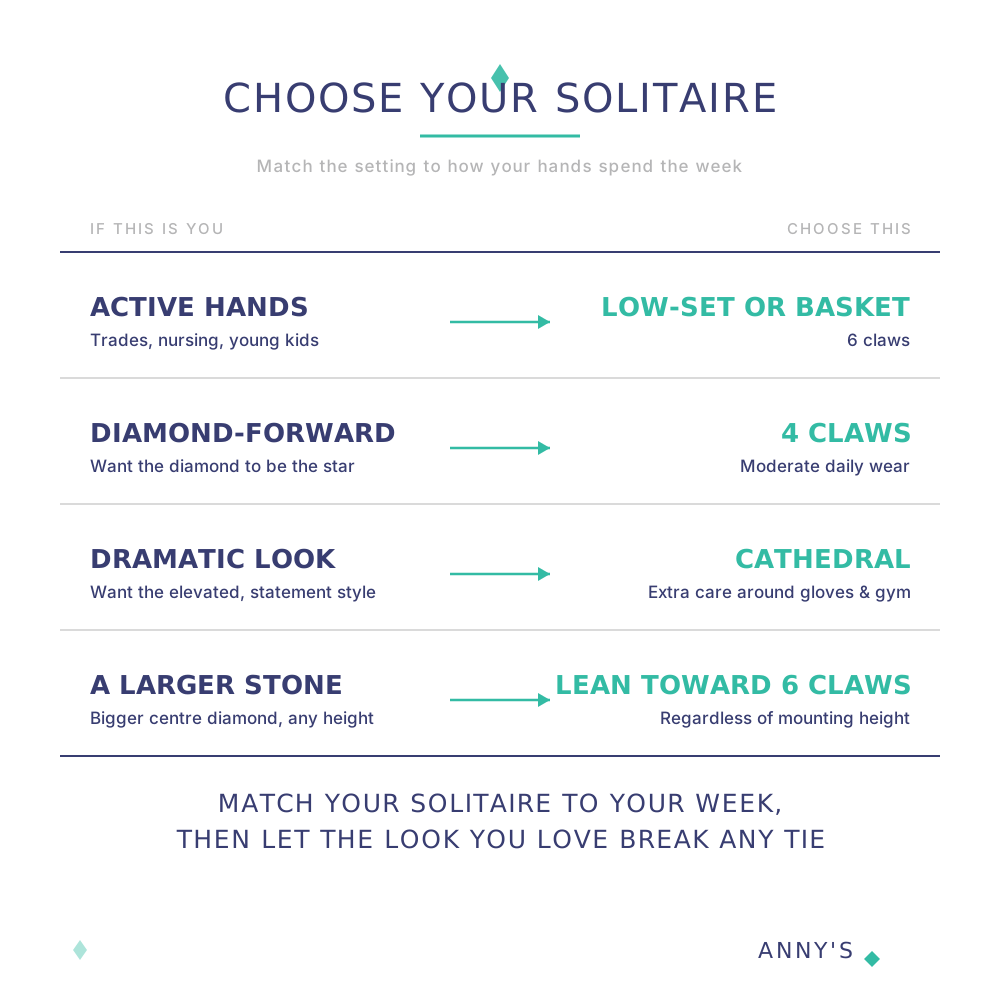
Match your solitaire to how your hands spend the week, then let the look you love break any tie.
- Active hands — trades, nursing, young kids: low-set or basket, 6 claws.
- Want the diamond to be the star: 4 claws, moderate daily wear.
- Want the dramatic, elevated look: cathedral, with a little extra care around gloves and gym equipment.
- A larger centre stone: lean toward 6 claws regardless of mounting height.
 View full size
We build every combination around your actual stone and hands, not a size chart — explore Anny's engagement rings or talk to us about our custom design and repairs service.
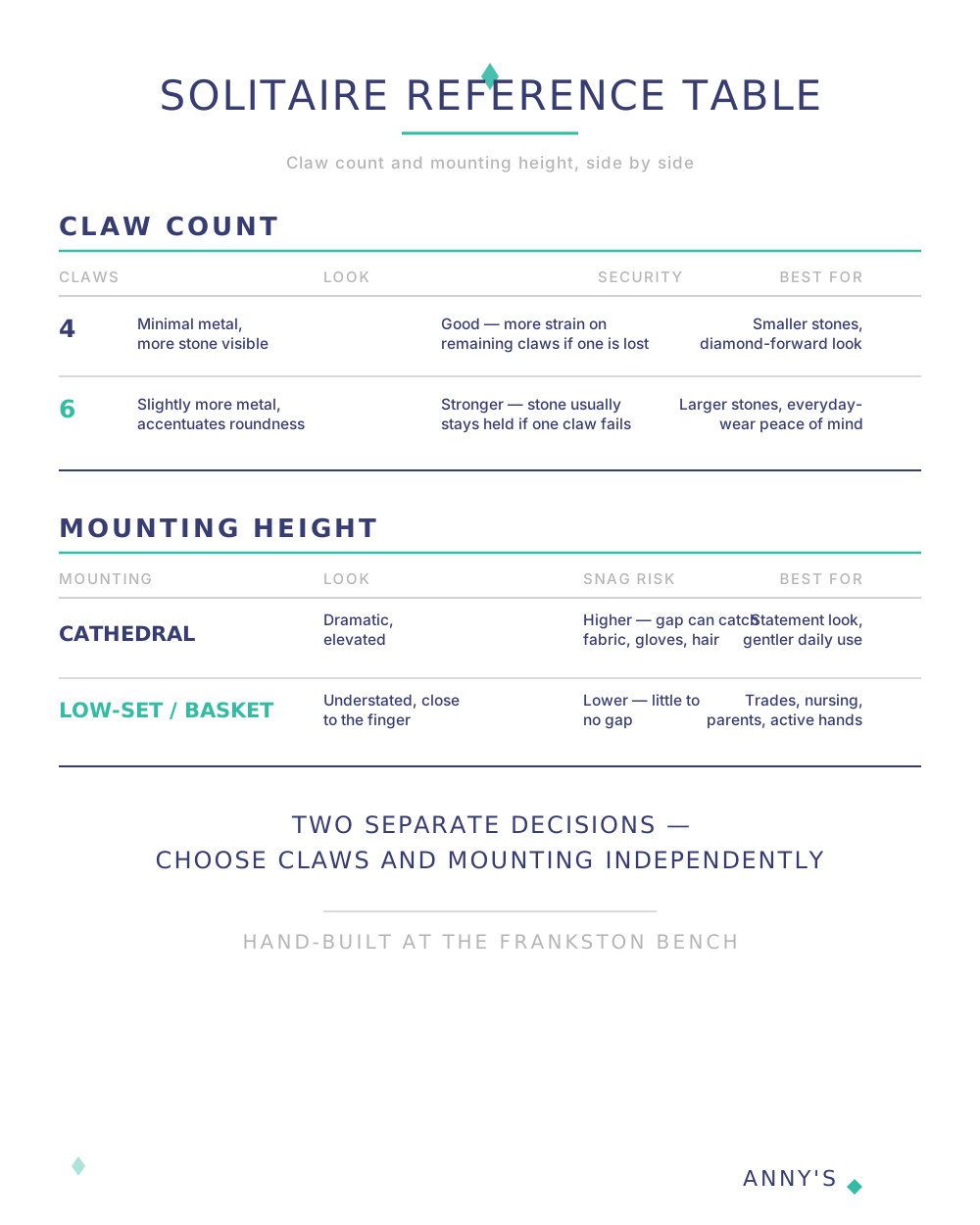
Claw count and mounting height — quick reference
 View full size
Frequently Asked Questions
Can I upgrade from 4 claws to 6 claws later?
Sometimes — it depends on the head. If there's enough spare metal, our setters can add claws to an existing mounting; otherwise a rebuild is cleaner. Ask us to look at your specific ring before assuming either way.
Do cathedral settings cost more to make than low-set mountings?
There's no single Australian figure for a setting on its own, since cost depends on your stone, metal and design together. A cathedral's raised shoulders generally use a little more metal and bench time than a flush low-set mounting.
Does a low-set solitaire still work with a straight wedding band?
Often not as well as you'd expect — a raised cathedral usually has enough shoulder room for a straight band to tuck underneath it, while a very low-set stone can leave none. A curved or contoured wedding band solves this neatly, and it's worth planning for before your band is made.
How do I know if my claws need re-forming or just retipping?
A claw that's thin at the tip but otherwise solid just needs retipping — fresh metal on the worn tip. One that's bent, cracked or broken off needs re-forming from new wire. A check every 6–12 months catches the difference early — see our full guide to engagement ring settings for the full maintenance rundown.
About the author
Written by Chris Ozkoch, who does Anny's in-house CAD work and signs the workshop's valuations. Reviewed by Harry Ozkoch, Master Jeweller — a diamond setter since age 16 and the JAA Australasian Jewellery Awards People's Choice winner (2019) for “A Drop Of Love.” Anny's is a family business established in 1990 in Frankston, Victoria.
The best way to choose is to try a few claw counts and mounting heights on your own hand. Visit our Frankston workshop (walk-ins welcome), or Email us before visiting our Melbourne CBD showroom for engagement and wedding rings. You Imagine. We Create. For Collins Street, please wait for our email confirmation before coming in.
Sources
[2] GIA 4Cs — “Four Prongs versus Six Prongs for Your Engagement Ring” — 4cs.gia.edu — accessed 5 July 2026; quotations re-confirmed verbatim 25 July 2026 against the Internet Archive capture of this URL (4cs.gia.edu refuses automated fetch).
[1] GIA 4Cs — “What is a Solitaire Setting?” — 4cs.gia.edu — accessed 5 July 2026; quotations re-confirmed verbatim 25 July 2026 against the Internet Archive capture of this URL (4cs.gia.edu refuses automated fetch).
[3] International Gem Society — “The Nomenclature of Jewelry, Part 1: Gem Settings” — gemsociety.org — accessed 5 July 2026; page body re-fetched and quotation re-confirmed verbatim 25 July 2026.
[4] Kernowcraft — “How To Make A Prong/Claw Setting For Irregular Shapes Stones” — kernowcraft.com — accessed 5 July 2026; page body re-fetched and all six step quotations re-confirmed verbatim 25 July 2026.
[5] Stuller Bench Jeweler — “A Jeweler's Guide to Common Jewelry Settings” — stuller.com — accessed 25 July 2026; page body fetched and basket wording confirmed verbatim.
Typical engagement and bridal ring turnaround: 3–4 weeks from CAD sign-off. We also have 2-week and 48-hour options for engagement and bridal rings. Get in touch and we'll help find an option that works for your timeframe.