Care, Repairs & Protection
Upgrading or Resetting Your Engagement Ring at a Milestone — Keep Your Diamond, Get a New Ring
The short answer? Yes — you can keep the diamond you said yes to and give it a brand-new ring. Because you're reusing the stone you already own, resetting it into a fresh design is usually far better value than starting over. And you'll see a 3D-printed wax of the new ring in your hand before your diamond is ever unset — so there's no leap of faith.
Can I keep my diamond and get a whole new ring for our anniversary?
Yes — and honestly, it's one of the loveliest things we get to do. We reset your centre diamond into a brand-new design, so you keep the exact stone from the day you got engaged, just dressed in a ring that fits who you are now. The design, the reset and the finishing all happen in-house through our custom and remodelling service. (If the piece came from someone else — a grandmother's ring, a late parent's gold — see remodelling an inherited or heirloom piece instead; this guide is about your own engagement ring.)
What are the best ways to upgrade or reset an engagement ring?
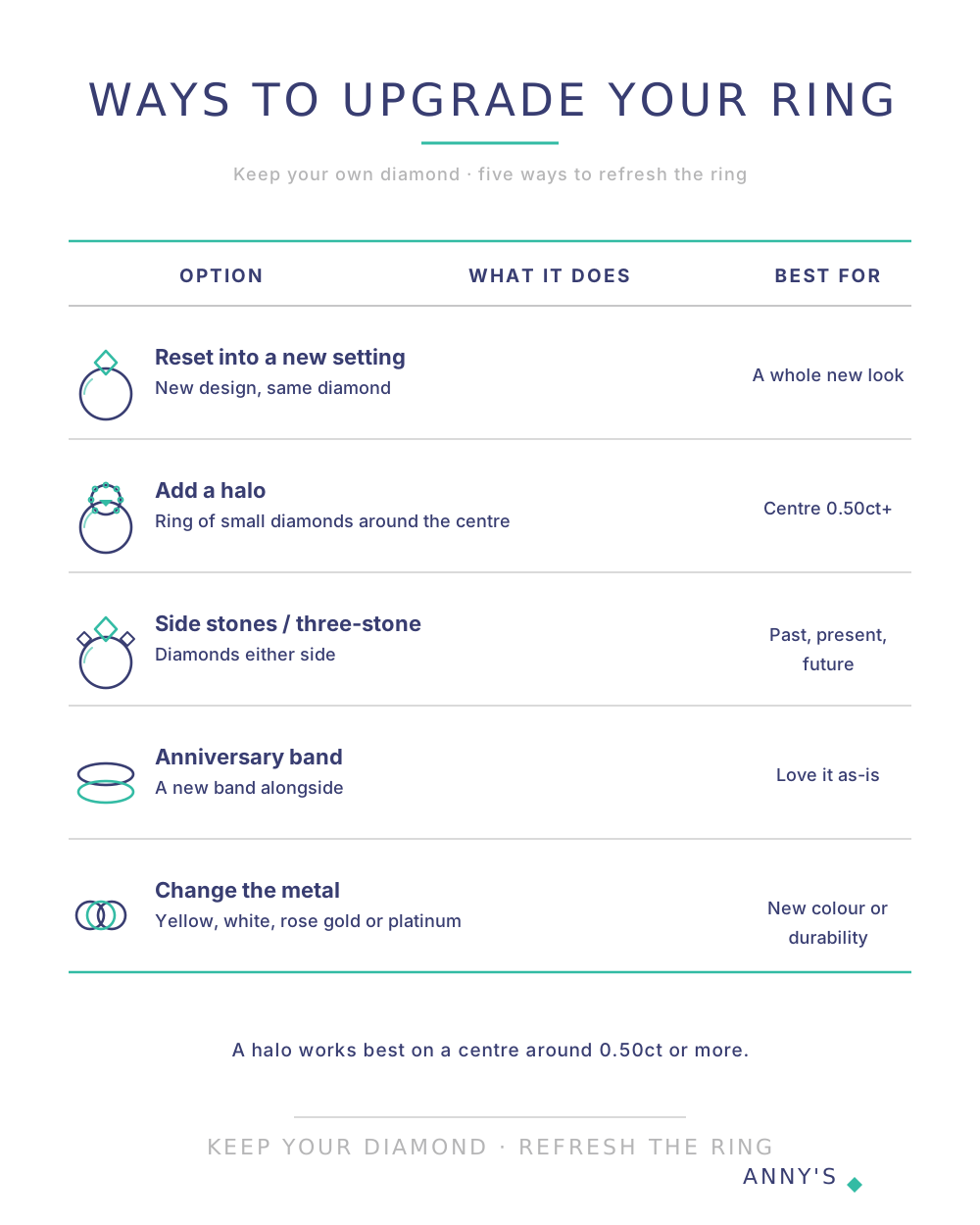
It depends on whether you love your ring's style or want a genuine change. GIA recognises several ways to refresh a ring while keeping the original diamond — remounting (resetting) the stone, adding a halo, and adding side stones (GIA) — and couples also change the metal, add an anniversary band, repurpose an old centre stone into a pendant, or go bigger with a new centre stone that has its available GIA or IGI grading report. For a halo, GIA notes a centre diamond of about 0.50ct or more works best, so the small halo stones make the centre look larger rather than competing with it (GIA).
Weighing a new shape for added stones? Compare diamond shapes before you decide.
 View full size
Will resetting my ring damage the diamond?
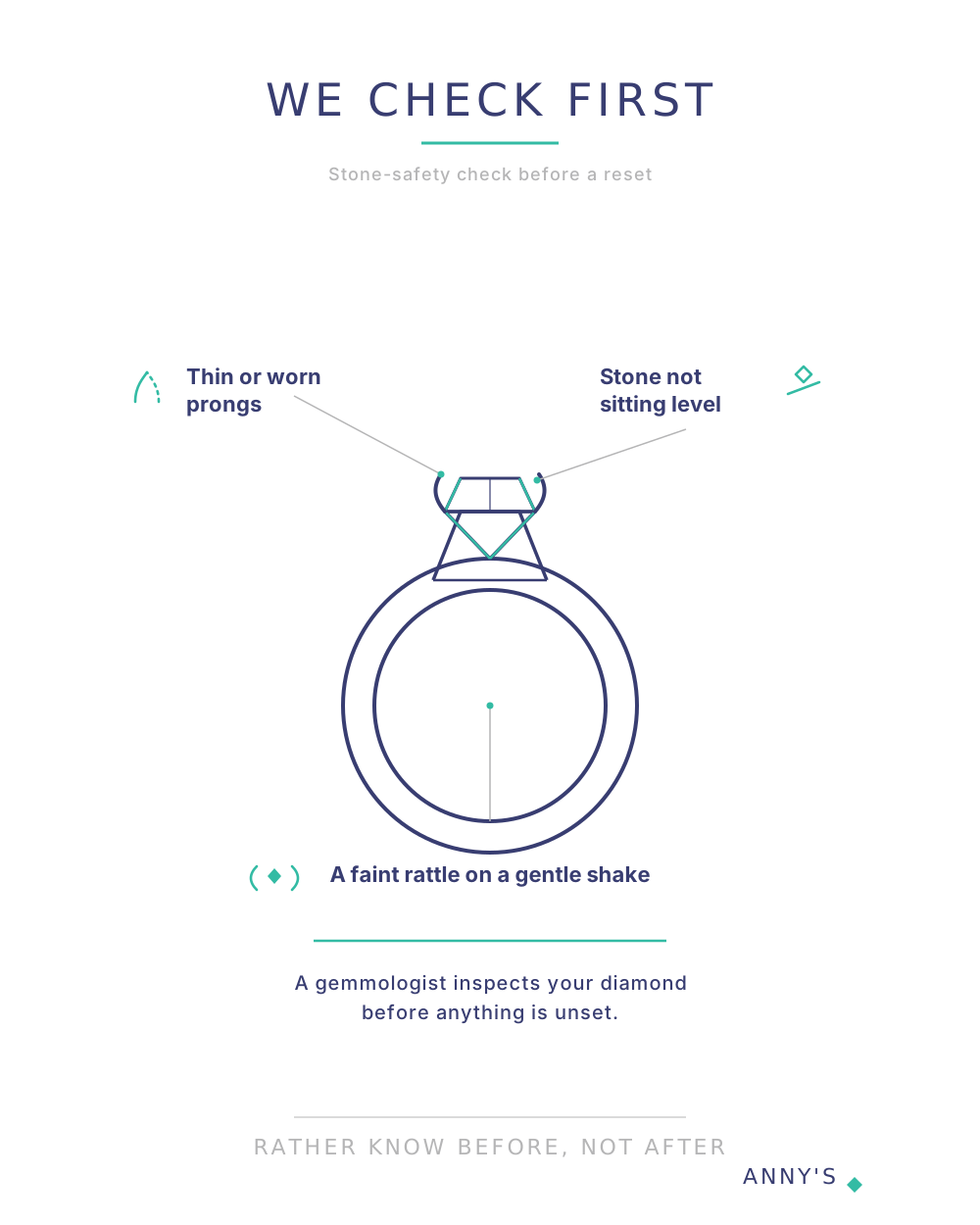
The risk is low and carefully managed — most diamonds reset without a hiccup; the real danger is heat meeting a hidden weakness, which is why we check first — we'd rather know before, not after. Our FGAA-accredited gemmologist inspects the centre stone for chips, cracks, feathers (tiny internal fractures) and general wear before anything is unset.
The one stone that needs real care is a treated one. Some diamonds have had their tiny cracks filled to look clearer — and that filling can't take heat. GIA won't issue a grading report for a fracture-filled diamond because the treatment isn't permanent or stable, and warns that common repairs and cleaning with steam, acid or ultrasonic solutions can damage the filling; any treatment must also be disclosed by the seller (GIA). In a GIA prong-retipping experiment, a filled diamond's appearance visibly changed once direct heat was applied (Kammerling et al., Gems & Gemology, Fall 1994, Vol. 30 No. 3) — exactly the surprise a proper check rules out first.
The setting deserves a look too: a prong that's shorter than its neighbours or narrowed at the top, a claw that's bent or missing, or a stone that no longer sits level are the warning signs a jeweller checks for (Jewelers Mutual). When a reset goes ahead, careful technique keeps stress on the stone to a minimum — and a laser welder (we use an Orotig EvoWhite) lets us work close to a diamond with far less heat than a traditional torch. The honest version: not "nothing can go wrong", but "here's exactly how we make sure it doesn't".
 View full size
How does an engagement-ring upgrade work at Anny's?
An upgrade follows the same journey as any custom piece, with one extra reassurance built in for resets: the design is fully proven on a model before your diamond is ever unset.
- We design your new ring in CAD and send you detailed images to react to.
- We 3D-print a model so you can review the design before casting. The $500 design fee covers CAD and the print, is deducted from the final price, and is not refundable for change of mind. Small changes at the 3D-print stage are usually made within the hour; we'll confirm the timing of larger changes.
- Only once you love it is it cast by a specialist casting house; then we reset your diamond, set any added stones, and hand you the finished ring.
The full walk-through lives on our how we design and make a custom ring page. The part that matters for an upgrade is the order: your diamond stays safe in its original setting until you've said "yes, that's the one" — the modern workflow where the "jeweller and customer can discuss the design together, and an hour later, the customer can hold and try on a real, physical model of the ring" (Formlabs).
Your diamond never leaves our workshop
Your sentimental stone stays in the building the whole time. Anny's is a team of around 10 under one roof in Frankston, so your reset is designed, set and finished by the actual people you talk to. Only the new metal goes to a specialist casting house — nobody posts your diamond anywhere.
 View full size
How much does it cost to upgrade or reset an engagement ring in Australia?
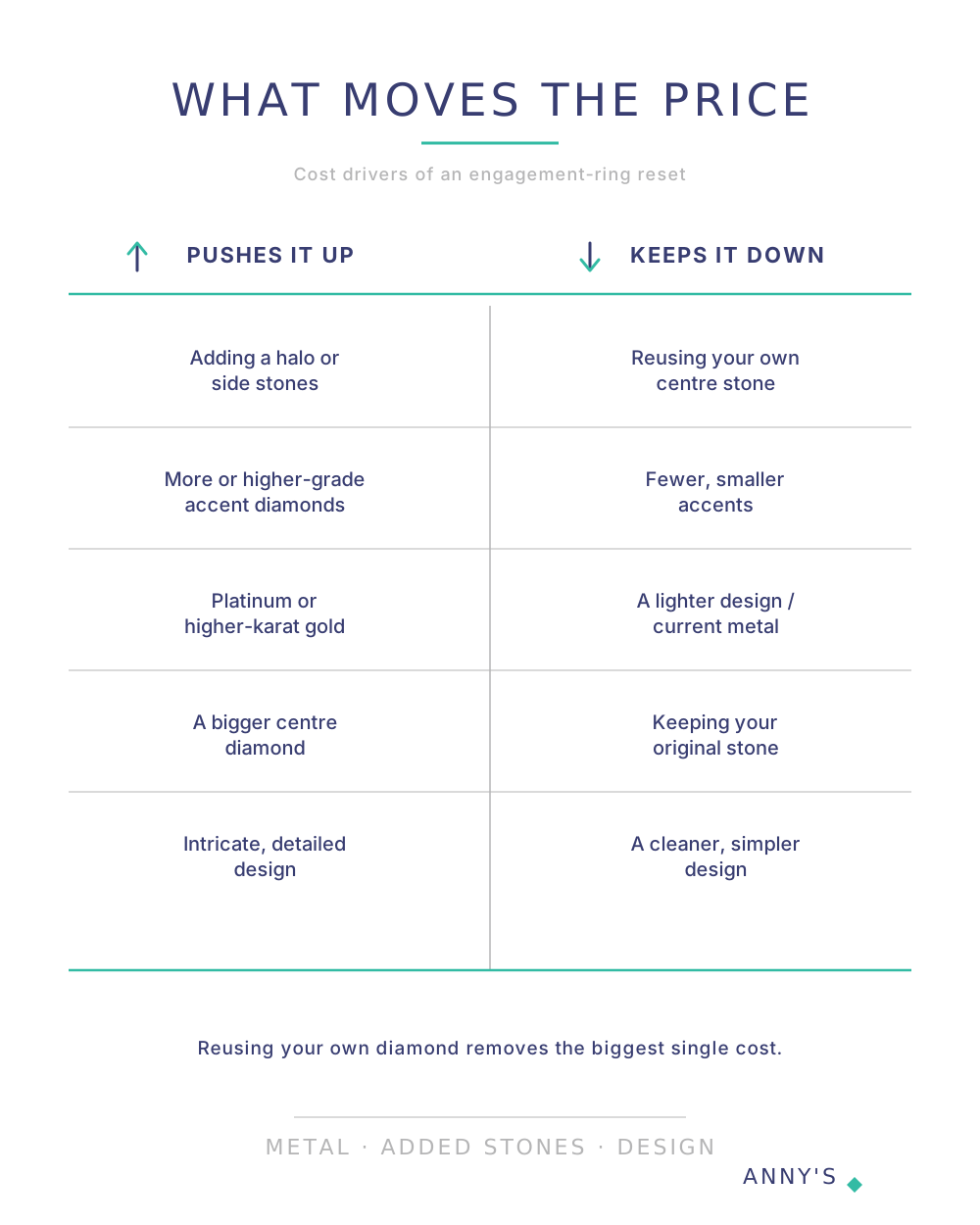
The honest headline: in most engagement rings the centre diamond is the biggest single cost, so keeping your stone and changing the setting is usually far cheaper than buying a whole new ring. What you pay for is mostly the new parts — the design, the metal, the labour, and any stones you add. There's no neutral or official Australian price for a reset, and we won't borrow a figure from anyone else. What moves the number: more added stones (especially fine melee, the tiny accent diamonds in a halo or band), a denser metal like platinum or a higher gold content, a bigger centre, and intricate design all push it up; reusing your centre stone, fewer accents, a cleaner design and staying in your current metal keep it down.
And what happens to your old ring? We can credit your old metal against the job — stones aren't credited, though resetting your own stone is the whole point here — and in certain circumstances, when the old metal is usable and sentimental, we can use it in the new piece itself. We'll tell you which applies once we've seen it.
One thing to note: Anny's engagement-ring price bands you might have seen elsewhere — lab-grown around AUD $3,000–$6,000 and natural around AUD $8,000–$30,000 — are for a whole new ring with a new stone. They don't apply to a reset of your own diamond, which is a different (usually smaller) job. For where the money goes when stones are involved, our diamonds with GIA or IGI grading reports page explains how the 4Cs drive value.
 View full size
Should I re-value and re-insure my ring after upgrading it?
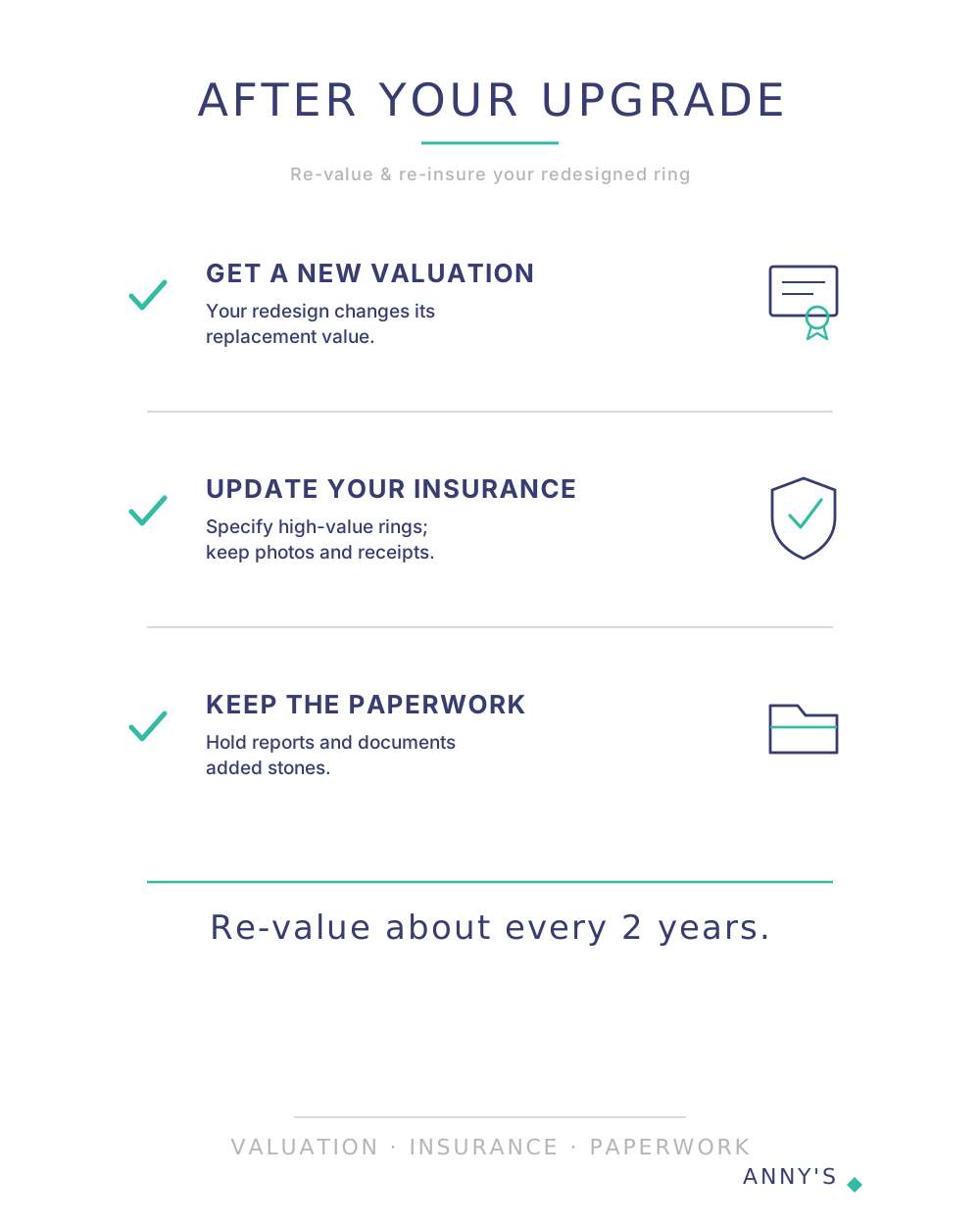
Yes — and it's an easy step to forget in the excitement. A redesign changes your ring's replacement value, so you'll want a fresh valuation and an updated insurance figure to match. The NCJV puts it plainly: "the condition and value of your item can fluctuate, so it is important for your information to be reassessed every two or three years" (NCJV) — and the JAA likewise recommends jewellery "be valued approximately every 2 years" (JAA). After an upgrade:
- Get a new valuation. After a reset, Anny's can provide a written valuation signed by Chris Ozkoch. Check your insurer's current PDS and requirements before relying on it for cover.
- Update your insurance. Keep the valuation, receipts and good close-up photos, then ask your insurer what it requires for the particular policy and claim.
- Keep the paperwork for any added stones. For an individual new diamond, keep the available GIA or IGI grading report; it can be matched to the exact stone by its report number, which may be laser-inscribed around the diamond's girdle (IGI).
A redesign is also covered by your usual consumer rights: in Australia, services must be carried out "using an acceptable level of care and skill" and within a reasonable time (ACCC).
 View full size
When should we upgrade, and will it be ready in time?
Most couples upgrade around a round-number anniversary — 5, 10, 15 or 20 years — or for a vow renewal. Our one bit of practical advice: give us a little lead time before the date, so there's no rush. Most remodelling commissions take 4 to 6 weeks from the initial brief to the finished piece; more involved heirloom commissions can take up to 8 weeks. We confirm your timeframe at consultation. Your diamond is not unset until you have approved the wax; if there is a date that matters, tell us upfront and we can discuss the timing.
When you're ready, Email us and we'll start by checking your diamond is happy to be reset.
Frequently Asked Questions
Can you keep my exact diamond, or will it get swapped?
We keep your stone — the actual diamond from your engagement, never a swap. If your diamond came with a GIA or IGI report, its report number can be matched back to the paperwork so the stone's identity is verifiable before and after the reset (IGI).
Will white gold need re-plating if I change the metal?
Likely, yes. White gold is gold mixed with white metals and coated in rhodium — a bright, hard-wearing white metal — for that mirror finish. The coating is incredibly thin and wears with daily wear, so white-gold rings may need re-coating from time to time. Platinum is naturally white, but its finish and care needs vary with wear and condition; a jeweller can assess the particular ring before recommending work.
Do I have to get my diamond re-graded before resetting it?
No — re-grading the existing stone is optional, not required. What we always do is a hands-on safety check: our FGAA-accredited gemmologist inspects your diamond for chips, cracks and wear before any reset, because heat is the real risk to an older or treated stone (GIA). If you'd like a fresh report you can have one, but for a reset the safety inspection matters more.
Ready to give the diamond you said yes to a brand-new ring? Have a browse of our engagement ring range for ideas, then Email us about visiting our Frankston workshop, or before visiting our Melbourne showroom. We'll check your stone is happy to be reset, talk through the design in plain English, and show you a 3D-printed wax before your diamond is ever unset. You Imagine. We Create. For Collins Street, please wait for our email confirmation before coming in.
About the author
Written by Chris Ozkoch, who signs Anny's-supplied written valuations at Anny's Manufacturing Jewellers and reviews the workshop's published guides. Reviewed by Harry Ozkoch, Master Jeweller — a diamond setter since the age of 16 who founded Anny's in Frankston, Established in 1990. Anny's designs, sets and finishes each piece in-house.
Typical engagement and bridal ring turnaround: 3–4 weeks from CAD sign-off. We also have 2-week and 48-hour options for engagement and bridal rings. Get in touch and we'll help find an option that works for your timeframe.