Diamonds & Gemstones
Diamond Stud Earrings Buying Guide: What's Different From Buying a Ring (Australia)
Honestly? Buying diamond studs isn't quite the same job as buying a diamond for a ring — the biggest surprise for most buyers is that the carat figure on a pair almost always describes both earrings together, not one per ear. Below, we'll walk you through what's genuinely different: reading total carat weight, matching a pair so it looks even, choosing a setting and a back that suit how you live, and translating carat into a size you can actually picture.
Last updated: 17 July 2026 · Reviewed by Harry Ozkoch, Master Jeweller, with the diamond-matching guidance reviewed by Lisa D, FGAA-accredited gemmologist (Gemmological Association of Australia).
Key takeaways
- Confirm whether "1.00ct" describes the pair and which stones it includes. For equal one-stone studs, 1.00ct total carat weight (TCW) means two 0.50ct diamonds; halo accents may be included in other designs (GIA).
- A matched pair needs consistent colour and clarity, not just equal weight — a small mismatch becomes obvious once both stones sit side by side.
- Bezel settings are the most secure and snag-resistant for daily wear; prong and martini settings show more sparkle but catch more easily on hair and clothing.
- Screw-backs lock on mechanically and suit active wearers, sport, or kids; push-backs are faster on and off for everyday use.
- Carat is a weight, not a size — a diamond's face-up diameter in millimetres depends on cut proportions too, so translate carat to mm before you picture it on the ear.
Does "1 carat" mean one diamond, or the pair?
Almost always, it means the pair together. GIA draws the distinction plainly: "carat weight" refers to the weight of a single stone, while "total carat weight" — often abbreviated "tcw" — describes the weight of all the diamonds in a multi-stone piece (GIA 4Cs — Nine Things About Diamond Carat Weight You Need to Know, accessed 25 July 2026). For equal one-stone studs with no accent diamonds, a 1.00ct TCW pair means two 0.50ct diamonds, one per ear. For halos and other multi-stone designs, ask for the centre-stone weights separately.
Confirm whether the quoted weight is for the pair or per stone, and which stones it includes. For matching one-stone studs, half the pair's total approximates each centre stone. For halos or other multi-stone designs, ask for centre-stone weights separately.
| Listed as | Total carat weight (TCW) | Each stone (equal one-stone studs) |
|---|---|---|
| 0.50ct TCW | 0.50 carats | 0.25 carats |
| 1.00ct TCW | 1.00 carats | 0.50 carats |
| 2.00ct TCW | 2.00 carats | 1.00 carat |

We won't re-explain the 4Cs from scratch here — for the full picture on cut, colour, clarity and carat, see what makes diamond cut the most important C. What's genuinely different about a pair is everything below: making sure two stones work together, not one.
Why do two diamonds in a pair need to match, not just weigh the same?
Because a mismatch that's invisible on a single ring diamond becomes obvious once two stones sit side by side. GIA makes the point directly when explaining why a pair costs what it does: you are buying two diamonds, "and the designer must make sure their 4Cs match" (GIA 4Cs — How to Choose Diamond Stud Earrings, accessed 25 July 2026). Worth knowing too that GIA reckons studs give you a little more leeway than a solitaire engagement ring, where the tiniest detail matters — the two stones need to agree with each other more than they need to chase the top of any one grading scale.
A sensible rule of thumb: keep colour within about one grade of each other. A G paired with an H is fine; a G paired with a J is risky. Keep clarity in the same band too, rather than mixing a VS1 with an I1. Cut still matters most for how alive a stone looks — see how diamond colour is graded and diamond clarity explained for the grading detail; we won't repeat it here.
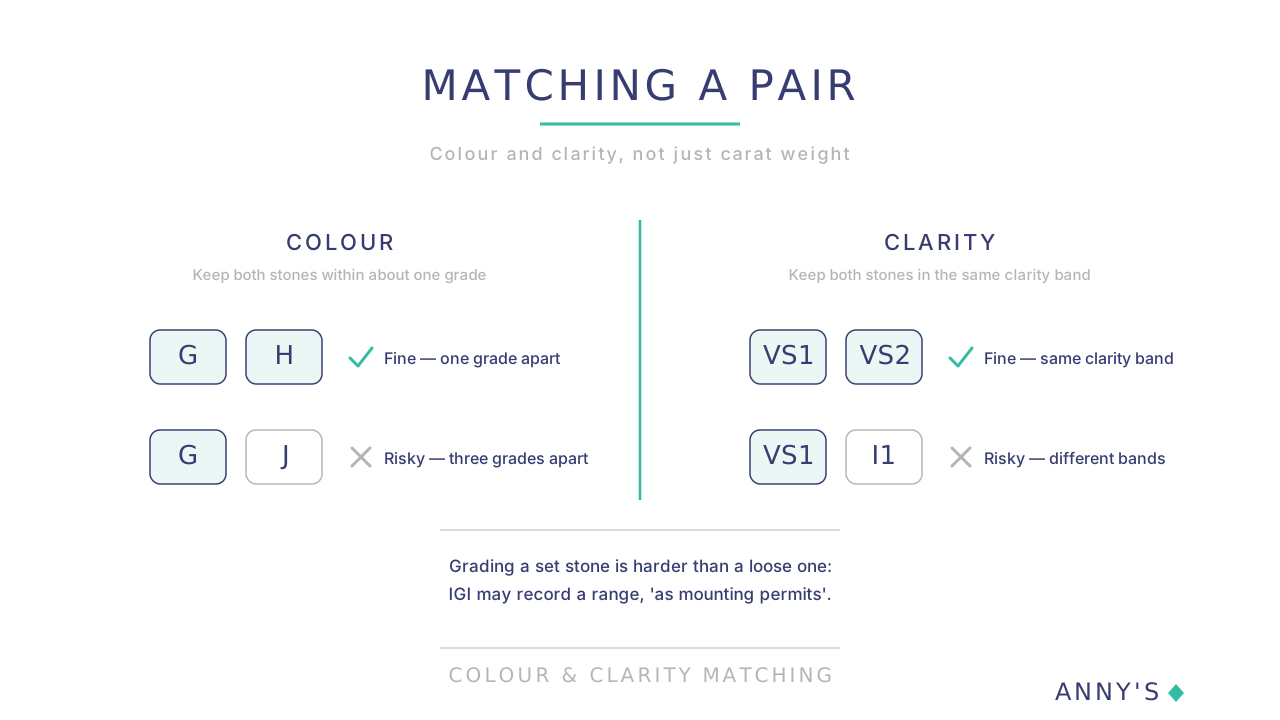
One nuance worth knowing: grading a mounted stone is harder than grading a loose one. The International Gemological Institute (IGI) will sometimes record a range rather than one precise grade for a set stone — "D–E" or "SI1–SI2," for example — noted as "graded as mounting permits" (IGI — Jewelry Reports, accessed 17 July 2026). That's not sloppy grading; it's the honest limit of assessing a diamond once it's set.
Anny's has an FGAA-accredited gemmologist on staff, whose role includes exactly this kind of judgement call — matching a pair by eye, not just by certificate, so two stones genuinely read as a pair rather than two separate purchases.
Which setting is best for diamond stud earrings — prong, martini, bezel or halo?
It depends on how you live day to day, and each style trades sparkle against protection. A prong setting shows the most stone; a bezel setting protects the stone best; martini and halo sit in between, each leaning one way. That trade-off is GIA's own framing: settings covering the least diamond area maximise apparent size but "offer the least amount of protection," while "the most protection is offered by a bezel setting," where a thin metal strip is worked around the stone to secure it (GIA 4Cs — How to Choose Diamond Stud Earrings, accessed 25 July 2026).
| Setting | How it holds the stone | Everyday-wear note |
|---|---|---|
| 4-prong (basket) | Four metal claws cradle the stone from the sides | Classic and versatile; plenty of sparkle, but the claws can catch on fine hair or delicate knits |
| Martini (3-prong) | Three claws let the stone sit low, close to the lobe | Shows the most stone of any common setting; fewer contact points make it the least secure of the four |
| Bezel | A smooth metal rim wraps fully around the stone's edge | The most secure and snag-resistant option — nothing for hair, hats or jumpers to catch on |
| Halo | Small accent diamonds ring the centre stone | Adds size and sparkle without a larger centre stone; more metal and stones overall means a little more that can catch |
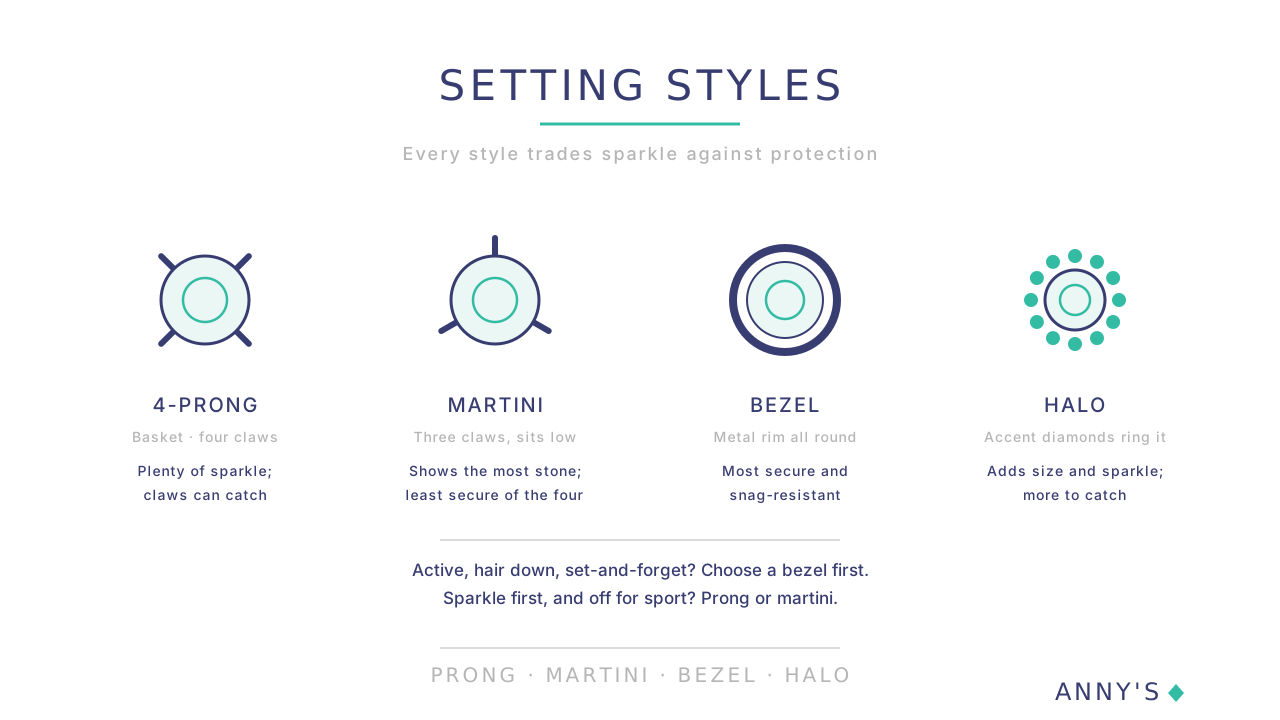
If you're active, wear your hair down often, or want to "set and forget" your studs, a bezel is worth choosing first. If sparkle matters most and the earrings come off for sport or sleep anyway, prong or martini will show more of the diamond. Either way, it's the same value Anny's builds into every piece: made to last rather than to wear thin.
Screw-back or push-back — which earring back should you choose?
Screw-backs lock on mechanically and won't slide loose by accident; push-backs (friction or "butterfly" backs) rely on grip alone and go on and off in a second. Choose screw-backs if the earrings will see an active life — sport, young kids, or anyone who'd rather not think about it — and push-backs for the fastest daily in-and-out.
| Back type | How it holds | Best for |
|---|---|---|
| Push-back (friction/butterfly) | A small metal disc grips the post through friction alone | Fast daily wear; the grip can loosen gradually over time |
| Screw-back | A threaded post locks the backing on; must be deliberately unscrewed | Active wear, sport and children — won't slip loose by accident |
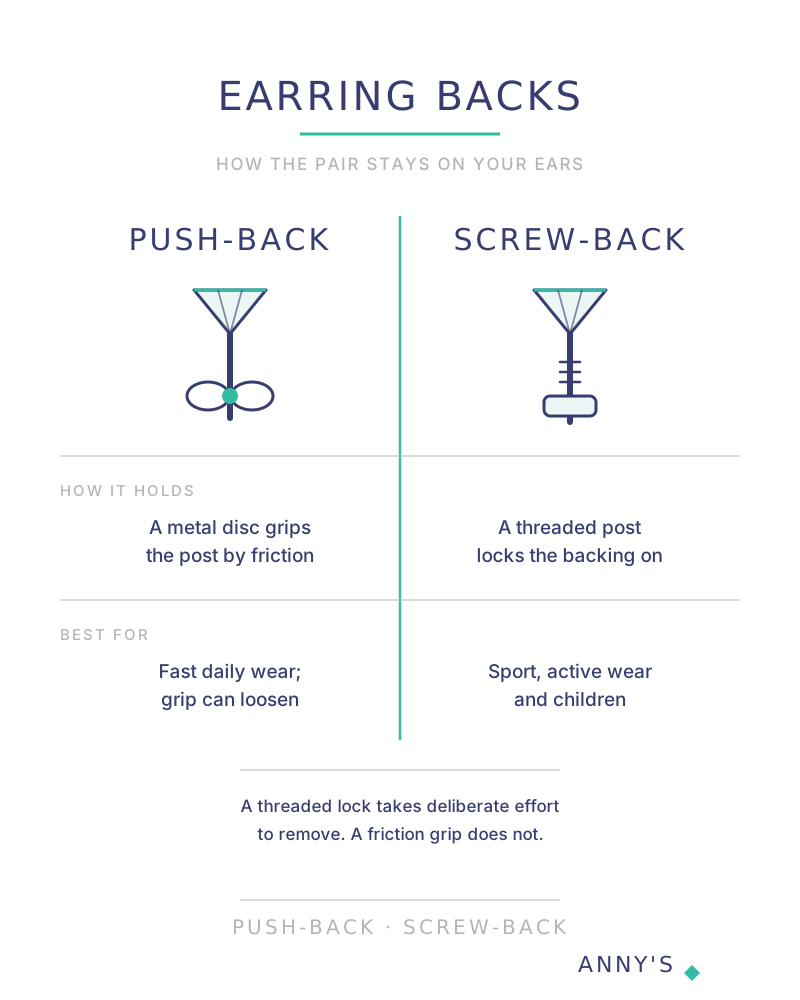
There's no reliable, verifiable statistic on how often either type is lost, so we won't invent one. GIA puts screw backs and locking backs together as "the two choices that offer the most security," and notes that friction backs "usually do not offer as much protection from loss" (GIA 4Cs — How to Choose Diamond Stud Earrings, accessed 25 July 2026). The mechanics alone make the case: a threaded lock takes deliberate effort to remove, and a friction grip doesn't — which is why we'd suggest a screw-back without hesitation for a child's earrings or daily gym wear. One honest caveat from the same GIA page: some people find threaded posts less comfortable, because they're thicker than a standard post.
What size are diamond stud earrings really — carat vs millimetres?
Carat measures weight, not the size you'll see. As the International Gem Society puts it, "a diamond's size is how large the diamond will look when viewed from above, while carats describe how much the diamond weighs" (IGS — Diamond Measurements, updated 16 May 2023) — and face-up diameter depends on cut proportions too. For a well-cut round brilliant, the standard stud shape, here's a reference table once you know the per-stone carat weight (see above).
| Diameter (mm) | Approx. carat weight (each stone) |
|---|---|
| 3.0 mm | 0.10 ct |
| 4.0 mm | 0.25 ct |
| 5.0 mm | 0.50 ct |
| 6.0 mm | 0.75 ct |
| 6.5 mm | 1.00 ct |
| 7.0 mm | 1.25 ct |
| 8.0 mm | 2.00 ct |
(International Gem Society — Standard Gem Sizes Chart, dated 16 April 2025. Figures are for well-cut round brilliants and are indicative — an individual stone's proportions can shift its real mm size slightly at the same carat weight.)
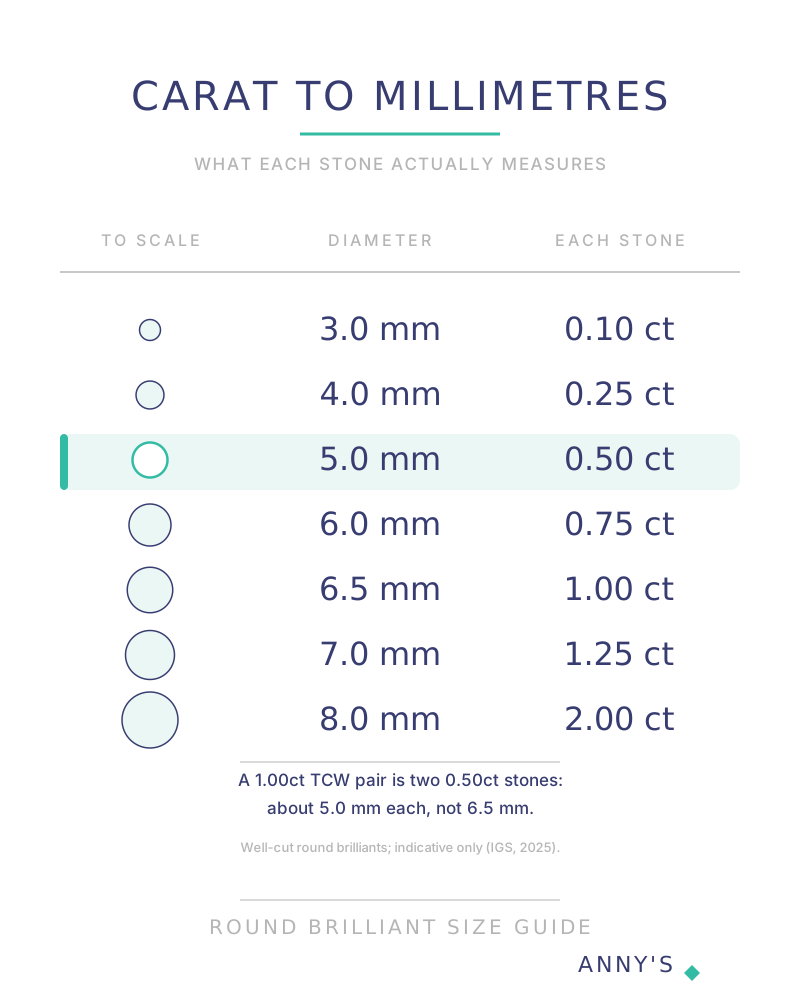
For equal one-stone studs without accents, a "1.00ct TCW" pair means two 0.50ct diamonds, and each reads at roughly 5.0mm — a neat, noticeable everyday stud, not the 6.5mm a single 1.00ct stone would measure. Knowing the millimetres, not just the headline carat number, is the easiest way to picture a pair before you commit.
What actually drives the price of diamond stud earrings?
The same factors that drive any diamond's price apply here — carat weight per stone (not the TCW total), colour, clarity and cut — plus the metal and setting on top.
Ask us for a quote for the stud design you have in mind. The mechanics are the same ones we've set out in full in how much an engagement ring costs in Australia: carat is the biggest single lever, cut matters most for how alive a stone looks, and colour and clarity are usually where you can save without anyone noticing. If lab-grown is on your mind, the value gap works the same way it does for a ring — see the FAQ below for more on that.
Can you get diamond stud earrings made to order in Australia?
Yes, in general — custom-made fine jewellery, not just engagement rings, is genuinely part of what Anny's designs and finishes at our Frankston workshop. Email us about the stud design you have in mind. We’ll confirm availability, whether a custom commission is suitable, and the timing.
What we can say plainly: our diamonds are hand-picked and supplied with GIA or IGI grading reports for the individual stone, and any custom jewellery is designed, set and finished by the same in-house team, with only the casting done by a specialist casting house. See our custom design and jewellery services, or browse fine jewellery at Anny's and diamonds at Anny's with GIA or IGI grading reports to see what's currently available.
Frequently asked questions
What if I only want to replace one earring from a pair I already own?
It's possible, but treat it carefully. A single replacement stone needs to be matched to your existing earring for colour, clarity and cut — not just carat weight — or the pair will look mismatched once worn together again. This is exactly the kind of judgement call an in-house gemmologist handles, working from your existing stone rather than a generic listing.
Which setting and back suit someone who plays sport or has small kids?
A bezel setting with a screw-back is the combination we'd suggest without hesitation. The bezel's smooth rim won't catch on headgear or hair mid-activity, and the screw-back's threaded lock means an earring can't quietly work loose the way a friction back sometimes does. It costs a little sparkle and a few extra seconds to fasten — a fair trade for peace of mind.
Can diamond stud earrings be resized or re-set later?
Yes. There's no ring size to adjust, but posts, backs and settings can wear or loosen over years of daily use, and claws can be re-tipped or a stone re-set into a new mounting entirely. Because Anny's sets, finishes and repairs its pieces in-house, that aftercare happens at the same bench that finished the piece.
Are lab-grown diamonds a good choice for stud earrings?
Yes — a lab-grown diamond is chemically and optically identical to a mined one, so a pair of lab-grown studs looks exactly like natural ones for meaningfully less money. The value gap works the same way it does for a ring; see lab-grown vs natural diamonds in Australia for the full comparison, including certification and resale.
What carat size reads as "everyday" versus a special-occasion statement?
For equal one-stone round studs without accents, a 0.50ct TCW pair (each stone about 4.0mm) tends to read as subtle and everyday, while 2.00ct TCW and above (each stone about 6.5mm) reads as a genuine statement. The right size comes down to your own comfort and how often you'd actually wear them, not a number anyone else sets.
Should I buy diamond studs ready-made, or have them made to order?
It depends on how specific your brief is. Ready-made suits a straightforward, classic pair; made-to-order suits a particular stone size, colour or setting you've pictured exactly. Ask us directly which applies to the pair you're picturing.
About the author
Written by Chris Ozkoch, who signs Anny's-supplied written valuations and reviews the education content here. Reviewed by Harry Ozkoch, Master Jeweller, with the diamond-matching guidance reviewed by Lisa D, FGAA-accredited gemmologist (Gemmological Association of Australia).
Anny's Manufacturing Jewellers is a family business Established in 1990, based at our Frankston workshop and showroom for all services. We design, set and finish fine jewellery in-house, and hand-pick both natural and lab-grown diamonds. Read more in our story, or Email us about visiting Frankston to see diamond stud earrings in person.
[1] GIA 4Cs — Nine Things About Diamond Carat Weight You Need to Know (carat weight vs total carat weight) — 4cs.gia.edu — accessed 25 July 2026.
[2] GIA 4Cs — How to Choose Diamond Stud Earrings (matching the 4Cs across a pair; setting protection; earring backs) — 4cs.gia.edu — accessed 25 July 2026.
[3] IGI — Jewelry Reports ("graded as mounting permits") — igi.org — accessed 25 July 2026.
[4] International Gem Society — Diamond Measurements: What You Should Know Before You Buy (size vs carat weight) — gemsociety.org — updated 16 May 2023.
[5] International Gem Society — Standard Gem Sizes Chart (round-brilliant mm-to-carat table) — gemsociety.org — updated 16 April 2025.
Typical engagement and bridal ring turnaround: 3–4 weeks from CAD sign-off. We also have 2-week and 48-hour options for engagement and bridal rings. Get in touch and we'll help find an option that works for your timeframe.