Engagement Rings
How to Secretly Find Your Partner's Ring Size (and Style) for a Surprise Proposal — the Australian Way
Honestly? You don't have to get this perfectly right. The easiest secret method is to quietly borrow a ring your partner already wears on the correct finger (usually the left ring finger), have it measured, then hand it straight back the same day. Australia uses the A–Z letter system, not US numbers — capture the letter and the millimetres. If you're truly guessing, go slightly large — a too-small ring won't go on, and a too-big ring is the easy fix, because we resize it for you, in-house; a near-miss is not a disaster. Their style you can read from what they already wear — metal colour, setting and stone shape — no need to ask. Here's how to do all of it discreetly, without giving the surprise away.
How can I find out my partner's ring size without them knowing?
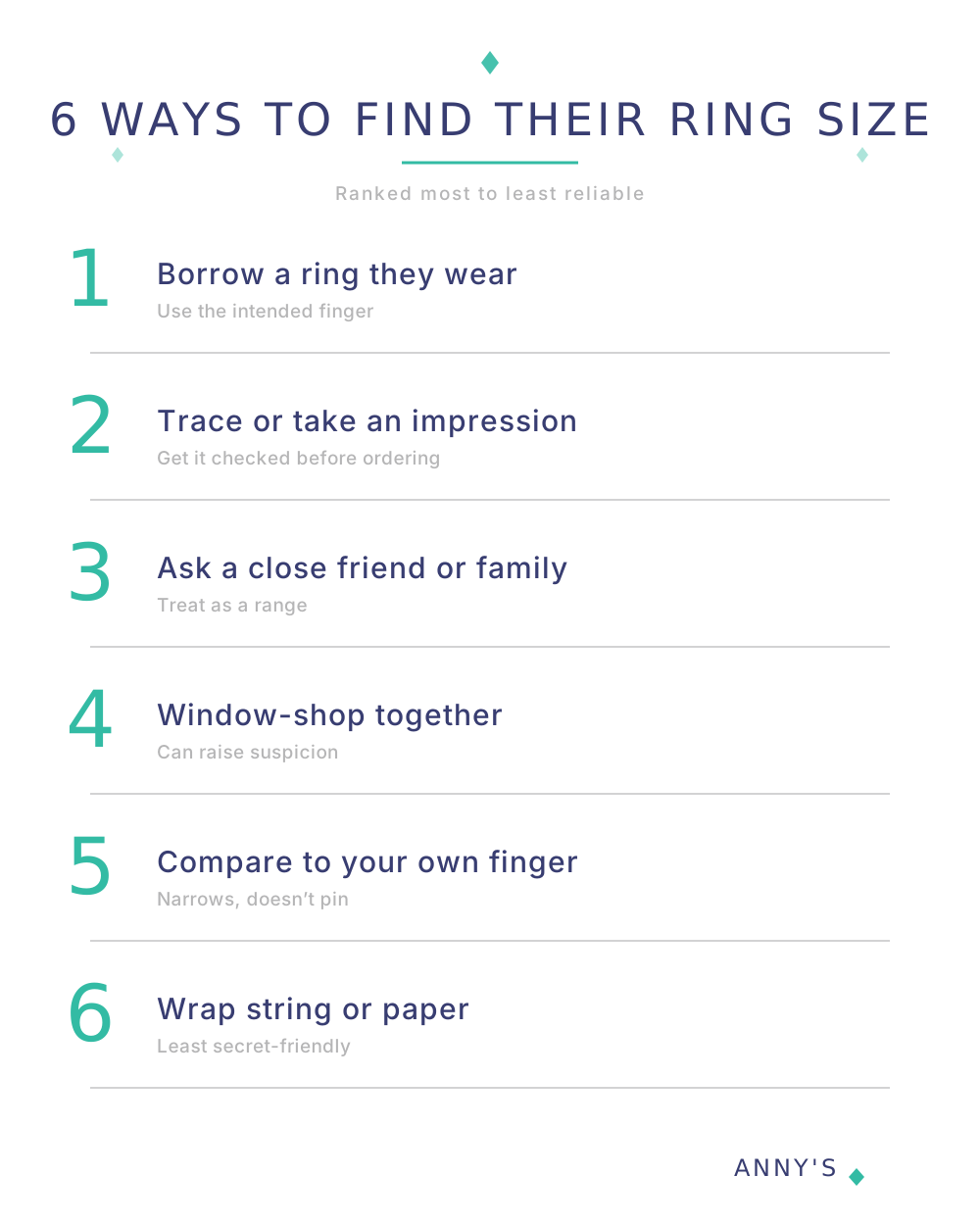
The most reliable way is to borrow a ring they already wear on the correct finger (usually the left ring finger), have it measured precisely, then return it before it's missed. If you can't take the ring, the methods below give you a fallback — each with one watch-out apiece, ranked most to least reliable:
- Borrow a ring they already wear (the lead method) — take one from the intended finger to be measured, then slip it back. Watch out: size differs between fingers and hands, so the wrong finger gives the wrong size.
- Trace or take an impression — draw around the inner circle on paper, or press it gently into soap. Watch out: home tracing is easily off by a full size, so have it checked before you order.
- Enlist a close friend or family member who can "compare rings" or already knows the size. Watch out: you're relying on someone's memory, so treat it as a range, not an exact size.
- Go "window shopping for fun" and let them try a few on casually. Watch out: it can raise suspicion, and store sizers read slightly differently from a finished ring.
- Compare their finger to your own — slide their ring onto your finger and mark where it stops. Watch out: rough; it narrows the range, it doesn't pin a size.
- Wrap string or paper around the finger. Watch out: the least secret-friendly method, since it usually needs their finger.
One thing trips up nearly every method: a finger isn't a fixed size. Fingers run a little larger in the morning and swell in the heat, so the safest reading comes in the late afternoon or early evening (Healthline; Banner Health). That daily swing is exactly why we lean on "guess slightly large, and resize."
 View full size
Borrow the ring, then measure it precisely
A real ring carries a real, measurable size — that's why borrowing one wins. Slip one away during a shower, a sleep-in or a day at the beach, have it measured the same day, and it's back before it's missed; just tell the jeweller which finger it came from so they can allow for the difference.
If you can't take the ring itself, measure its inner diameter in millimetres and convert that to an Australian letter using the table below. A jeweller does this on a calibrated ring stick — the tool ISO 8653:2016, the standard for how ring size is measured and designated, is written around — reading to a small fraction of a millimetre (ISO 8653:2016). A printed home chart is easy to get wrong, so the surest path is to bring the borrowed ring in and we'll measure it precisely on our in-house equipment, then hand it straight back.
How does ring sizing work in Australia? (the letter system)
Here in Australia we use the A–Z letter system (with half sizes like N½) — the same as the UK and Ireland, not the US numbers. In Anny's workshop reference table, adjacent half sizes differ by about 0.6–0.7 mm of inner circumference; a whole-letter step is about 1.2–1.3 mm. Use the measured circumference rather than assuming one exact step (Wikipedia, "Ring size"). So if you read one thing off a borrowed ring, make it the inner diameter in millimetres — that comes straight from the standard — and treat any US number as a rough cross-reference. Here's the common range:
| AU/UK letter | Inner circumference (mm) | Inner diameter (mm) | US size (approximate) |
|---|---|---|---|
| H | 46.8 | 14.90 | ~4 |
| I | 48.0 | 15.28 | ~4½ |
| J | 49.3 | 15.70 | ~4¾ |
| K | 50.6 | 16.10 | ~5¼ |
| L | 51.9 | 16.51 | ~6 |
| M | 53.1 | 16.92 | ~6½ |
| N | 54.4 | 17.32 | ~7 |
| O | 55.7 | 17.73 | ~7½ |
| P | 57.0 | 18.14 | ~8 |
| Q | 58.3 | 18.54 | ~8½ |
| R | 59.5 | 18.95 | ~9 |
| S | 60.8 | 19.35 | ~9½ |
| T | 62.1 | 19.76 | ~10 |
| U | 63.4 | 20.17 | ~10½ |
An indicative conversion, not a reproduction of a standards table (Wikipedia, "Ring size") — published charts differ from one another by up to half a size at points along the scale — anchor on the inner diameter in millimetres.
That US column is genuinely approximate — US and AU/UK sizing use different reference scales, so anchor on the letter and the millimetres (Wikipedia, "Ring size").
People always ask about the "average" Australian size, and we'll be straight: there isn't one. Size varies widely, and there's no official Australian statistic. You'll see women cited around N and men around T, but that's a trade rule of thumb, not a confirmed figure — don't propose on the back of it. Measure a ring they actually wear, and you'll know for sure.
 View full size
Is it better to guess a ring size too big or too small?
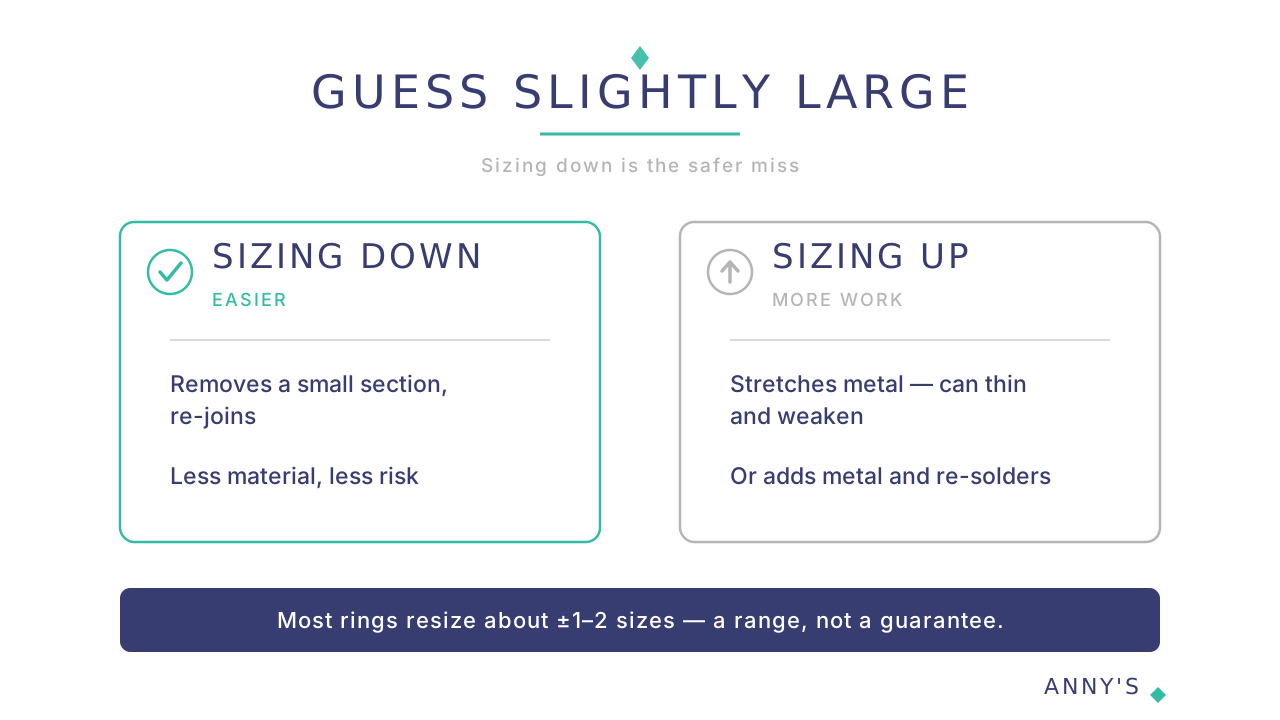
If you have to guess, guess slightly large. A too-big ring can be worn temporarily or held with a guard until it's resized; a too-small ring simply won't go on. The safer miss is in the metal: sizing down removes a small section of band and re-joins it (less material, less risk), while sizing up means stretching the metal — which thins and weakens it — or adding new metal and re-soldering, more work and more cost. Some metals, like rose gold, are also prone to cracking when stretched.
Most rings resize comfortably by about ±1–2 sizes — a range, never a guarantee. A few settings (full eternity, pavé all the way around, tension) are limited or not resizable, so if their taste leans that way, get the size right up front.
 View full size
What if I get the size wrong — can the ring be resized?
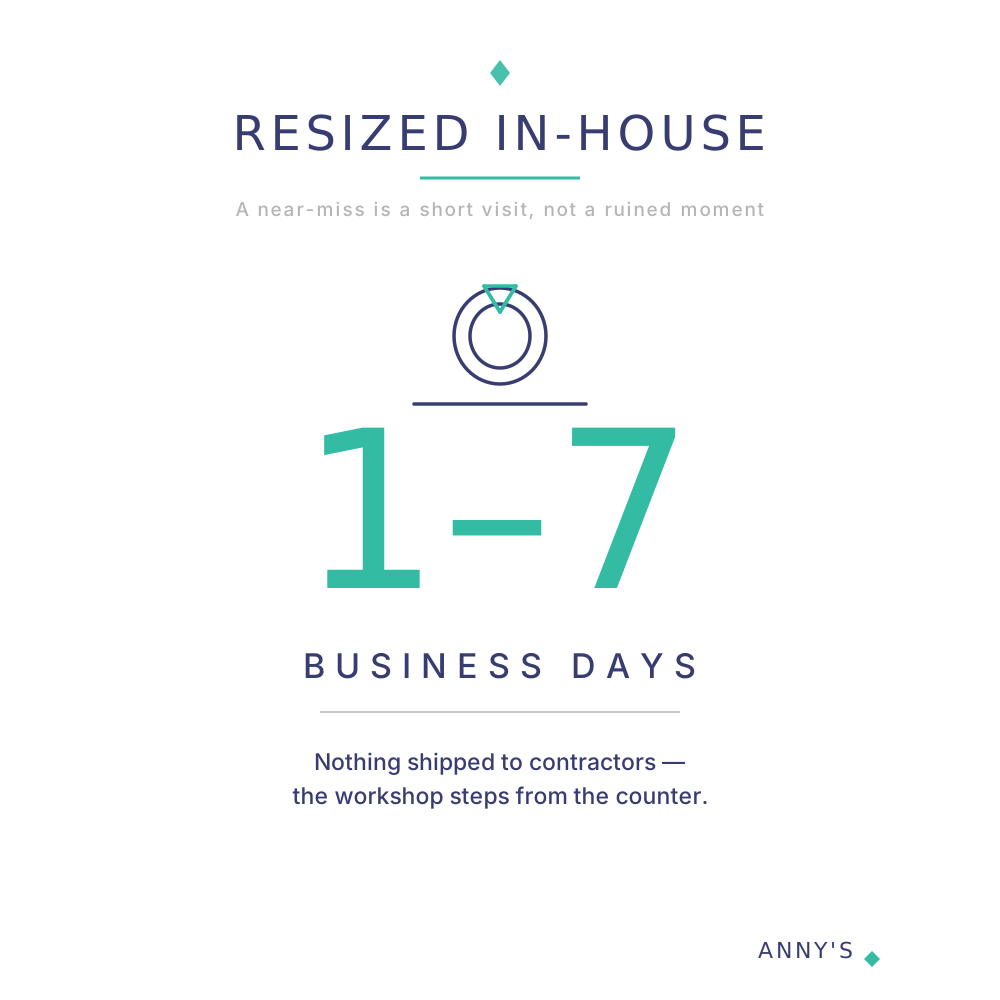
Yes — a slightly wrong size is an easy fix we sort out every week. We resize rings in-house as part of our repairs service — nothing shipped to contractors, the workshop steps from the counter — so turnaround runs 1–7 business days. For a ring from Anny’s, there is one free resize within the first 2 months, for a change of up to three ring sizes. Titanium rings can't be resized. Read more about our in-house jewellery repairs and resizing on our services page.
Two honest caveats. A few settings have resize limits by design (more in the FAQ below). And because a custom ring is made to your specification, it isn't a "change-your-mind" return — the ACCC is clear that a consumer isn't entitled to a repair, replacement or refund under the consumer guarantees if they simply changed their mind — though the guarantees themselves (acceptable quality, fit for purpose, as described) still apply (ACCC; ACCC consumer guarantees). A simple sizing miss, though, is just a quick resize.
 View full size
How do I work out their ring style without asking?
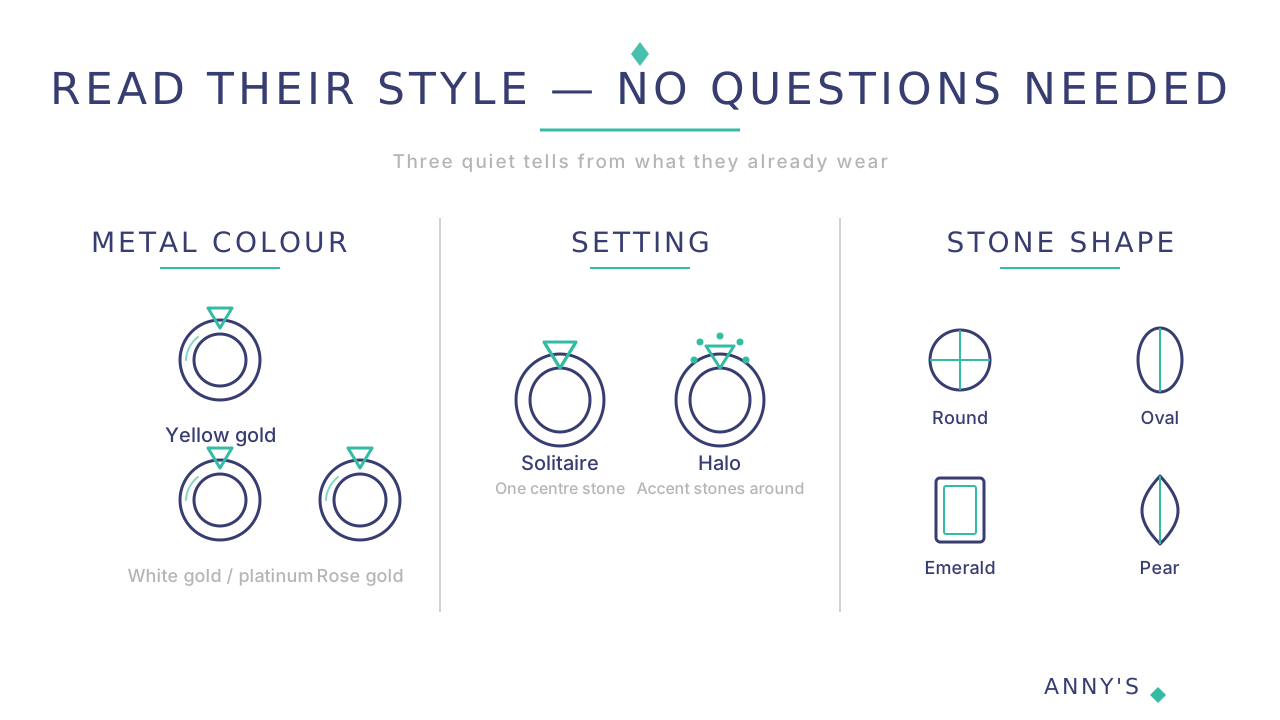
You can read most of their style straight from what they already wear — no questions needed. Three things tell you almost everything: metal colour, whether they lean plain or sparkly, and the stone shapes they own or admire. Their existing jewellery, a shared Pinterest board or saved photos make a quiet, accurate style brief.
Metal colour (yellow, white or rose gold — or platinum)
The single biggest tell — watch what your partner wears most, across rings, earrings, a necklace, a watch. Consistent yellow gold, cool silvery white gold or platinum, or warm pink rose gold points straight at a preference; if they happily mix metals, you have flexibility. At Anny's we work in 9ct, 14ct and 18ct gold across yellow, white and rose, plus platinum.
Solitaire vs halo (and a few other settings)
A solitaire is a single centre stone on a clean band — classic, timeless, low-maintenance. A halo rings that stone with small accent diamonds, making it look larger and adding sparkle, with a touch more cleaning over time. Plain and understated says solitaire; loves sparkle says halo. Other settings (three-stone, pavé, bezel) suit different tastes too — browse our engagement rings page to see how each looks on the hand.
Diamond or stone shape — and a nod to coloured stones
Stone shape is easy to read from what they already wear — round, oval, emerald, pear and so on each have a distinct look. Note the shapes that keep appearing, then compare them side by side in our diamond shape comparison guide. If your partner gravitates to colour over a white diamond, follow that signal — coloured-gemstone engagement rings, especially sapphire and ruby, are a genuine specialty, so our coloured gemstones are worth a look. Whichever stone you choose, our certified diamonds are graded by GIA and IGI, and our natural diamonds are conflict-free.
 View full size
How far ahead should I sort the size and style before proposing?
Give yourself a little runway: time to capture the size, choose or custom-make the ring, and resize if needed. Custom manufacture at Anny's takes approximately 3–4 weeks from CAD sign-off, subject to design complexity and workshop capacity. Allow time beforehand for consultation, sourcing and design approval, and ask us about any resize timing before relying on a proposal date. Easiest of all is to bring the borrowed ring to the people who'll make the ring, and we'll size it and read the style with you, quietly. If you're leaning bespoke, the journey of a custom ring walks you through what to expect.
One light budget note: as a guide, lab-grown-diamond engagement rings sit around AUD $3,000–$6,000 and natural-diamond rings around AUD $8,000–$30,000, depending on the stone, metal and design — the centre stone you choose drives the final price.
Frequently asked questions
Is there a "magic" trick if I really can't get a ring to measure?
Bring in any ring they wear — even one from another finger — and we'll allow for the difference. Our gear reads far finer than anything you can manage at home — our in-house 3D scanner works to a small fraction of a millimetre, well past what a ruler or a printed chart can resolve. Failing that, guess slightly large and let us resize it.
Can you resize a ring with diamonds all the way around (an eternity band)?
Often not, or only with limits — the honest answer. A full eternity or pavé band has stones set all the way around, leaving no plain section to cut, re-join and re-finish; tension settings are similarly restricted, though some can be modified rather than simply resized. If your partner's taste leans that way, get the size right up front.
How do I keep the purchase a secret?
A few simple habits help: a large purchase can show on a shared account or banking-app notification, so shop in a private browser window on a device that isn't shared, and don't risk a parcel arriving at home. You can collect from a free Australia Post Parcel Locker (within 2 business days) or Parcel Collect at a Post Office (within 10 business days) (Australia Post) — or just buy in person and take it with you.
How much does resizing cost?
It depends on the metal, the design and how far the size needs to move — so the fairest answer is to bring the ring in and we'll quote it on the spot. A simple resize is a quick, modest job; an intricate one with stones to reset takes more. For a ring bought from Anny’s, there is one free resize within the first 2 months, for a change of up to three ring sizes. Titanium rings can't be resized.
About the author
Written by Chris Ozkoch, who designs Anny's pieces in CAD in-house and signs Anny's-supplied written valuations. Reviewed by Harry Ozkoch, Master Jeweller at Anny's Manufacturing Jewellers in Frankston, Victoria — Established in 1990. Harry has lived and breathed jewellery since he was 16 and won the Jewellers Association of Australia's People's Choice Award in 2019.
Come and talk sizing and style with the people who'll make the ring: drop into our Frankston workshop (walk-ins welcome) or Email us before visiting Melbourne for an engagement-ring consultation. Bring the borrowed ring, and we'll help you choose a ring they'll love. You Imagine. We Create. For Collins Street, please wait for our email confirmation before coming in.
Written by Chris Ozkoch · Reviewed by Harry Ozkoch, Master Jeweller. Last updated 8 August 2026.
Frequently asked questions
How much does resizing cost?
It depends on the metal, the design and how far the size needs to move — so the fairest answer is to bring the ring in and we'll quote it on the spot. A simple resize is a quick, modest job; an intricate one with stones to reset takes more. For a ring bought from Anny’s, there is one free resize within the first 2 months, for a change of up to three ring sizes. Titanium rings can't be resized.
Typical engagement and bridal ring turnaround: 3–4 weeks from CAD sign-off. We also have 2-week and 48-hour options for engagement and bridal rings. Get in touch and we'll help find an option that works for your timeframe.