Melbourne CBD
Melbourne showroom
257 Collins Street, Level 3Melbourne VIC 3000
Email us before visiting Collins Street. Please wait for our email confirmation before coming in.
Arrange your visitEngagement Rings
A toi et moi engagement ring sets two stones side by side instead of one centre stone — often two different shapes or colours — to symbolise two people coming together. The name is French for "you and me." Below: the meaning, a brief and honestly-hedged history, and the practical side most trend articles skip — pairing two stones so one doesn't outwear the other, and how we'd design one for you.
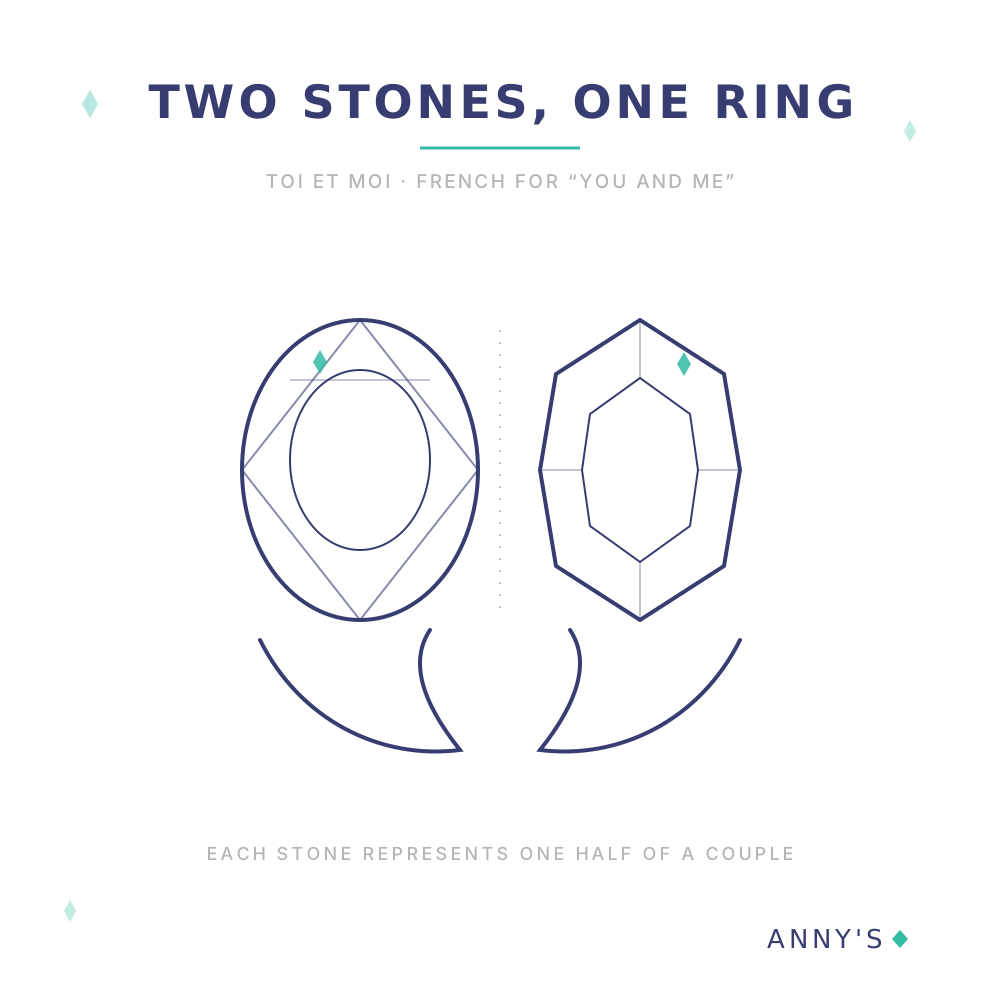
A toi et moi ring places two gemstones next to each other in the one setting, instead of a single stone in the middle. The two stones are often different shapes, sizes, or colours — a round diamond beside an oval sapphire, say — and each one is meant to represent one half of a couple. "Toi et moi" is French for "you and me."
It's a different idea to a trilogy (three-stone) ring, where three matching stones usually represent a couple's past, present and future. A toi et moi deliberately lets its two stones look distinct from each other — neither one is the "main" stone; they're meant to sit as equals.
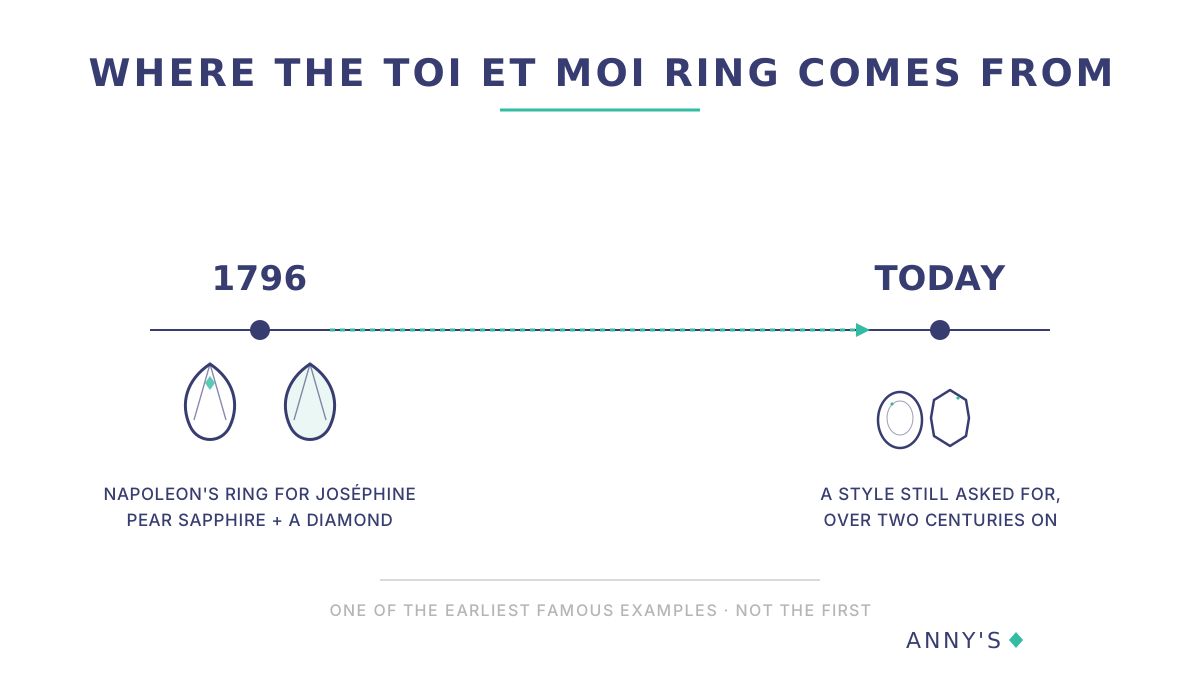
The style is older than its most famous example. Sotheby's dates the toi et moi concept to “at least the 18th century,” and describes the ring Napoléon Bonaparte gave Joséphine de Beauharnais in 1796 — set with “a pear-shaped sapphire and a diamond,” one stone for each of them — as “one of the most famous early examples,” rather than the first. Sotheby's credits that ring with setting “a precedent for the Toi et Moi style, making it a popular choice for engagement rings among European aristocracy.”
We hedge that deliberately. It's a widely repeated account rather than something we can point to a surviving 1796 document for, and the “first toi et moi ring” framing you'll see on plenty of jewellery blogs isn't what the auction house itself claims — so we'd rather be honest about that than dress it up as more certain than it is. What we can say plainly: the idea has clearly got staying power, because it's a style we're seeing more people ask about today, well over two centuries later.
 View full size
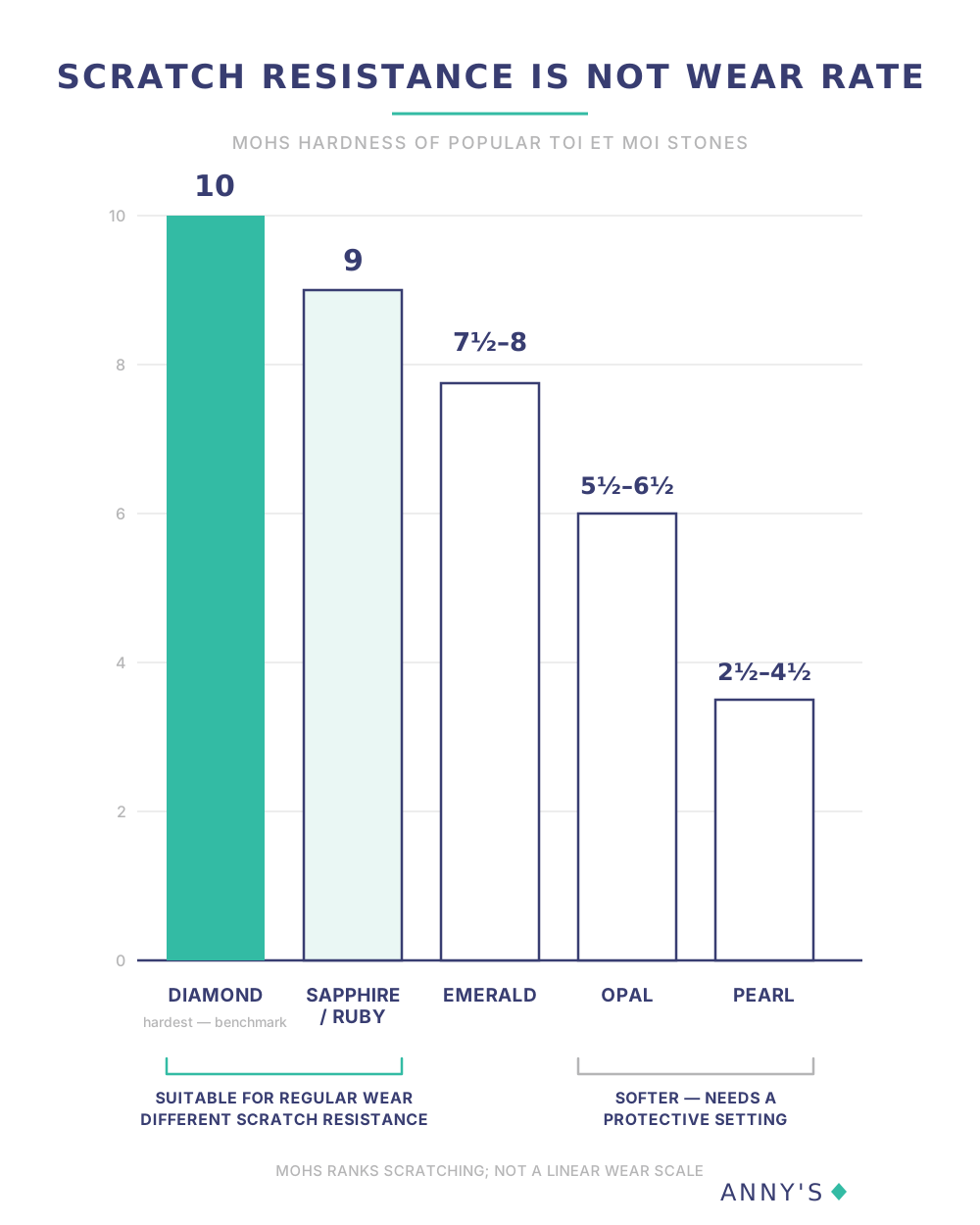
Honestly, it depends entirely on which two stones you pick — and this is exactly the bit most toi et moi articles skip. Diamond sits at 10 on the Mohs hardness scale, the scale gemmologists use for scratch resistance; corundum, the mineral family behind both sapphire and ruby, sits at 9, according to the International Gem Society. Diamond, sapphire and ruby can suit regular ring wear, but their scratch resistance and resistance to knocks differ. Mohs ranks scratching; it does not predict wear rate. Plan the settings and care for both stones. Pair a diamond with a much softer stone — an opal (around 5½–6½) or a pearl (2½–4½) — and the softer stone is simply more exposed to everyday scratching. That's not a reason to avoid the pairing if you love the look; it's a reason to choose a protective setting for the softer stone and treat that ring a little more gently.
| Popular pairing | Mohs hardness | Everyday-wear note |
|---|---|---|
| Diamond + sapphire or ruby | 10 + 9 | Can suit regular wear; scratch resistance and resistance to knocks differ |
| Diamond + emerald | 10 + 7½–8 | Emerald is a step down in hardness and more brittle; benefits from a protective setting |
| Diamond + opal | 10 + 5½–6½ | Scratches far more easily; needs gentler wear and a protective setting |
| Diamond + pearl | 10 + 2½–4½ | Soft; best suited to occasional wear rather than a daily ring |
Mohs hardness figures: International Gem Society.
There's a second layer the Mohs scale alone doesn't capture: hardness (resisting scratches) and toughness (resisting chips or breaks) are different things. GIA puts it directly — “Diamond is the hardest gemstone, but not necessarily the toughest. While they resist scratching and abrasions, diamonds can be cleaved or fractured by a hard blow.” It's why we think about both properties, not just one, when helping you choose a pairing.
For a full breakdown of sapphire and ruby's durability credentials, see our guide to sapphire and ruby engagement rings.
 View full size
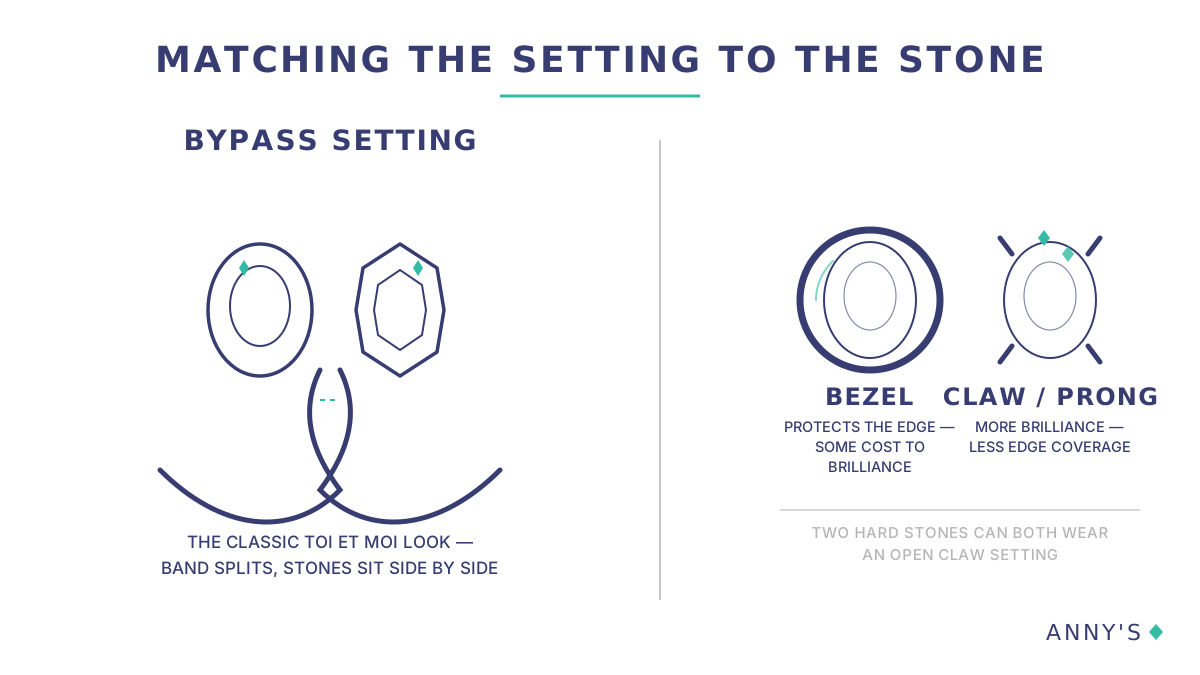
The setting most people picture when they hear "toi et moi" is the bypass, sometimes called a crossover: the band splits and the two ends sweep past each other, so the stones sit side by side without a solid bridge of metal beneath them — the classic, romantic look for this style.
The same setting logic applies here as to any ring, just doubled: a bezel protects a stone's edge from knocks at a small cost to brilliance, while a claw or prong setting exposes more of the stone for more sparkle — and a sturdy claw setting is what we reach for most. Match the setting to each stone's needs: in a mixed pairing it's the softer stone that needs the most protection, so that's where the setting choice deserves the most thought. See our guide to engagement ring settings, explained for the full rundown.
 View full size
The trick isn't making the two stones identical — it's matching their visual weight, so neither one dominates. Two stones of a similar carat size, even in different shapes, read as a considered pair; a big size difference can make the smaller stone look like an afterthought. It's also worth checking how the ring sits day to day — two stones side by side, especially with a bypass band, can sit a little higher or wider than a single-stone ring.
Here's exactly how we'd go about making one, using the same process as every custom piece. We'd start with a consultation to talk through your two stones, your preferred setting, and your budget, then design the piece in CAD (computer-aided design — the 3D software we use to model a ring precisely) in-house, placing both stones exactly where they'll sit before anything is made in metal.
The part that matters most for a two-stone design is the 3D-printed wax model. Because a toi et moi ring lives or dies on how the two stones look together, this is your chance to see the real arrangement — size, spacing, balance — on a model you can hold, not a drawing on a screen. Small changes at the 3D-print stage are usually made within the hour. We'll confirm the timing of larger changes, so you can approve the balance before casting. From CAD sign-off, custom manufacture takes approximately 3–4 weeks, subject to design complexity and workshop capacity. See how a custom engagement ring is made for the full process.
Sapphire and ruby are a genuine coloured-stone specialty of ours, backed by our FGAA-accredited gemmologist. Take a look at our coloured gemstones or browse Anny's engagement rings for inspiration, then Email us and we'll design it with you from there.
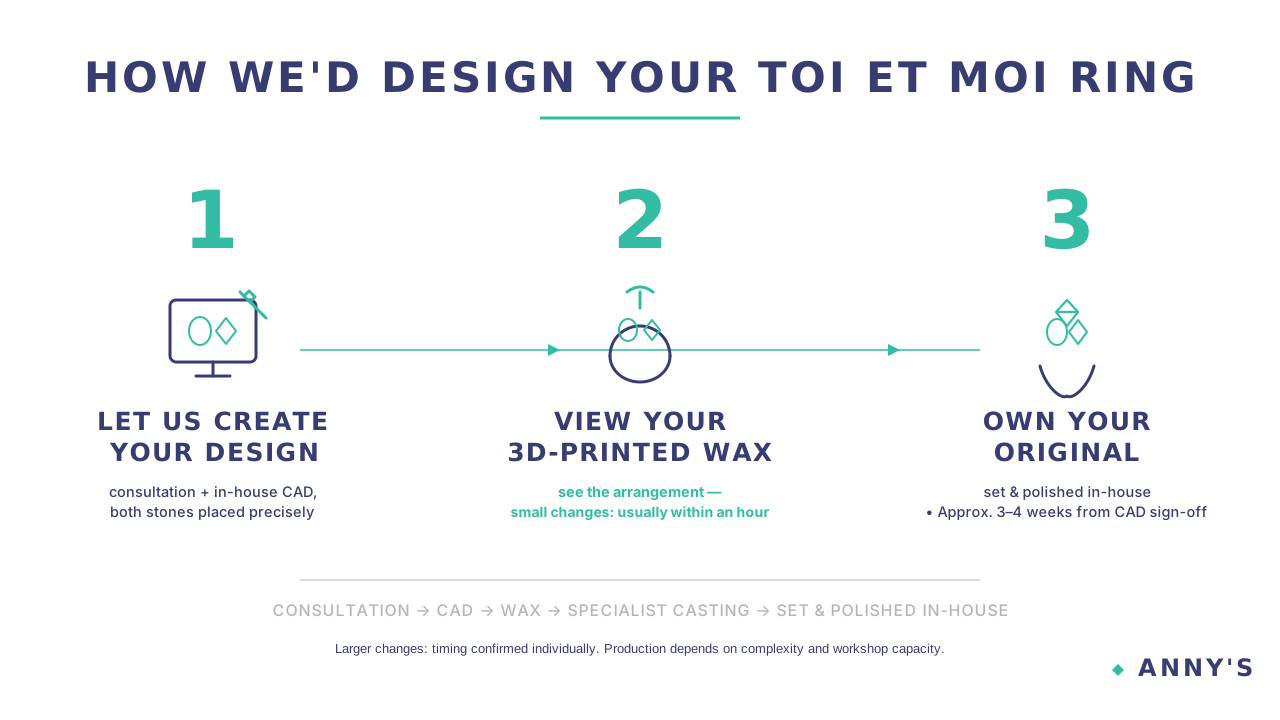 View full size
It depends entirely on the two stones you choose, not the style itself — two smaller stones can cost less than one larger centre stone, or more, depending on type and quality. As a general anchor, Anny's custom engagement rings run from around $3,000–$6,000 AUD with lab-grown diamonds and $8,000–$30,000 AUD with natural diamonds, and a toi et moi pairing would sit within those same bands depending on what you choose.
Yes — it's one of the most popular combinations, and it echoes the style's best-known early example: Napoléon's 1796 sapphire-and-diamond pairing. Sapphire and ruby are the coloured stones we're asked for most, though we work with all coloured stones and can talk through what suits your budget at a consultation.
Yes, though it's worth having it resized by a jeweller who's comfortable with two-stone settings, since there's more to account for than on a plain band. Bring it into our Frankston workshop and we're happy to take a look.
If you love the look, the more useful question isn't whether it's trending — it's whether your chosen stones and setting will actually hold up to how you live day to day. Get the pairing and the setting right, and a toi et moi ring wears just as well as any other engagement ring style.
Fallen for the two-stone look? Have a browse of our coloured gemstones and Anny's engagement rings for inspiration, then Email us about visiting our Frankston workshop. We'll talk through your two stones, the setting, and the budget in plain English, and design it with you from there. You Imagine. We Create.
Chris Ozkoch writes Anny's educational content and signs Anny's-supplied written valuations at Anny's Manufacturing Jewellers, a family business Established in 1990, based in Frankston, Victoria. This article was reviewed by Harry Ozkoch, Master Jeweller, and the gemstone-durability facts were reviewed by Lisa D, an FGAA-accredited gemmologist (Gemmological Association of Australia) on Anny's in-house team.
Last updated: 30 August 2026 · Written by Chris Ozkoch · Reviewed by Harry Ozkoch, Master Jeweller.
Typical engagement and bridal ring turnaround: 3–4 weeks from CAD sign-off. We also have 2-week and 48-hour options for engagement and bridal rings. Get in touch and we'll help find an option that works for your timeframe.
Made personal, at Anny's
Melbourne CBD
Email us before visiting Collins Street. Please wait for our email confirmation before coming in.
Arrange your visitOur Frankston home
Visit us to talk through your ideas, explore designs and find your perfect fit.
Explore our Frankston showroomTypical engagement and bridal ring turnaround: 3–4 weeks from CAD sign-off. We also have 2-week and 48-hour options for engagement and bridal rings. Get in touch and we'll help find an option that works for your timeframe.
Typical repair turnaround: 1 to 7 business days, depending on complexity and customer urgency
Anny's Manufacturing JewellersABN 88 447 171 579