Metals & Wedding Rings
Can a wedding or eternity ring be resized?
The short answer is yes — in most cases. Here's the picture at a glance:
- Most wedding bands resize about one to two sizes up or down; how far depends on metal, thickness and setting.
- A full-eternity ring is the hard case — stones all the way around leave no plain metal to work — but there's nearly always a path.
- Gold (9ct/14ct/18ct), platinum and silver resize well; tungsten, ceramic, cobalt and stainless steel generally can't be sized. Titanium rings can't be resized.
- Arthritis, pregnancy and weight change are the most common reasons a long-worn ring stops fitting — and there's almost always a comfortable fix.
- Done in-house in Frankston, resizing here is typically 1–7 business days — and we resize rings we didn't make, including other brands' and other jewellers' pieces.
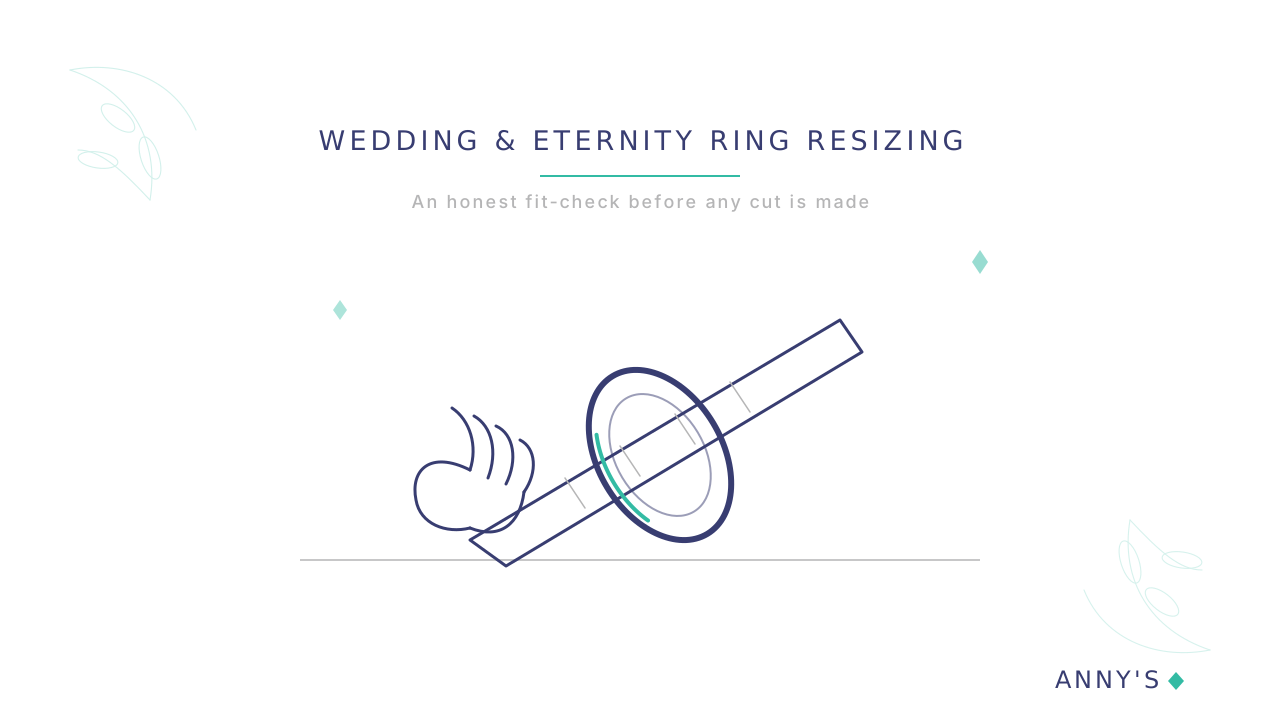
Can a wedding ring be resized — and how far can it go?
Yes — a plain or lightly-set wedding ring can almost always be resized, and most move comfortably by about one to two sizes up or down. As the jewellery insurer Jewelers Mutual puts it, "in general, rings can be adjusted up to two sizes larger or smaller." Beyond that, the risk to the band's shape, strength and settings climbs — so "how far?" depends on your ring's metal, thickness and setting, assessed in person before we touch it.
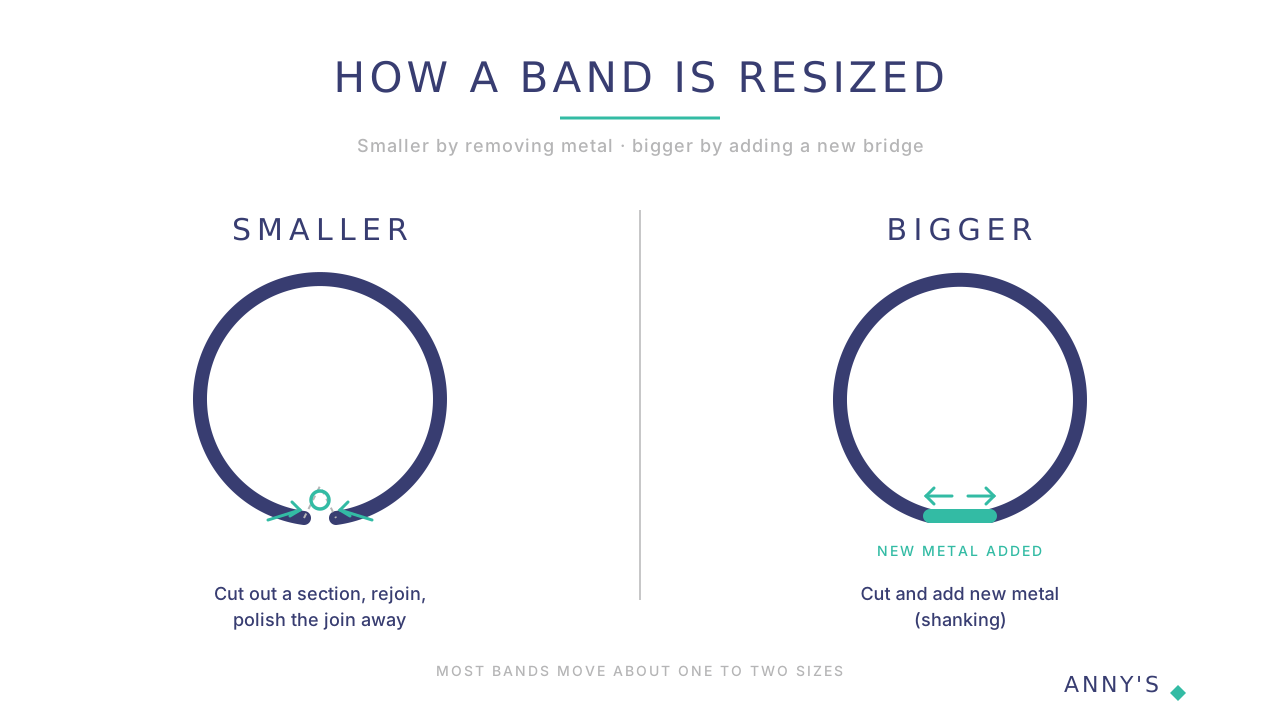
To make a band smaller, we cut a small section out of the shank — the back curve that wraps under your finger — rejoin the ends, then polish the join until it disappears. To make it bigger, we either cut the shank and add a bridge of new metal, or — for a plain band only — gently stretch it on a mandrel for modest changes. Stretching isn't an option for stone-set bands: as GIA warns, "Do not stretch bands containing stones. It can weaken the areas between or under stones and lead to stone loss" — one reason we look at a ring before promising a number over the phone.
One note on sizing in Australia: we use the letter system, A–Z (with half sizes like N½) — the same as the UK, not the US numbers. As a rough guide, women often sit around M–N and men around S–T, though that's indicative only. (If US numbers help, AU N is roughly a US 7.) And a band we didn't make is completely fine — see our jewellery repairs and resizing service.
 View full size
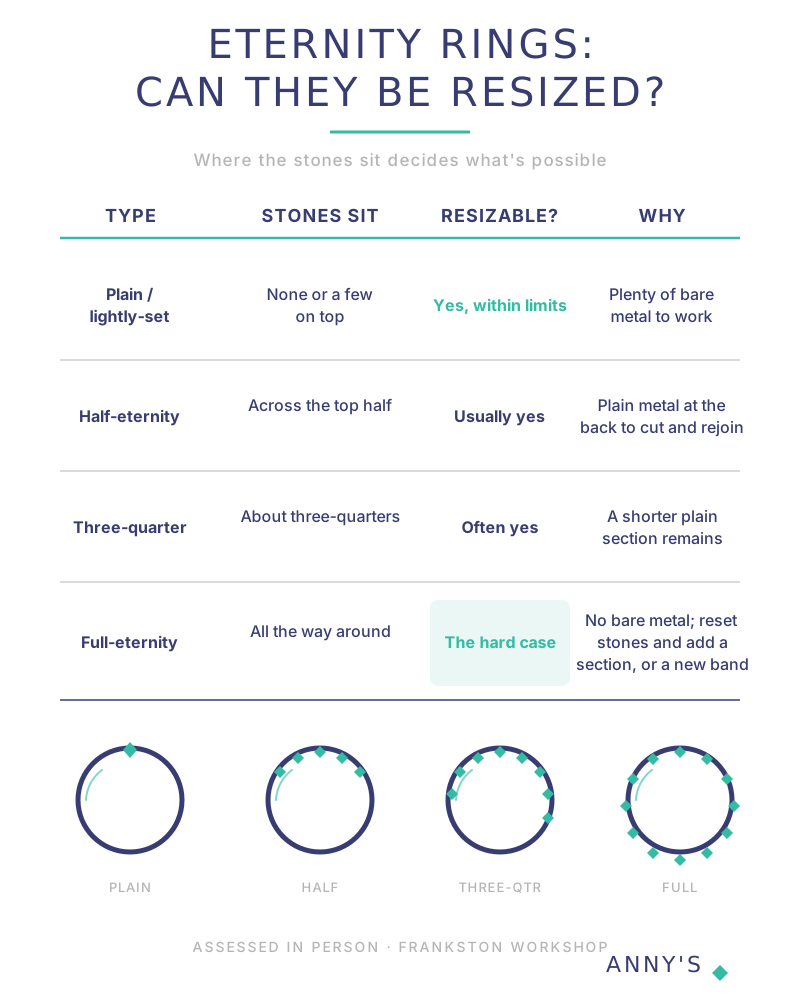
Can an eternity ring be resized? (full vs half vs three-quarter)
Sometimes — and it depends entirely on where the stones sit. A half or three-quarter eternity usually has plain metal at the back of the shank to work on, so it resizes much like a normal band within limits. A full-eternity ring has stones set continuously around the whole circumference, leaving no bare metal to work — the genuinely hard case, and the real reason some jewellers say it "can't be resized." As Jewelers Mutual explains, such rings "cannot be resized without adding or removing additional gems" — a job "many jewelers are unwilling to take on due to the labor involved." It isn't impossible; it takes bench skill and patience.
When a full-eternity does need to change size, the trade recognises a few honest paths: a small adjustment within tolerance if the design allows; resetting the stones, then adding or removing a metal section and re-spacing them so the join is invisible; or a new shank or band for larger changes. Temporary options like sizing beads or a ring guard can take up small slack, but they don't truly resize the ring. If a new band genuinely is the kinder answer, we'd talk you through our wedding and eternity bands.
 View full size
Can you resize my ring for arthritis or a swollen knuckle?
Yes — this is one of the most common reasons people come in, and there are well-established solutions. The goal is always the same: the ring needs to pass over your larger knuckle yet sit snug at the base of the finger without spinning or flipping.
At our bench, the first approaches are a metal sleeve fitted inside the band, or two small balls of metal set inside the shank — the trade calls these sizing beads, and as Jewelers Mutual describes them, "the little balls grip your finger, eat up some of that extra space, and keep your ring upright." A hinged, adjustable shank — which opens to pass the knuckle, then locks closed — is something we offer too, but as a last resort once the simpler fixes won't do the job. Which suits depends on your ring and your finger, so we assess it in person first.
You're in good company, too: just under 3.7 million Australians (14.5%) had arthritis in 2022, according to the Australian Bureau of Statistics, rising to "almost one in two (48.9%)" of those aged 75 and over.
My finger changed — can the same wedding ring still fit? (weight change, pregnancy, time)
Usually, yes — and often the kinder question is whether to resize or wait. The trick is telling a temporary swing from a lasting change. As Jewelers Mutual notes, weight, climate (humidity, dryness, extreme cold) and a night of salty food and alcohol can all move your size for a while; fingers also swell in heat and later in the day, which is why the standard advice is to measure at the end of the day. Other changes settle in for good: sustained weight change, the joint changes of ageing or arthritis, and pregnancy changes that don't fully ease. When it looks settled — the ring spins daily, or won't pass the knuckle anymore — that's the time to resize rather than wait.
A wedding ring is meant to be worn for decades — resizing is how you keep the ring you love wearable for life, alongside the lifetime cleaning and polishing we give every Anny's piece. (None of this is medical advice — for your joints, your doctor's the right person; we just make the ring fit beautifully again.)
 View full size
Which rings and metals can't be resized?
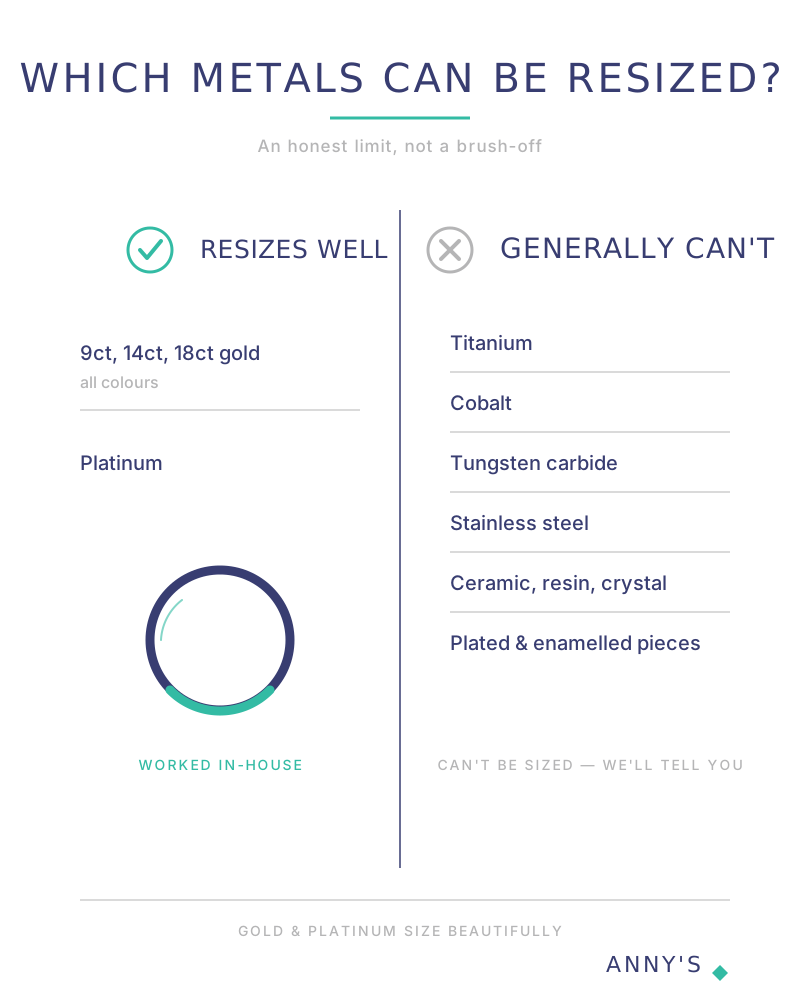
A few genuinely can't be resized — and we'd rather tell you that honestly than promise something that won't hold. Gold (9ct, 14ct, 18ct, all colours), platinum and silver resize well — the soft precious metals most of our work is in. Our men's wedding bands are partner-made. The catalogue offers 9kt and 18kt gold, platinum 950 and 960, silver, titanium, tantalum, black zirconium and mixed-metal designs, including gold with Damascus steel. Titanium rings can't be resized. Ask us about the chosen band's sizing options before ordering.
The harder "no" is for certain modern metals. As Jewelers Mutual lists them, cobalt, tungsten carbide and stainless steel generally can't be resized, and neither can non-metallic rings like ceramic, resin or crystal; plated and enamelled pieces are best left alone too. Tungsten carbide and ceramic are pressed, sintered powder, so they shatter rather than bend, and titanium resists conventional soldering. For those, a poor fit usually means replacing the ring rather than resizing it — an honest limit, not a brush-off.
 View full size
Why we can resize the bands others won't — and do it in time
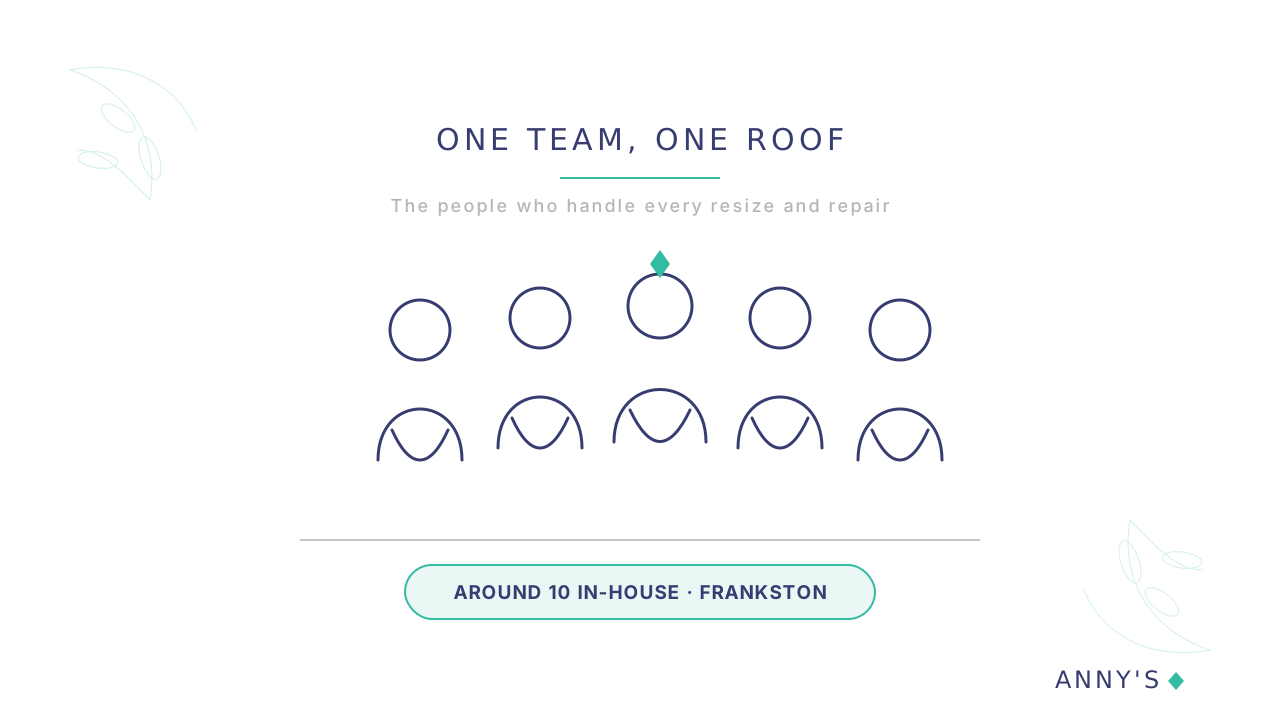
Because it's all under one roof. Your ring isn't posted out to a chain of contractors — our team of around 10 jewellers, setters and designers work together in the one Frankston workshop, so you can speak to the person doing the work. Repairs are about a quarter of what we do, not a sideline.
The tooling matters too. Before any cut, we can 3D-scan a band with our Artec Micro scanner for an exact starting record. We add or remove metal with our Orotig EvoWhite laser welder, whose fine focal spot (as small as 0.15 mm) delivers low, localised heat for clean joins. That matters most near set stones: a laser lets a jeweller work "as close as half a millimeter away from heat-sensitive stones," because "it doesn't transfer enough heat to the metal to damage the stones" — so a section can often be added or removed with the stones still in place, which is exactly why laser welding beats an open torch flame near emerald or opal.
When a worn band needs more than a resize, we can also build it a brand-new shank or retip worn claws so the stones stay secure. We build a little extra metal and thickness into our work so a piece holds up — we won't tell you a ring "lasts forever"; what we will promise is honest work, to the bar set by Australian Consumer Law — a service carried out "using an acceptable level of care and skill." For the bigger picture on the tricky jobs, read repairs other jewellers call impossible; the family behind the bench is at our family story since 1990.
 View full size
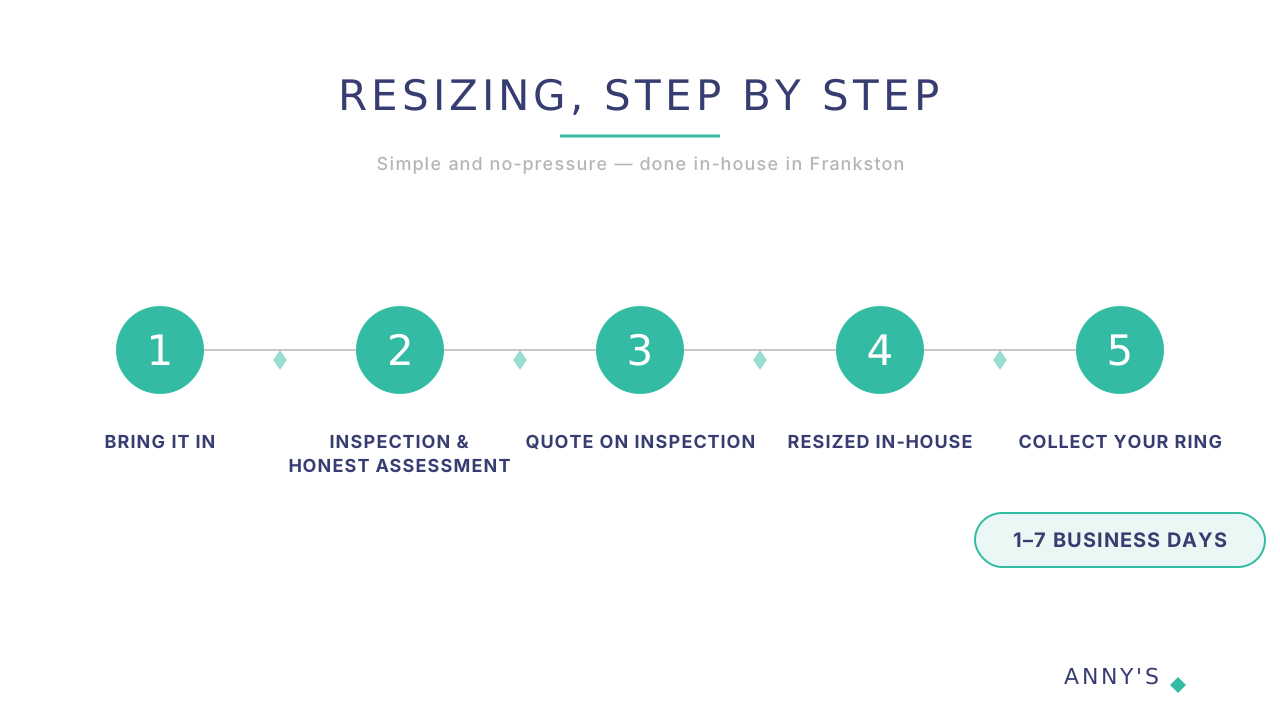
What happens when you bring a ring in to resize?
It's simple, and there's no pressure at any step:
- Bring it in. Walk in to our Frankston workshop — it's always staffed and walk-ins are welcome. (For resizing and repairs, come to Frankston; our Collins Street showroom is for engagement and wedding rings; email us before visiting.)
- Inspection and honest assessment. We examine the band, metal and any settings, and tell you plainly what can and can't be done — including if the better answer is a new shank or band.
- Quote on inspection. A clear quote before any work begins, so there are no surprises.
- We resize it in-house. Your ring stays in the building — scanned if needed, then resized or re-shanked at our bench.
- Collect your ring. Typically within 1–7 business days. If there's a wedding date, tell us and bring it in early — general industry guidance is to allow about a month when the ring is needed by a set date.
If you'd rather plan ahead, Email us for advice or a quote or visit our Frankston workshop at 92 Young Street, Frankston VIC 3199 (Mon–Fri 10–5, Sat 10–3), or call 1300 092 000.
Frequently asked questions
Will I be able to see where the ring was resized?
Done well, no — the join should disappear. We rejoin the shank ends, then file and polish the seam until it blends into the band's surface and curve. On a patterned or engraved band we take extra care to carry the pattern across the seam so it reads as one continuous ring.
Can a ring be resized more than once?
Yes, but with care. Repeated resizing or large jumps gradually thin and stress the shank and can affect nearby settings. If a band has been sized several times and feels thin, a fresh shank is often a better, longer-lasting answer than yet another adjustment.
Can you make my ring smaller without taking the stone out?
In most cases, yes. Sizing a ring down works on the shank (the plain back of the band), so for a standard solitaire or a ring with stones only across the top, the diamond stays exactly where it is. The exceptions — a full eternity band, a tension setting, or a channel-set band with stones close to the resize area — need more care and sometimes a different approach; bring the ring in and we'll tell you what yours needs. For a ring from Anny's, our policy is one free resize within the first 2 months, for a change of up to three ring sizes. Titanium rings can't be resized.
About the author
Written by Chris Ozkoch and reviewed by Harry Ozkoch, Master Jeweller, of Anny's Manufacturing Jewellers — a family business established in 1990 in Frankston, Victoria. Harry has lived and breathed jewellery since he was 16, and leads the in-house team who handle every resize and repair under one roof.
Frequently asked questions
Can you make my ring smaller without taking the stone out?
In most cases, yes. Sizing a ring down works on the shank (the plain back of the band), so for a standard solitaire or a ring with stones only across the top, the diamond stays exactly where it is. The exceptions — a full eternity band, a tension setting, or a channel-set band with stones close to the resize area — need more care and sometimes a different approach; bring the ring in and we'll tell you what yours needs. For a ring from Anny's, our policy is one free resize within the first 2 months, for a change of up to three ring sizes. Titanium rings can't be resized.
Typical engagement and bridal ring turnaround: 3–4 weeks from CAD sign-off. We also have 2-week and 48-hour options for engagement and bridal rings. Get in touch and we'll help find an option that works for your timeframe.