Melbourne CBD
Melbourne showroom
257 Collins Street, Level 3Melbourne VIC 3000
Email us before visiting Collins Street. Please wait for our email confirmation before coming in.
Arrange your visitEngagement Rings
In Australia, an engagement ring goes on the left hand's fourth finger — the one most people just call the "ring finger," counting from the thumb. It's a lovely old custom rather than a rule, dating back to an ancient (and since-disproven) Roman belief about a vein running to the heart, and it's shared with the UK, the US, and much of the historically British-influenced world. A number of countries — across Eastern Europe, parts of Central and Western Europe, and parts of Latin America — customarily wear the ring on the right hand instead, and same-sex couples have no single "correct" finger to follow at all. At Anny's, Established in 1990, here's the honest, practical answer — including what actually happens on your wedding day.
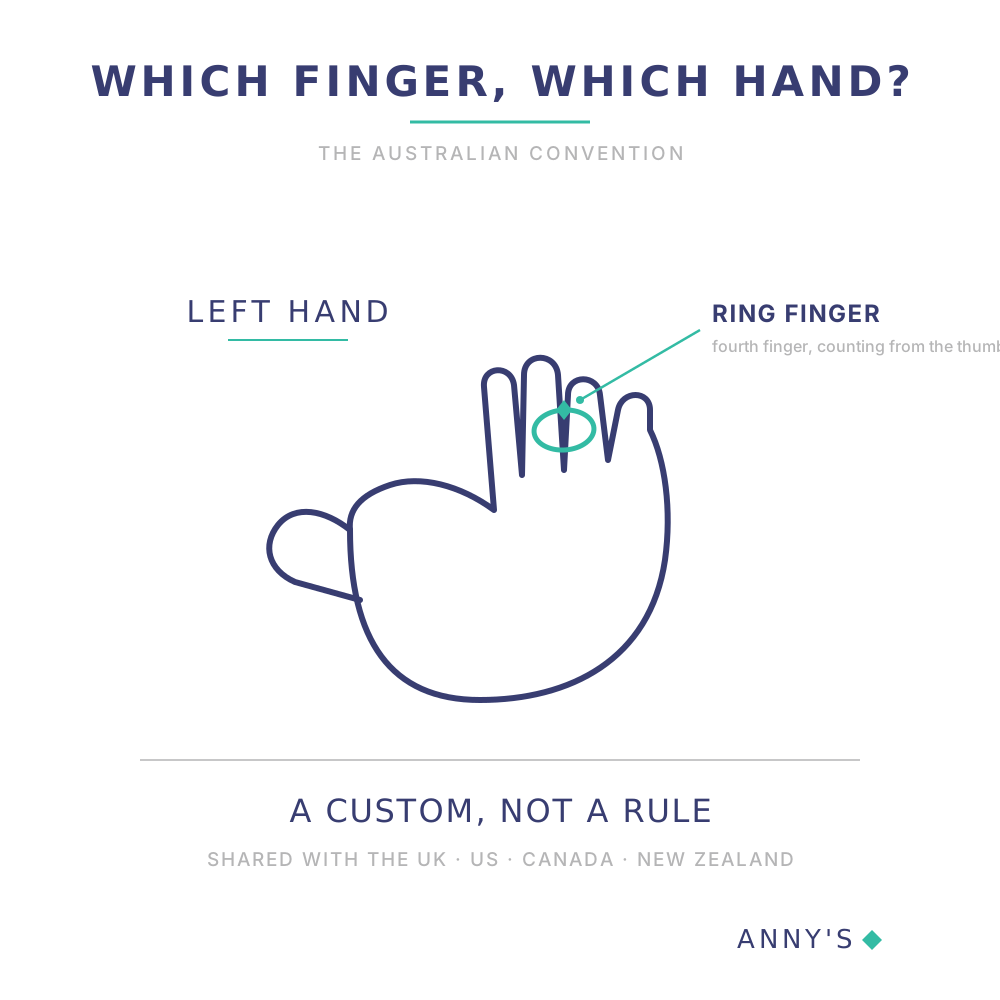
An engagement ring is worn on the left hand's fourth finger in Australia, shared with Canada, New Zealand, and much of the historically British-influenced and Western European world. It's a custom, not a law: at Anny's, Established in 1990, we've fitted rings for plenty of couples who've chosen a different finger, a different hand, or no ring at all before the wedding — every choice is completely valid.
If you're still choosing the ring itself, our deep dive on solitaire engagement rings is a good place to start before the finger question even comes up. The reason it's this particular finger is a story worth knowing.
The custom traces back to an ancient Roman belief that the fourth finger of the left hand held a "vein of love" running directly to the heart — the reason this specific finger became the one for a ring meant to symbolise love.
The Roman writer Macrobius recorded the belief well over 1,500 years ago, describing "a certain nerve which has its origin in the heart and runs from there to the finger next to the little finger" (Wikipedia, "Vena amoris"). The Latin phrase itself — vena amoris, "vein of love" — didn't appear in writing until 1686, in a treatise by the English ecclesiastical lawyer Henry Swinburne (Wikipedia).
Here's the honest twist: it isn't true. Every vein in your hand flows back to the heart, not just one on your fourth finger — something nobody could prove until the 17th century, when the physician William Harvey worked out how circulation actually works (Wikipedia). So the "vein of love" is a romantic story rather than a medical fact — and a custom doesn't need to be anatomically accurate to be worth keeping.
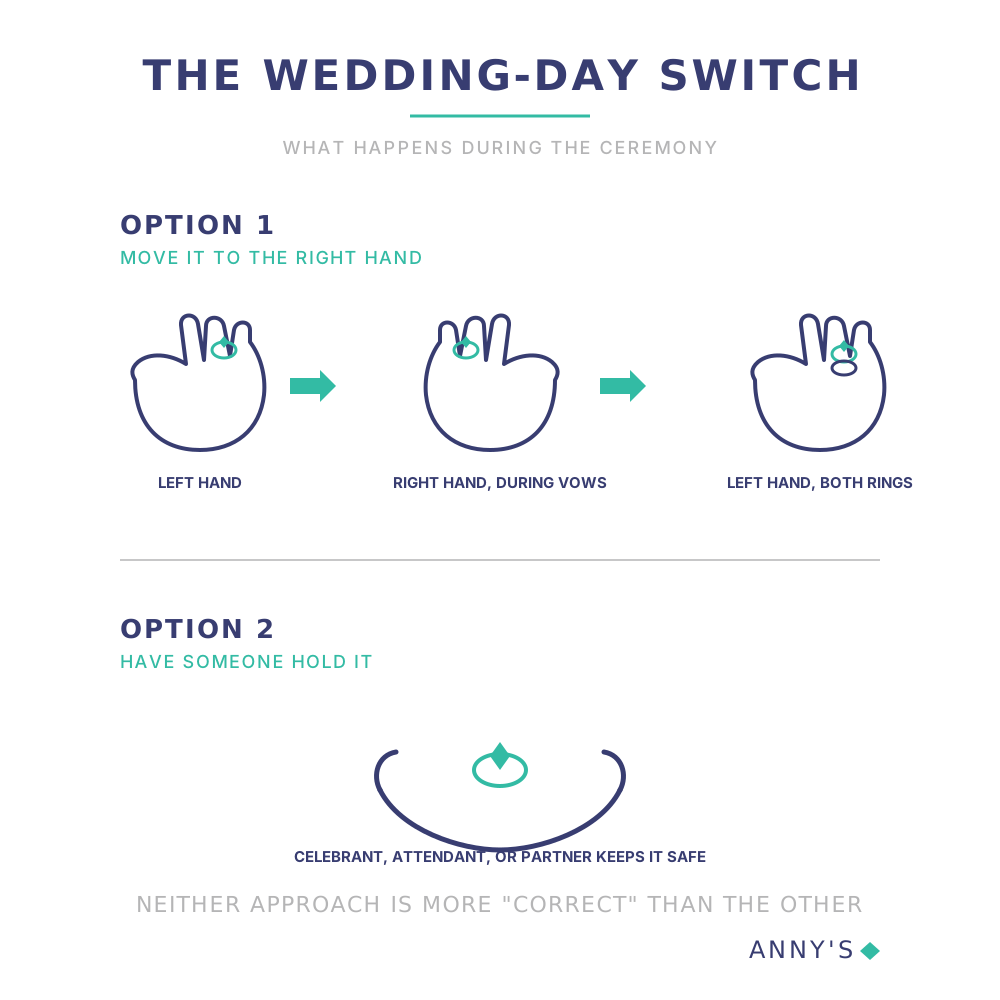
On the wedding day, most people either move their engagement ring to the right hand just before the ceremony — swapping it back afterwards — or simply hand it to someone to hold until the vows are done. Both are common, practical solutions to the same small problem: your wedding band needs an empty finger to go on.
Jewellery insurer Jewelers Mutual puts it plainly: there are no hard-and-fast rules on how wedding bands are worn. In practice, couples land on one of two approaches, and neither is more "correct" than the other (Jewelers Mutual):
 View full size
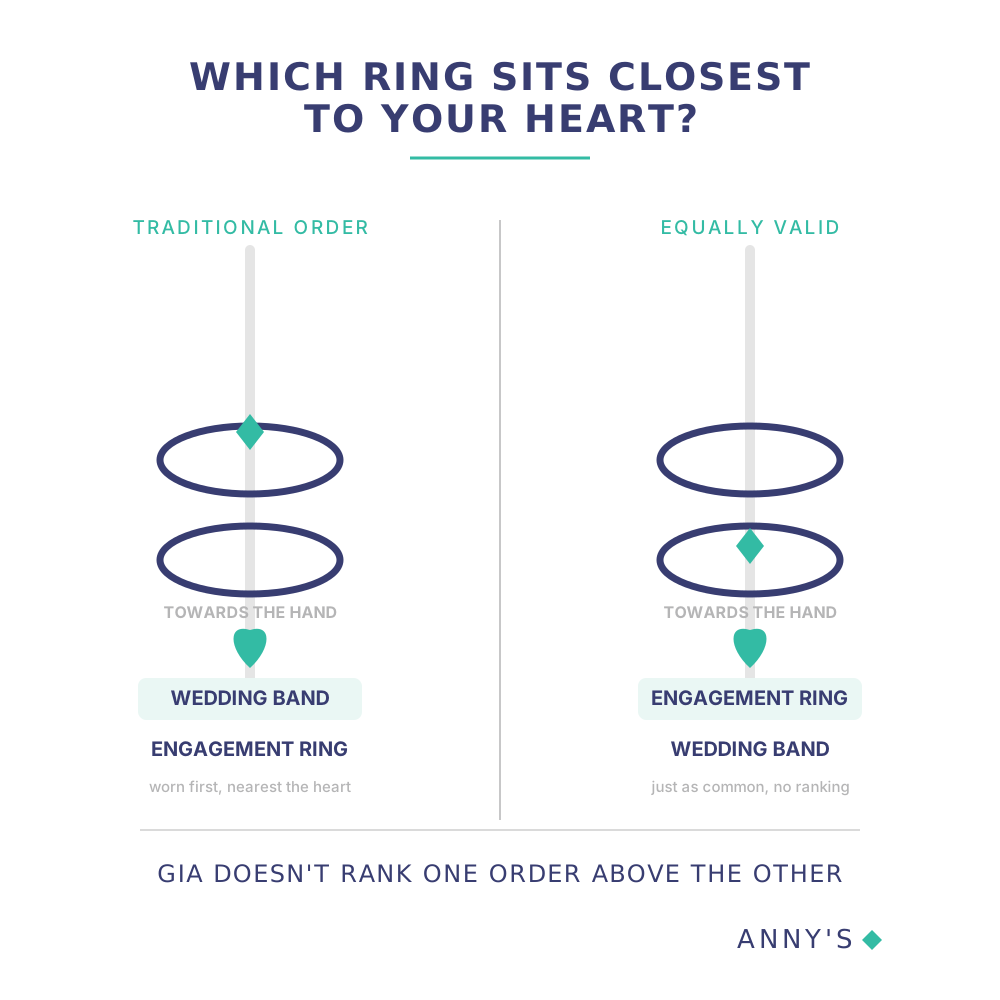
Traditionally, the wedding band sits closest to your heart — worn first, nearest to the hand, with the engagement ring stacked on top — symbolising the vows as the ring worn nearest to you. That is the long-standing convention, and the order most couples ask us for.
Plenty of couples happily do the reverse, wearing the engagement ring first and the wedding band above it — often simply because that's the order the rings arrived, or because it sits more comfortably against their particular setting. There's no rule that ranks one order above the other, and we certainly don't.
 View full size
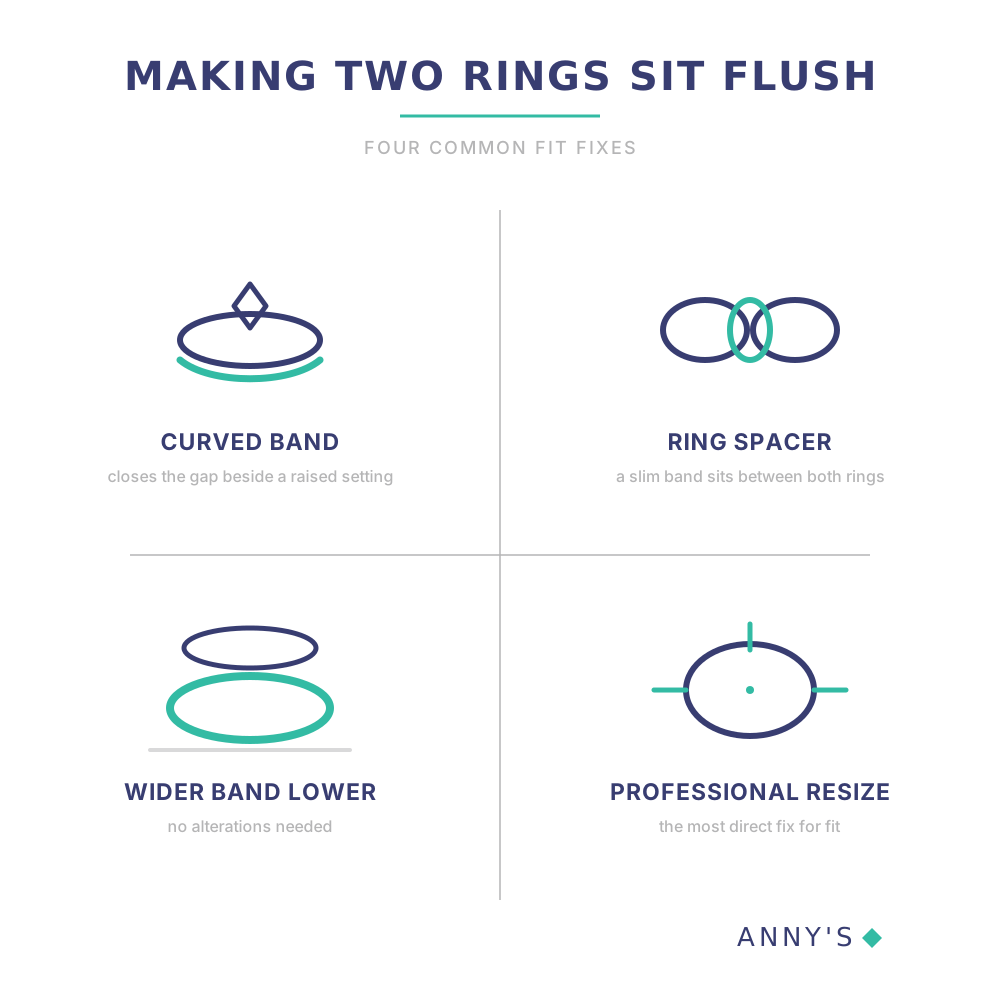
Not always — and that's completely normal. A raised centre stone or an unusual setting can leave a visible gap next to a plain wedding band, but a curved band, a slim spacer ring, or a quick resize solves this in almost every case.
These are the fixes we see work at our own workbench:
| Fit problem | Common fix | Notes |
|---|---|---|
| Gap beside a raised setting | A curved or contoured wedding band, shaped to wrap around the engagement ring's setting | Closes the visual and physical gap so both rings sit flush |
| Two straight bands that won't nest neatly | A ring spacer — a slim, low-profile metal band, narrow enough to sit between the two rings without adding bulk | Sits between the two rings; also reduces metal-on-metal wear over time |
| Rings of different widths sitting awkwardly | Wear the wider band lower on the finger, closer to the hand | A simple stacking-order fix, no alterations needed |
| A finger that's changed size, or a band that never quite fit | A professional resize | The most direct fix when the issue is fit, not setting shape |
A resize or custom-fitted band is genuinely routine work for us — our diamond setters, jewellers and CAD designers all work under one roof at our Frankston workshop, so fit adjustments happen faster than a disjointed, back-and-forth process. If you're still deciding on a setting, our guide to engagement ring settings covers how claw height and band profile affect fit later on.
 View full size
There's no single "correct" finger for same-sex couples — it's genuinely personal choice, and that's exactly how it should be. Many same-sex couples follow the same left-hand, fourth-finger convention as anyone else. Others choose a different hand, a different finger, or something entirely their own.
Australia has had full marriage equality since December 2017, when the Marriage Amendment (Definition and Religious Freedoms) Act came into effect, redefining marriage in Australian law as the union of two people (Australian Government, Attorney-General's Department). Australians voted for the change decisively — 61.6% in favour in the national postal survey that year (National Museum of Australia). Before that legal recognition existed, some same-sex couples chose the right hand as their own tradition, distinct from a marriage the law didn't yet recognise. With equality now settled, there's simply no fixed rule left to follow.
At Anny's, we've always believed in looking after every client like one of our own family — every couple who walks through our door, wherever they're from and whoever they love, gets the same warm welcome. Whatever finger, hand, or arrangement feels true to you and your partner is the right one.
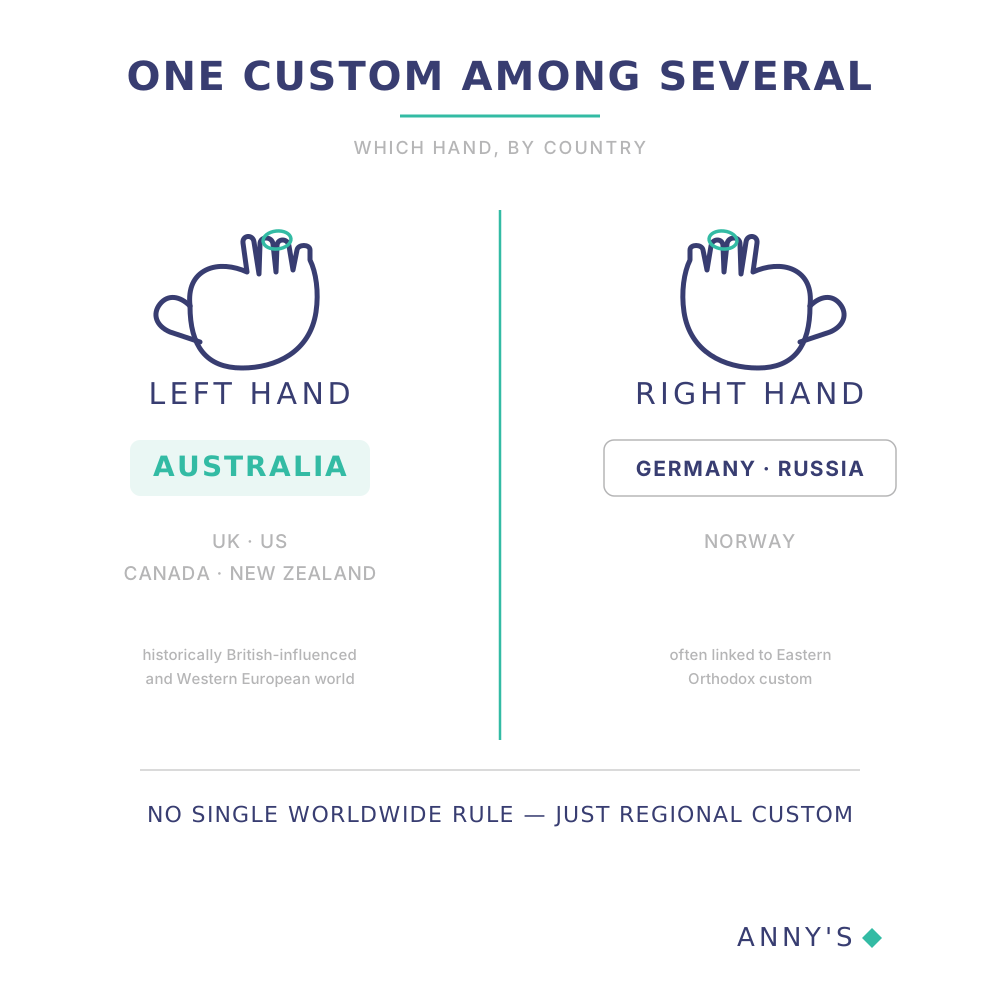
No — a good number of countries wear the wedding ring on the right hand instead: much of Eastern Europe, parts of Central and Western Europe, and several Latin American countries. Australia's left-hand convention is common, but it's genuinely just one regional custom among several.
Germany, Russia and Norway are among the countries with a right-hand tradition (Wikipedia, "Ring finger"). There isn't one neat religious explanation for it: the right-hand custom turns up in some Orthodox countries, in a small number of Catholic ones, and in several Protestant Western European ones. The split can even come down to faith rather than nationality — in the Netherlands the ring goes on the left hand if you're Catholic and on the right if you're not. A few countries, including Turkey and Brazil, do something different again: the ring sits on the right hand until the wedding day, then moves to the left once married (Wikipedia) — a mirror image of the switch described earlier. No source gives a reliable percentage for how many people in any one country follow their own custom, so we haven't invented one — but the pattern itself, confirmed across dozens of named countries, is well established.
 View full size
Because Western culture has worn betrothal and wedding rings on that finger for so long — well over 1,500 years, per the Roman origin story above — that the name stuck to the finger itself, independent of which hand. The name doesn't imply a rule; it's simply what the custom left behind.
The finger tradition came first, by centuries. The Roman "vein of love" belief behind it is well over 1,500 years old, while the first well-documented use of a diamond ring to signify an engagement was Archduke Maximilian of Austria's, in 1477, on his betrothal to Mary of Burgundy — with diamonds only becoming common in engagement rings much later still (Wikipedia, "Engagement ring").
It applies to both. The Roman "vein of love" belief and the finger convention it produced were never gender-specific — they describe the fourth finger of a hand, not a finger reserved for one sex. In Britain, only women tended to wear a wedding ring until after the World Wars, when married men serving overseas started wearing them — and once adopted, men's rings followed the same finger convention (Wikipedia).
About the author: Chris Ozkoch writes for Anny's Manufacturing Jewellers and signs Anny's-supplied written valuations. This article was reviewed by Harry Ozkoch, Master Jeweller — a diamond setter since the age of 16, and the founder of Anny's, a family business Established in 1990 in Frankston, Victoria.
Whichever hand, finger, or arrangement suits you, we're always happy to help you get the fit right — whether that's exploring Anny's engagement rings, pairing a new wedding ring with one you already love, or fitting a curved band or spacer so both rings sit exactly as they should. Visit us at our Frankston workshop (walk-ins welcome) or Email us before visiting our Melbourne CBD showroom. You Imagine. We Create. For Collins Street, please wait for our email confirmation before coming in.
Last updated: 30 August 2026 · Written by Chris Ozkoch · Reviewed by Harry Ozkoch, Master Jeweller.
Typical engagement and bridal ring turnaround: 3–4 weeks from CAD sign-off. We also have 2-week and 48-hour options for engagement and bridal rings. Get in touch and we'll help find an option that works for your timeframe.
Made personal, at Anny's
Melbourne CBD
Email us before visiting Collins Street. Please wait for our email confirmation before coming in.
Arrange your visitOur Frankston home
Visit us to talk through your ideas, explore designs and find your perfect fit.
Explore our Frankston showroomTypical engagement and bridal ring turnaround: 3–4 weeks from CAD sign-off. We also have 2-week and 48-hour options for engagement and bridal rings. Get in touch and we'll help find an option that works for your timeframe.
Typical repair turnaround: 1 to 7 business days, depending on complexity and customer urgency
Anny's Manufacturing JewellersABN 88 447 171 579